Day trading crypto is sold as a lifestyle. Wake up, open a laptop in a cafe somewhere warm, place three trades, close the laptop, go to the beach. The reality is closer to staring at a 5-minute chart for six hours wondering why you took that last entry. I’ve been doing this for six years. I’ve had weeks where I cleared more than my old salary in five days, and weeks where I lost more than my rent in a single afternoon. This is the honest guide — what day trading crypto actually involves, the setup I run, and the order I’d learn it in if I were starting again today.
Short answer: Day trading crypto means opening and closing positions within the same day to profit from short-term price moves. Most retail day traders lose money — studies put the failure rate at roughly 80% over a 12-month horizon. To do it without blowing up: trade a major coin (BTC or ETH), risk no more than 1% of your account per trade, use a hard stop loss every time, journal every entry, and learn the process from a structured source like Trade Travel Chill before scaling size. Execute on an exchange with deep liquidity — I use BitGet.
See Trade Travel Chill → (affiliate link) · Open BitGet → (referral)
Key takeaways
- Day trading crypto means opening and closing positions inside 24 hours, often inside a few minutes.
- Roughly 80% of retail day traders lose money over a year. The maths is against you before you start.
- Position sizing and stop losses are non-negotiable. Most blow-ups come from sizing, not strategy.
- Fees and slippage compound fast — a 0.10% taker fee on 20 round trips a day eats real money.
- Learn the process before you scale capital. Trade Travel Chill is the community I learnt in.
Table of contents
- What day trading crypto actually is (vs swing and long-term)
- The brutal honest stat: how many retail day traders lose money
- What you need before you start (capital, mindset, education)
- The setup I use (BitGet plus TradingView)
- The 5 strategies that work for day traders
- Position sizing — the 1% rule explained
- Stop losses are mandatory
- Fees and slippage eat profit fast
- The day trader’s daily routine
- How to learn day trading properly
- Trade Travel Chill vs YouTube vs paid courses
- When to consider bots instead
- FAQ
What day trading crypto actually is (vs swing and long-term)
Day trading is the shortest of the active trading styles. Positions open and close inside 24 hours — sometimes inside 24 minutes. You’re not investing in a project. You’re trading price action.
There are three main timeframes in crypto trading:
- Long-term investing (HODLing) — you buy spot, hold for months or years, and sell when the thesis plays out. Lowest stress, lowest active time, highest patience required.
- Swing trading — you hold positions for 3–30 days, trying to catch multi-day moves. You’re trading trend continuation or mean reversion on the daily or 4-hour chart.
- Day trading — you open and close inside the same day. Some day traders take one trade a day. Others take 20.
Day trading sits at the high-activity, high-stress, high-fee end of that spectrum. The upside is that profitable trades compound quickly because you’re cycling capital multiple times a day. The downside is that losses also compound — and the fees never sleep.
Day trading vs scalping
People mix these up. Scalping is a subset of day trading where positions last seconds to minutes and you’re chasing tiny moves with high frequency. I cover the differences properly in the scalping crypto post. For this guide, assume “day trading” means trades that last anywhere from 15 minutes to several hours, with a handful of positions per day rather than dozens.
Why crypto specifically
Crypto markets run 24/7. There are no opening bells, no closing auctions, no weekends off. That sounds good — more opportunity — but it’s also exhausting. Stocks at least force you to stop. Crypto won’t.
The other crypto-specific thing: volatility. Bitcoin can move 3% in an hour for no reason anyone can articulate afterwards. That’s both why day trading crypto is appealing (more setups) and why it’s dangerous (more ways to get wrecked). For context on volatility levels, Investopedia’s primer on crypto volatility lays out the structural reasons.
The brutal honest stat: how many retail day traders lose money
Before you decide to do this, look at the data.
Multiple academic studies of retail day traders across markets — equities, forex, futures, and now crypto — consistently put the loss rate at 70–95% over a 12-month period. The most commonly cited stat is that roughly 80% of retail day traders lose money within a year, and around 1% become consistently profitable over multiple years.
Investopedia’s piece on day trader failure rates walks through some of the underlying research, including the well-known Brazilian study that tracked thousands of equity day traders and found that fewer than 3% earned more than minimum wage after costs.
Crypto is, if anything, harder. The volatility is higher, the leverage available is higher (up to 125x on some exchanges), and the asset class itself is younger — which means fewer well-established edges and more random moves driven by news.
This is not me trying to talk you out of it. It’s the number you need to internalise before you commit money. If you’re going to be one of the 1% who makes it work over multiple years, you need a process, education, and the discipline to follow both. That’s the entire reason this guide exists.
What you need before you start (capital, mindset, education)
Three things, in order.
Capital
You don’t need a huge account to learn — but you do need enough that the position sizes are meaningful and the fees don’t dominate.
My honest recommendation: start with somewhere between £500 and £2,000 of risk capital. Risk capital meaning money you can afford to lose without it affecting your rent, food, or sleep. I cover this properly in how much money to start trading crypto — the short version is that under £200 the fees and minimum position sizes make practical learning hard, and above £5,000 you’re risking too much before you’ve proven you have an edge.
If you have £10,000 and want to day trade, my advice is to learn with £1,000 and keep the other £9,000 in spot or stablecoin yield. After 6 months of journaled trades and a positive expectancy, scale up. Not before.
Mindset
This is the part most guides skip. Day trading is mostly psychological work disguised as financial work. Things you need to be comfortable with:
- Sitting on hands. Most days the best trade is no trade.
- Taking losses. A losing trade isn’t a mistake if the process was right.
- Being wrong publicly to yourself. Your journal will catch every mistake.
- Not chasing. When you miss a move, you miss it. There’s another setup coming.
- Sticking to plan. Every emotion-driven decision costs money over time.
I cover this in more depth in crypto trading psychology. It’s the single most underrated topic in trading education.
Education
Information is free. Structure is not. You can find every concept I’ll mention in this post on YouTube, on Investopedia, or in a textbook. What you can’t find for free is a sequenced curriculum that teaches you to actually do it, plus a community to check your work against.
That’s the gap Trade Travel Chill (affiliate link) fills for me, and the gap I’d point you at if you’re serious. I wrote a full Trade Travel Chill review if you want the long version.
The setup I use (BitGet plus TradingView)
Tools matter less than people think. I’ve seen profitable traders working off mobile apps. I’ve also seen unprofitable traders with eight monitors. But there’s a baseline setup that makes the job easier.
The exchange: BitGet
I use BitGet (referral) as my main exchange for active trading. Three reasons:
- Liquidity on majors. BTC, ETH, SOL, and other top coins have deep order books, so slippage on market orders is small.
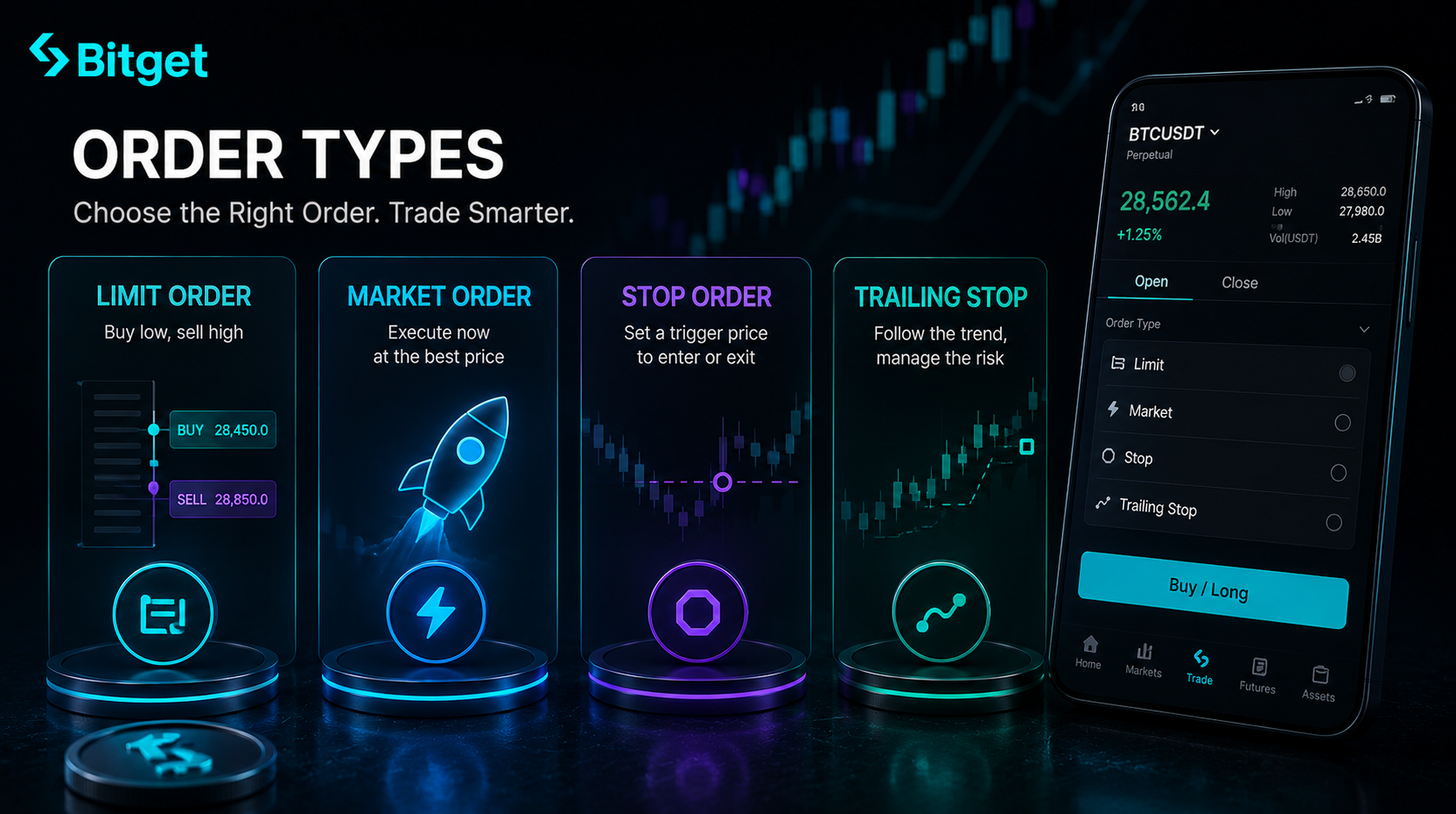
- Order types. Stop-loss, take-profit, trailing stop, OCO — all built into the trade panel. I cover the full list in BitGet spot trading guide.
- Fees. Taker fees start at 0.10% on spot and drop with BGB holdings or volume tier. Maker fees can be lower. Full breakdown in BitGet trading fees.
If you want the long form on the exchange itself, see BitGet review. For futures specifically (which is where a lot of day traders end up), see BitGet futures USDT-M and BitGet leverage explained.
The charts: TradingView
I do all my chart analysis on TradingView, then execute on BitGet. The two link together via BitGet TradingView integration so you can place trades directly from the TradingView chart.
TradingView’s free tier is enough to start. The paid tiers add more indicators per chart and more timeframes — useful but not essential. TradingView’s own education hub is a solid free starting point for chart basics.
The journal
I use a spreadsheet. Date, ticker, direction, entry, stop, target, position size, R-multiple, outcome, notes. Nothing fancy. The point isn’t the tool — it’s the discipline of writing every trade down. I’ll come back to journaling.
The phone
I have BitGet’s mobile app on my phone for monitoring positions when I’m away from the desk. I don’t recommend opening new trades on mobile. Too easy to misclick, too easy to act emotionally.
Want the education path I followed?
Structure beats information every time. Trade Travel Chill is the community I’m part of — sequenced lessons, real working traders, risk management drilled in from day one.
Affiliate link. I may earn a commission at no extra cost to you.
The 5 strategies that work for day traders
There are a thousand strategies in the wild. Most are variations on a handful of structural ideas. These are the five I see working repeatedly for retail day traders.
1. Range trading
You identify a price range — a high and a low the asset has bounced between for a few hours or days — and you buy near the low and sell near the high. Sometimes you short near the high too.
This works well when crypto is consolidating sideways, which is most of the time. The risk is that ranges break. Your stop goes just outside the range so a breakout closes the trade quickly.
2. Breakout trading
The opposite of range trading. You wait for price to break out of a range or a chart pattern (triangle, flag, wedge) with conviction, then enter in the direction of the break. You’re betting that momentum continues.
The trap with breakouts is the fakeout — price breaks the range, you enter, and it immediately snaps back. Confirmation candles and volume are how experienced traders filter these. I cover patterns in how to read crypto charts.
3. Trend continuation
You identify a clear trend on a higher timeframe (4-hour or daily) and look for pullback entries on a lower timeframe (15-minute or 5-minute). The trade is: trend up, wait for a pullback, enter when momentum resumes.
This is one of the highest win-rate strategies for beginners because you’re trading with the dominant direction. The hard part is staying patient enough to wait for the pullback instead of chasing the breakout.
4. Mean reversion
You bet that an extreme move snaps back to an average. The classic indicator setup is RSI hitting oversold/overbought combined with a Bollinger Band touch. The full toolkit is in crypto trading indicators.
Mean reversion works well in ranges and badly in trends. The skill is knowing which regime you’re in. New traders often blow up doing mean reversion in trending markets — buying every dip until the dip turns into a 30% leg down.
5. Event-driven (news plays)
A specific catalyst — an ETF announcement, a major exchange listing, a network upgrade — moves price predictably (or unpredictably) in the minutes around the event. You position before and exit fast.
This is the highest-risk strategy because slippage and volatility around news events are extreme. I’d put it last on the list of things to learn.
Position sizing — the 1% rule explained
If you remember one thing from this post, remember this.
Never risk more than 1% of your trading account on a single trade. Some traders go up to 2%. Some go down to 0.5%. Nobody serious goes above 2%.
Here’s why. If you risk 1% per trade and you have a string of 10 losers in a row — which will happen, possibly more than once — you’re down ~10% on your account. Survivable. Annoying, but survivable.
If you risk 5% per trade and have 10 losers in a row, you’re down ~40%. To recover from a 40% drawdown you need a 67% gain. That’s not survivable for most retail accounts because the psychological pressure to swing for the fences after that kind of loss is overwhelming.
How to size with the 1% rule
The 1% rule means the dollar amount you can lose is fixed — not the position size.
Example. Account: $5,000. Risk per trade: 1% = $50. You spot a long setup on ETH at $3,000 with a stop loss at $2,940. That’s a $60 risk per coin (2% stop distance). Your position size = $50 ÷ $60 = 0.83 ETH (about $2,500 notional).
If your stop is wider — say $2,910 — that’s a $90 risk per coin. Position size = $50 ÷ $90 = 0.55 ETH. The wider your stop, the smaller your position. Always.
This is the entire point of position sizing. The stop comes first. The size follows from the stop. Not the other way around.
If you find yourself thinking “the stop is too wide, let me move it closer to make my size bigger” — stop. You’re working backwards from desired size, which is the most common path to blowing up an account.
Stop losses are mandatory
I’ll keep this short because the rule is simple.
Every trade has a stop loss. Set it before you enter. Don’t move it against you.
A stop loss is the price at which your trade idea is wrong. If price hits that level, the setup has failed. Closing the trade and stepping back is correct, even if it feels bad.
The two failure modes:
-
No stop at all. “I’ll just watch it.” You won’t. You’ll get distracted, the price will move 8% against you, and you’ll either take a much bigger loss or — worse — convince yourself it’ll come back. Sometimes it does. Sometimes it doesn’t.
-
Moving the stop. Price drifts toward your stop, you panic and widen it “just a bit.” Now your risk per trade is bigger than 1%. Repeat this five times and your “1% per trade” rule has actually become 4% per trade.
The discipline is to set the stop at the technical level (just below support, just above resistance, just below a swing low) and let it execute. If you keep losing on stops that get hit by a wick and then reverse, the answer is to look at your stop placement, not to widen all your stops.
Heads up: Day trading crypto on futures or with leverage can wipe out your account in a single move. The 1% rule applies even more strictly with leverage. If you’re new to trading, start on spot before touching futures. The numbers in this article are examples, not promises.
Fees and slippage eat profit fast
The hidden killer of day trader returns is transaction costs.
Fees
Let’s run the maths. Say you take 10 round-trip trades per day (10 entries + 10 exits = 20 fills). At BitGet’s standard taker fee of 0.10%, each fill costs 0.10% of position notional. Over a day, that’s 2% of position notional in fees.
If your average win is 0.8% and average loss is 0.5% on positions sized at, say, your full account — you’re probably netting break-even or slightly negative just on fees alone, even if your trading is profitable on the raw P&L.
The fix is twofold:
- Trade fewer, higher-conviction setups. 2–5 trades per day, not 10–20.
- Use limit orders where possible to capture maker fees (which are lower) instead of taker fees.
I cover the full fee schedule in BitGet trading fees, including how to hit lower tiers by holding BGB or trading volume.
Slippage
When you market-buy or market-sell, you take the best available price on the order book. If liquidity is thin or you’re trading a large size, you’ll pay worse than the displayed price. That difference is slippage.
On BTC and ETH, slippage on retail-sized orders is negligible. On smaller altcoins, slippage can be 0.5–2% — enough to ruin a trade idea before it starts. Stick to majors when you’re learning.
The compounding cost
Here’s the brutal stat: across multiple studies of retail day traders, transaction costs alone account for 30–50% of the gap between gross and net performance. Many retail traders are profitable gross of fees and losing net of fees. Fees are not a footnote. They are a core part of the system.
The day trader’s daily routine
What does an actual day look like? Mine, roughly:
Pre-market (the night before or 30 mins before session)
- Review the previous day’s trades in the journal. Note what worked and what didn’t.
- Check the macro calendar — any major news drops, CPI prints, FOMC meetings?
- Look at the daily charts of the 3–5 coins I trade. Where are they in their structure? Trend, range, key levels?
- Mark key support and resistance on each chart.
- Write down 2–3 setups I’d take if they appear.
Session (3–4 focused hours, not 12)
- Watch the lower timeframes (15m and 5m) on the coins I marked.
- Wait for one of my pre-planned setups to trigger.
- Enter with predefined stop and target. Size from the 1% rule.
- Manage the trade. Don’t move stops against. Trail stops in profit if rules allow.
- If no setup appears, do nothing. Close the laptop.
Post-session
- Log every trade in the journal. Entry, stop, target, size, R-multiple, outcome, screenshot if it was instructive.
- Honest post-mortem. Was the entry quality good? Was the sizing correct? Did emotion enter the decision?
- Step away. Read something unrelated. Trading 12 hours a day is how you go broke.
The discipline
The hardest part isn’t the strategy. It’s not trading when there’s nothing to trade. The pull to “make something happen” is constant. You’ll watch a chart go nowhere for two hours, take a marginal setup just to feel productive, and lose money.
Sitting on hands is the work. Real trading is mostly waiting.
How to learn day trading properly
I’m going to be blunt because the alternative wastes your money.
There is no shortcut. There is no course you take in a weekend that turns you into a profitable trader. There is no signal service that does the thinking for you. There is no indicator setup that prints money.
What works is the unsexy combination of:
- Structured education — a sequenced curriculum that takes you from concept to application.
- A community of working traders — people who can call out your mistakes faster than you can.
- Real reps with small size — placing actual trades and journaling them.
- Patience — most people who succeed at trading needed 18–36 months of focused practice before they were consistently profitable.
The first two are the bit that’s hard to get for free. The third and fourth are on you.
Trade Travel Chill
I’ll tell you what I did. After losing money for three years on my own, I joined Trade Travel Chill (affiliate link) in 2023. It’s a paid trading community run by working traders. Structured modules. Regular live calls. An active member chat where setups get posted and reviewed in real time.
The thing that actually changed my trading wasn’t any single lecture. It was being in a room where the bar was higher than mine. Watching how experienced traders sized positions. Watching how they wrote their entries. Watching how often they did nothing. That ambient pressure dragged my standards up.
I covered TTC in depth in my full review. The short version: if you’re going to pay for one thing in your trading education, I’d pay for a community over a course. Information is everywhere. Accountability and structure are not.
If you want a wider comparison of the options, best crypto trading courses is the post.
Trade Travel Chill vs YouTube vs paid courses
Quick comparison of the main paths.
| Path | Cost | What you get | Where it fails |
|---|---|---|---|
| YouTube (Coin Bureau, Banter, etc) | Free | Broad market context, fundamentals | No structure, no accountability, no feedback loop |
| Investopedia and CoinDesk | Free | Definitions, concepts, news | Not trade-process focused |
| Coursera / Udemy courses | $20–$200 | Structured video lessons | Static content, no community, often outdated |
| Paid bootcamps | $1,000–$5,000 | One-off intensive | Expensive, content goes stale, no ongoing support |
| Trade Travel Chill | Subscription | Structure + community + ongoing calls | Recurring cost; requires you to engage |
| Telegram signals | Free or paid | Trade signals | Usually pump groups, no learning, no edge |
YouTube is great for what to think about. It is bad at how to think about it.
Coursera and Udemy have over 100 cryptocurrency-related courses each between them — quality varies wildly. A few are excellent. Most teach the basics fine and stop short of real trading process.
Paid bootcamps charging £2,000 for a weekend masterclass — almost always not worth it. The content goes stale in 18 months and there’s no community attached.
Trade Travel Chill’s recurring model is the one I think is most honest. The content keeps updating, the chat keeps producing value, and the price per month is far less than a single avoided bad trade.
When to consider bots instead
Honest question: should you day trade at all?
If you have a full-time job, a family, or anything else that takes most of your attention, day trading is probably the wrong choice. The time required to develop skill is significant, and trying to monitor charts while doing other work usually ends in bad trades.
Two alternatives for people in that situation:
Swing trading
Hold positions for 3–30 days. You make decisions on the daily chart, which only updates once a day. Total time commitment: 30 minutes a day if that. Far more compatible with a job. See swing trading crypto.
Crypto trading bots
Set up an automated strategy that runs 24/7 without your input. Grid bots, DCA bots, and copy trading bots all let you participate in the market without sitting at a screen. I cover the full landscape in crypto trading bots guide and the honest question of are crypto bots profitable.
BitGet’s own bot suite is well-built. The BitGet BTC/USDT spot trading bot (affiliate) is the one I currently have running on a portion of my account — set the range once, let it work.
Copy trading is another option — you copy the trades of an experienced trader automatically. Full breakdown in BitGet copy trading.
None of these are magic. Bots can lose money. Copy traders can blow up accounts. But for people who don’t have the time to develop day trading skill themselves, automation is often the better path.
Serious about learning to day trade?
The shortcut isn’t a magic indicator. It’s a community of traders better than you. TTC is the one I’m in — structured education, live walkthroughs, no signal-pumping nonsense.
Affiliate link.
Frequently asked questions
Can you actually make money day trading crypto?
Yes, but most people don’t. Across the available data, roughly 80% of retail day traders lose money over a year and only around 1% achieve consistent profitability over multiple years. The people who make it work treat it as a profession — structured education, strict risk management, a journal, and years of focused practice.
How much money do I need to start day trading crypto?
Practically, I’d say £500–£2,000 to start. Below that, fees and minimum position sizes dominate. Above £5,000 you’re risking too much before you’ve proven you have an edge. See how much money to start trading crypto for a deeper take.
What is the 1% rule in day trading?
Never risk more than 1% of your trading account on a single trade. Your stop-loss distance determines your position size — not the other way around. With $5,000 and a 1% risk per trade, the maximum loss on any single trade is $50.
Is day trading crypto better than swing trading?
Not better, just different. Day trading requires more screen time and produces faster feedback. Swing trading requires more patience but fits a full-time job. Most retail traders are better off swing trading. See swing trading crypto.
What’s the best exchange for day trading crypto?
Anywhere with deep liquidity on majors, low taker fees, and a full set of order types. I use BitGet — see the BitGet review for the long version. Binance, Bybit, and OKX are also viable.
Should I day trade with leverage?
If you’re new, no. Spot first. Leverage amplifies losses just as fast as it amplifies wins, and most retail traders lose more on leverage than without. When you do use leverage, keep it low — 2–5x — and always with a stop. BitGet leverage explained covers the mechanics.
How long does it take to become a profitable day trader?
For most retail traders who eventually become consistently profitable, 18–36 months of focused work with a journal. People who skip the journaling and the structured education take much longer or quit.
Are trading bots better than day trading manually?
For most people with a job — yes. Bots remove the emotion, run 24/7, and don’t get tired. They aren’t magic, but they’re often a more realistic path than learning manual day trading. See crypto trading bots guide and are crypto bots profitable.
Can I day trade crypto without KYC?
Most major exchanges require KYC for higher withdrawal limits. P2P or DEX trading can avoid it, but liquidity is thinner and the user experience is worse. For serious day trading, KYC’d CEXs are the practical choice.
What’s the biggest mistake new day traders make?
Position sizing. Followed by moving stop losses against the position. Both come from emotion overriding plan. Fixing those two things alone will dramatically improve most beginners’ results.
Final word
Day trading crypto isn’t a get-rich-quick. It’s a skill profession with a brutal failure rate, and the people who succeed at it treat it that way — structured learning, strict risk rules, journals, years of reps.
If you decide you want to do it: start with a small account, follow the 1% rule, set every stop, journal every trade, and put real money into learning the process from a community of working traders. Trade Travel Chill (affiliate) is the community I’m in and the one I’d send you to.
If you decide you don’t want to do it: that’s a valid answer too. Swing trading or bots will probably make you more money over a 5-year horizon, with less stress and less time.
Right — over to you.
Related posts
- Trade Travel Chill Review: Where I Actually Learned to Trade
- Best Crypto Trading Strategy for Beginners
- Scalping Crypto: A Realistic Look at High-Frequency Trading