I’ve watched friends spend £2,500 on a one-off “crypto trading masterclass” and lose every penny of it inside three months. I’ve watched other friends learn the same lessons for free off YouTube — and lose money just as fast. The question of where to learn crypto trading isn’t really about price. It’s about what kind of learner you are and how serious you are about not being one of the 80% who blow up their account. Here’s the honest map.
Short answer: The best places to learn crypto trading are (1) free YouTube channels like Coin Bureau for fundamentals, (2) Investopedia and CoinDesk for definitions and context, (3) paid trading communities like Trade Travel Chill for structured education and accountability, and (4) actually placing small real trades. The single biggest unlock is joining a community where real traders explain real setups — not a course that ends after eight lectures. My pick is Trade Travel Chill, the community I’m part of.
See Trade Travel Chill → (affiliate link)
Key takeaways
- Most people lose money trading crypto. The data is brutal — over 70% of active retail traders are unprofitable on a 1-year horizon.
- Free resources (YouTube, Investopedia) are great for what to think about. They don’t teach you how to size positions or build a process.
- Paid courses on Coursera and Udemy are mixed quality. Some are solid, some are recycled garbage.
- Trading communities like Trade Travel Chill combine structured learning with real accountability. The community is the part nobody else replicates.
- Start free. Validate you actually want to do this. Then pay for structure when you’re ready.
TL;DR comparison table
If you want one table to compare your options before reading further, here it is.
| Resource | Cost | Best for | Weakness |
|---|---|---|---|
| Trade Travel Chill | Paid subscription | Structured learning + active community | Not free; takes time to engage |
| YouTube (Coin Bureau, Banter) | Free | Fundamentals + market context | No structure, no accountability |
| Investopedia | Free | Definitions and concepts | Not crypto-specific |
| Coursera crypto courses | $20–$80 | Academic-style learning | Outdated fast, no community |
| Udemy crypto courses | $10–$200 | Wide topic range | Quality wildly variable |
| TradingView education | Free | Charting + technical analysis | Niche; not full trading process |
| Exchange academies (Binance, BitGet) | Free | Platform-specific basics | Marketing arm of the exchange |
| Books | $10–$30 | Deep foundational thinking | Not crypto-current |
| Telegram signals | Free or paid | Nothing useful | Often pump and dump groups |
| Just losing money | Variable | Pain-based learning | Most expensive option |
The 5 ways people learn to trade crypto
Strip the marketing away and there are basically five paths. Most people end up doing some combination.
1. YouTube and free content
How most people start. Free, accessible, and the content range is huge. According to data from CoinGecko’s industry reports the crypto audience has exploded — the top crypto YouTube channels each pull tens of millions of monthly views.
Pros: Free. Massive variety. You’ll hear different perspectives. Good for fundamentals (what is Bitcoin, what is Ethereum, what’s a wallet).
Cons: No structure. No accountability. Algorithm rewards drama over education. Most channels are entertainment first, education second. Easy to spend 200 hours and learn nothing actionable.
2. Books
Old-school. The trading fundamentals don’t change much across markets, so a good book on risk management or technical analysis from 1990 is often still useful today.
Pros: Deep, structured thinking. Cheap. You can re-read chapters.
Cons: Most aren’t crypto-specific. Markets have changed. Books can’t show you a live chart and explain why it matters in real time.
3. Paid courses (Coursera, Udemy, bootcamps)
Structured curriculum, one-time payment, video lessons, sometimes a certificate.
Pros: Structure. Often well-presented. Some teach proper concepts.
Cons: Static content goes out of date. No community. Quality is wildly variable. Some are excellent, some are repackaged Wikipedia articles.
4. Trading rooms / paid communities
Subscription-based access to a chat plus structured education plus regular calls. Trade Travel Chill is in this category.
Pros: Structure + community + accountability + real-time learning. Material stays current. You get feedback on your trades.
Cons: Recurring cost. Requires you to engage actively. Quality varies — there are good communities and bad ones.
5. Just losing money
A lot of people skip the first four and “learn by doing.” Open an account, place trades, lose money, eventually figure things out (or quit).
Pros: Real money makes lessons stick. You learn discipline because your wallet is on the line.
Cons: Insanely expensive. Most people quit before they learn. The same lessons are available for far less elsewhere.
YouTube: the channels worth your time
If you’re starting from zero, this is where the cheapest education lives. Here are the channels I rate and why.
Coin Bureau
The closest thing crypto has to a journalist who shows up to work prepared. Long-form videos on tokenomics, market conditions, and project deep-dives. Educational tone, low hype, evidence-cited.
Best for: fundamentals, understanding what you’re trading, macro context.
Not for: actual trading mechanics. Coin Bureau doesn’t really teach you how to size a position or where to put a stop loss.
Crypto Banter
Higher energy. Live shows, market reaction, trader interviews. Mix of education and entertainment.
Best for: market context, hearing different trader perspectives.
Not for: deep skill-building. The format isn’t structured for it.
InvestAnswers, Benjamin Cowen, others
There are a dozen other reputable YouTube channels doing on-chain analysis, technical analysis, or macro work. The names rotate but the format is similar.
Honest assessment of YouTube overall: Excellent for fundamentals and market awareness. Useless for actually building a trading process. If you’ve watched 50 hours of crypto YouTube and your trading hasn’t improved, that’s not because you’ve watched the wrong channels. It’s because YouTube isn’t the right format for what you need next.
Free resources beyond YouTube
The internet has more than YouTube. Here’s what’s worth bookmarking.
Investopedia
The single best free resource for trading definitions and concepts. Not crypto-specific, but every concept that matters (limit orders, stop losses, position sizing, technical indicators) is explained well. If you don’t know a term, Investopedia’s definition will sort you out.
CoinDesk
The major crypto news outlet. Good for market context and regulatory updates. Not where you learn to trade, but where you learn what the market is reacting to.
CryptoCompare
CryptoCompare hosts comprehensive market data, historical price data, and educational content. Good for research.
CoinGecko / CoinMarketCap
Market cap, volume, supply data. Essential reference for any token research. CoinGecko tracks over 15,000 tokens with real-time pricing across hundreds of exchanges. Use it before buying anything.
Exchange academies
Binance Academy, BitGet Academy, Kraken Learn — every major exchange runs an education arm. Quality is decent, especially for fundamentals. The catch is they’re marketing content. Use them for definitions and concepts; ignore the “now trade on our platform” sections.
Honest assessment of free resources overall: Brilliant for definitions, fundamentals, and context. Limited for actual trading skill development. They’re the textbook. Trading skill is built in practice with feedback.
Paid courses: Coursera, Udemy, and the wild west of “crypto trading masterclasses”
This is where you have to be careful with your money.
Coursera
Coursera hosts university-backed courses, some with proper academic rigour. Searching “cryptocurrency” returns over 100 courses ranging from “Bitcoin and Cryptocurrencies” (Princeton) to applied blockchain courses.
Best for: academic understanding of crypto, the underlying tech, regulation.
Not for: practical trading. These are academic courses. They teach you the theory of crypto, not how to trade it.
Typical cost: $30–$80 per course or $50/month for unlimited access.
Udemy
Udemy has thousands of crypto trading courses. The quality range is enormous — some solid, some appallingly recycled.
A typical Udemy “crypto trading bootcamp” promises 30+ hours of content for $20 on sale. Some are worth that. Many aren’t. You’re rolling the dice based on reviews and instructor track record.
Best for: bargain-bin education if you’re willing to take some chances.
Not for: serious traders. The lack of community and the static nature of the content limit what you can actually learn.
Standalone bootcamps and “masterclasses”
The four-figure crypto trading bootcamps you see on Instagram are a mixed bag. Some are legitimate. Most are recycled material from a single course author who hasn’t traded in two years, packaged in a slick funnel.
How to spot the bad ones:
– The instructor’s main income is selling the course, not trading
– Lifestyle photos (Lambo, beach, watch) in the marketing
– “Guaranteed returns” or “secret strategy” language
– No clear curriculum, just vague promises
– High-pressure sales tactics
How to spot the good ones:
– Clear curriculum
– Real instructor track record outside the course
– Refund policy
– Reasonable claims (not “make millions”)
– Community attached
Honest assessment: Paid courses sit in an awkward middle ground. They’re more structured than YouTube but less alive than a community. If you want a course, pick one with a clear curriculum and a community attached. If it’s just a static video library, you’re paying for what YouTube does for free.
Trading communities: where the real skill develops
This is the category I think most people underrate. A trading community is a structured education platform plus a live community of working traders. Done well, it’s the format that closes the gap between “understanding concepts” and “actually trading well.”
Trade Travel Chill (TTC)
This is the community I’m part of. I’ve written a full Trade Travel Chill review but the short version: structured education across spot, day, and swing trading, with a heavy emphasis on risk management, plus regular calls and a member chat.
What makes it work:
- Structured curriculum — you’re not just dipped into a chat and left to figure it out
- Risk management focus — the through-line is “don’t blow up your account,” which is the lesson most education skips
- Community accountability — posting your trades publicly changes how you make them
- Live calls + Q&A — real-time learning, not pre-recorded videos from 2022
- Working traders — the people leading the calls are actually trading, not just teaching about trading
- No signal-pumping — TTC is education, not “buy this coin now” alerts
Who it’s for: beginners through to intermediate traders who are serious about learning and willing to do the work.
Who it’s not for: people who want plug-and-play signals, people who want to learn for free, advanced systematic traders, people who won’t engage.
The link if you want to look at it: Trade Travel Chill (affiliate link).
Other communities worth knowing about
There are several other reputable paid crypto trading communities. Without naming specific ones I can’t personally vouch for, the format is similar: subscription, structured material, community access. The principles I’d use to evaluate any of them:
- Do they teach process or just give signals? (Process is what you want.)
- Are the instructors actually trading their own capital? (Or just teaching?)
- Is there a real community chat? (Or just a one-way broadcast?)
- Is risk management prominent? (Or buried at the back?)
- Is the recurring cost reasonable for the value? (Or are you paying for a one-time course at a monthly rate?)
The reason I went with TTC is that it scored well on all five.
TradingView learning resources
If you’re going to do any technical analysis, you’ll end up on TradingView. It’s the dominant charting platform for crypto traders.
TradingView’s education section includes:
- Their “TradingView Pine Script” tutorials (for writing your own indicators)
- The Education feed (community-written articles on technical analysis)
- “Ideas” — published trade setups from other users, complete with chart annotations
Best for: learning charting, understanding indicators, seeing how other traders annotate their setups.
Not for: full trading process. TradingView is one tool in your kit, not the whole education.
I use TradingView daily. The free tier is enough to start with. Upgrade only when you hit specific limitations.
Books worth reading
The trading fundamentals don’t change, so the right books still hold up. None of these are crypto-specific, but the principles transfer.
“Trading in the Zone” by Mark Douglas
The book on trading psychology. If you can’t follow your own rules, no strategy works. Douglas explains why and what to do about it. The book that fixed the most for me personally.
“Reminiscences of a Stock Operator” by Edwin Lefèvre
A semi-fictional biography of Jesse Livermore, one of the great traders of the early 20th century. The principles he learned in 1900 still apply in crypto in 2026. Brutally honest about losing.
“The Little Book of Common Sense Investing” by John Bogle
Not a trading book, but the book on why most people should index-invest instead of trading. Read it before you commit to active trading. If you find yourself agreeing with Bogle, just buy Bitcoin and stop reading my site. Either approach is valid.
“Trading Bitcoin” — anything crypto-specific
The crypto-specific books are mostly weaker than the general trading books. The field changes fast and books take 18 months to write. Use general trading books for principles and online resources for crypto-specific context.
Honest assessment of books: Brilliant for foundational thinking. Useless for current market conditions. Read them once early on. Then move to live resources.
The order I actually recommend
If you’re starting from zero today, here’s the path I’d take. It’s the path I wish I’d taken in 2020 instead of the chaos I actually ran.
Step 1: Start free (weeks 1–4)
- Watch a few Coin Bureau videos to understand the asset class
- Read Investopedia entries for every term you don’t know
- Read crypto for beginners and what is Bitcoin for the basics
- Don’t buy anything yet
Step 2: Open an exchange and buy a small amount (week 4–6)
- Sign up to a tier-1 exchange (I use BitGet — full BitGet review, or compare with best crypto exchanges)
- Complete KYC
- Buy £50–£200 of Bitcoin
- Learn how the platform works without risking real money
The exchange affiliate I use: BitGet (affiliate link).
Step 3: Practice with small positions (weeks 6–12)
- Place 10–20 small spot trades
- Keep a journal of every trade
- Don’t touch futures or leverage yet
- Read how to buy crypto if you haven’t already
Step 4: Set up storage (week 8 onwards)
- Once you have more than ~£500 in crypto, move it off the exchange to a hardware wallet
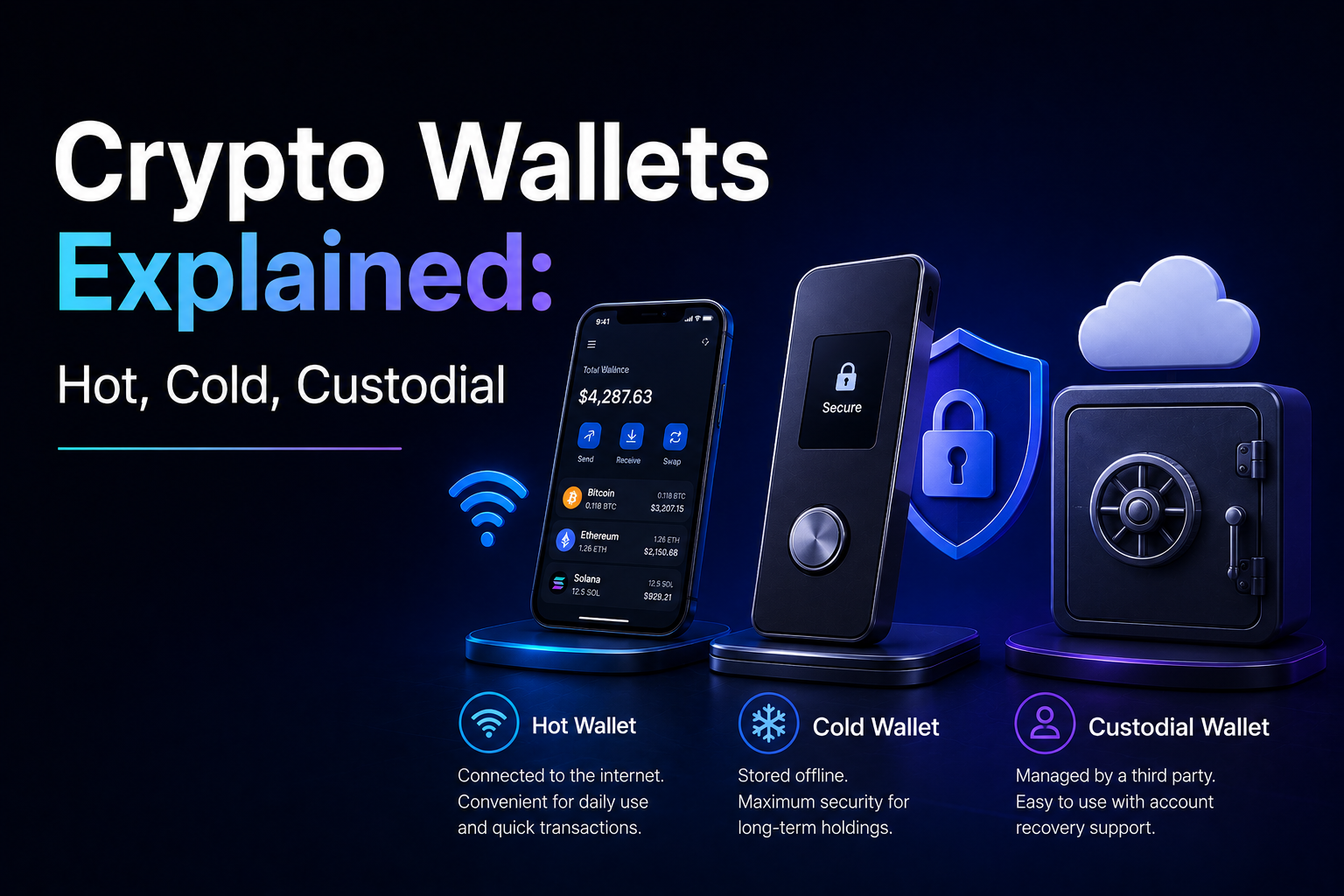
- I use a Ledger Nano X — the hot vs cold wallet post explains why
- Read how to store crypto safely for the full setup
Step 5: Upgrade to structured learning (month 3+)
- This is where free runs out of road
- Join a paid community that fits your style. I rate Trade Travel Chill.
- Commit to engaging — show up to calls, post your trades, ask questions
- Read the modules. Apply what you learn to small trades.
- Keep the journal. Review it monthly.
Step 6: Scale up slowly (month 6+)
- Once you have a process that’s working with small money, scale gradually
- Never increase position size by more than 50% in one step
- Keep a fixed risk-per-trade rule (1-2% of account)
- Continue learning
That’s the order. Anything else and you’re optimising for the wrong thing.
Ready to upgrade past YouTube?
If you’ve been watching videos for months and your trades aren’t getting better, you don’t need more videos. You need structure and a community. TTC is the one I’m part of.
Affiliate link. I may earn a commission at no extra cost to you.
Why I went with TTC (personal section)
I’ll give you my honest reasoning. This is the part where I stop comparing and tell you what I actually do.
I tried YouTube for two years. I learned a lot about crypto. I did not learn to trade. My account size went up in 2021 with the market, and down in 2022 with the market. I was a passenger.
I bought one Udemy course. £35. The instructor was a decent communicator but the material was about 18 months old by the time I finished it. The case studies were from a previous market cycle. There was no community. I finished it, made marginally better trades for two weeks, then drifted back to my old habits.
I read books. Mark Douglas’s “Trading in the Zone” was the single best read in any format. But you can’t ask a book a question.
I joined TTC after watching a trader I respected mention it. I lurked for a week. I asked a question. Someone answered properly. I posted a trade idea. Three people pointed out a flaw I’d missed. I closed the position before it lost money.
That single intervention paid for the membership.
What kept me there:
- The community catches mistakes I’d otherwise pay to learn
- The structured modules gave me a framework I’d been missing
- The risk management focus is repeated until it sticks
- The calls expose me to different trading styles
- The accountability makes me a more disciplined trader
What it didn’t do:
- Make me rich
- Give me signals to copy
- Promise anything
That’s the version that’s true. Take it for what it’s worth.
Trade Travel Chill (affiliate link) is the link if you want to look at it. There’s a full Trade Travel Chill review on this site if you want the deeper write-up first.
How to spot a scam course or community
There’s a lot of garbage in this space. Here’s how to filter it out.
Red flags
One. Promises of specific returns. “Make $10,000/month trading crypto” is marketing fiction. Real traders talk in probabilities, not promises.
Two. Lifestyle marketing. If the sales page has Lamborghini photos, watches, or beach lounging shots, walk away. People who actually trade for a living don’t market themselves that way.
Three. “Secret strategy” language. There are no secrets in trading. Every strategy has been written about for fifty years. Anyone selling you a “secret” is selling you nothing.
Four. High-pressure sales tactics. Countdown timers, “only 5 spots left”, “price doubles tomorrow” — all manipulation. Reputable communities don’t need pressure tactics because the value is the value.
Five. No clear curriculum. If you can’t see what’s being taught before you pay, don’t pay.
Six. No refund policy. Reputable products offer some form of refund window. If they’re confident in their product, they’re confident you’ll keep paying.
Seven. Instructor’s main income is the course, not trading. Check the instructor’s background. If they make all their money selling education, that’s the business model — not trading.
Eight. Reviews are all glowing. Look for the negative reviews and read them carefully. Every legitimate product has critics. A product with no criticism either suppresses negative reviews or is too small to have any.
Nine. Telegram or Discord without structured material. A signals chat with no actual education isn’t education. It’s a pump group.
Green flags
- Clear curriculum visible before purchase
- Real instructor with verifiable background
- Refund policy
- Realistic claims
- Community attached
- Risk management prominent
- Honest about limitations
- Members who post negative experiences without being banned
Use these checklists. They’ll save you thousands.
Done window-shopping?
If you’ve read this whole comparison, you’re past the YouTube-only stage. The community I joined was Trade Travel Chill. It’s the one I still recommend.
Affiliate link.
Frequently asked questions
What’s the best way to learn crypto trading?
Start with free resources (YouTube, Investopedia) for fundamentals. Move to a structured community or course once you understand the basics. Practice with small real money throughout. Keep a journal. The combination of structured learning and accountable practice beats any single resource.
Are crypto trading courses worth it?
Some are, most aren’t. The ones worth paying for combine structured material with a community and ongoing updates. The ones not worth paying for are static video courses that go out of date within months. Trade Travel Chill is the community I rate; full review at Trade Travel Chill review.
Can I learn crypto trading for free?
You can learn the fundamentals for free using YouTube, Investopedia, and exchange academies. What’s harder to get free is structured learning, accountability, and a community of working traders. Most successful traders combine free resources with at least one paid resource.
What’s the difference between trading and investing in crypto?
Investing is buying and holding for months or years, betting on the asset’s long-term value. Trading is shorter-term, buying and selling for profit on price movements. Investing requires less skill and discipline. Trading requires far more. Most people should invest first and only trade once they understand what they’re getting into.
How long does it take to learn crypto trading?
Honestly? It takes most people 1–3 years to become consistently profitable. Some never get there. The faster path is structured learning plus deliberate practice. The slow path is YouTube plus losing money. Either way, plan for years, not months.
Is YouTube enough to learn crypto trading?
No. YouTube is good for fundamentals and market context, but it lacks structure, accountability, and feedback. Most people who only use YouTube don’t develop a consistent process. Upgrade to paid education once you’ve learned the basics.
What’s the best free crypto trading resource?
Investopedia for definitions, Coin Bureau on YouTube for fundamentals, CoinGecko for market data, and TradingView for charting. Combine these and you have a solid free education in fundamentals. They will not teach you how to actually trade.
Should I take a Coursera or Udemy crypto course?
If you find one with strong reviews and a recent update date, it can be a useful piece of your education. Don’t expect it to teach you to trade by itself. Pair it with a community or practical experience.
What’s the cheapest paid education option?
Most community subscriptions cost less than a single Udemy course over the first few months. The recurring fee adds up over time, but the value compounds in a way a one-off course doesn’t. Trade Travel Chill is the one I’m a member of.
Final word
The crypto trading education market is full of garbage. Lambo influencers selling “secret strategies.” Bootcamps with recycled material. Telegram groups dumping bags on members. It’s easy to spend thousands and learn nothing.
It’s also easy to spend nothing and learn nothing.
The right approach is a combination: free for fundamentals, paid for structure and community, real-money practice throughout. The single thing nobody can give you is consistency — that has to come from you.
If you’re going to pay for one thing, make it a community where real traders share real setups with real accountability. For me, that’s Trade Travel Chill. It might be something different for you. The principle is the same: structure + community + real money + time.
There’s no shortcut. There’s just the right path or the wrong one.
Right — over to you.
Related posts
- Trade Travel Chill Review: Where I Actually Learned to Trade
- Crypto for Beginners: The Honest Starting Guide
- BitGet Review: The Crypto Exchange I Actually Use