Most beginner crypto guides are written by people who started writing about crypto last week. They throw the word “transformative” around three times in the intro and never tell you why anyone actually buys it.
I’ve been trading since 2020. I survived 2022. I’ve watched friends make a fortune and watched the same friends give it back. The pattern is always the same — they never got the basics right, and the basics are smaller and weirder than people think.
This post is the version of “crypto for beginners” I wish someone had handed me on day one. No buzzwords. No marketing slogans. Just the bits that actually matter, in the order they actually matter.
Short answer: Crypto is internet money that nobody controls — it runs on blockchains, networks of computers that share a single ledger of who owns what. To start, you need to understand wallets (where coins live), exchanges (where you buy and sell), and private keys (the password that proves you own coins). Learn Bitcoin first, exchanges second, wallets third. Skip futures and leverage entirely for the first six months.
Open a BitGet account → (affiliate link)
Key takeaways
- Crypto is a way of moving value across the internet without needing a bank to approve it.
- Bitcoin came first and is still the safest single bet in the space — own it before owning anything else.
- The one technical concept you must understand is public and private keys. Everything else builds on it.
- The biggest beginner risks are not market crashes — they’re leaving coins on exchanges, getting hacked, and falling for shilled tokens.
- Most people overcomplicate this. Buy Bitcoin, hold it on a hardware wallet, ignore Twitter. That’s the boring 90% strategy.
What crypto actually is (in plain English)
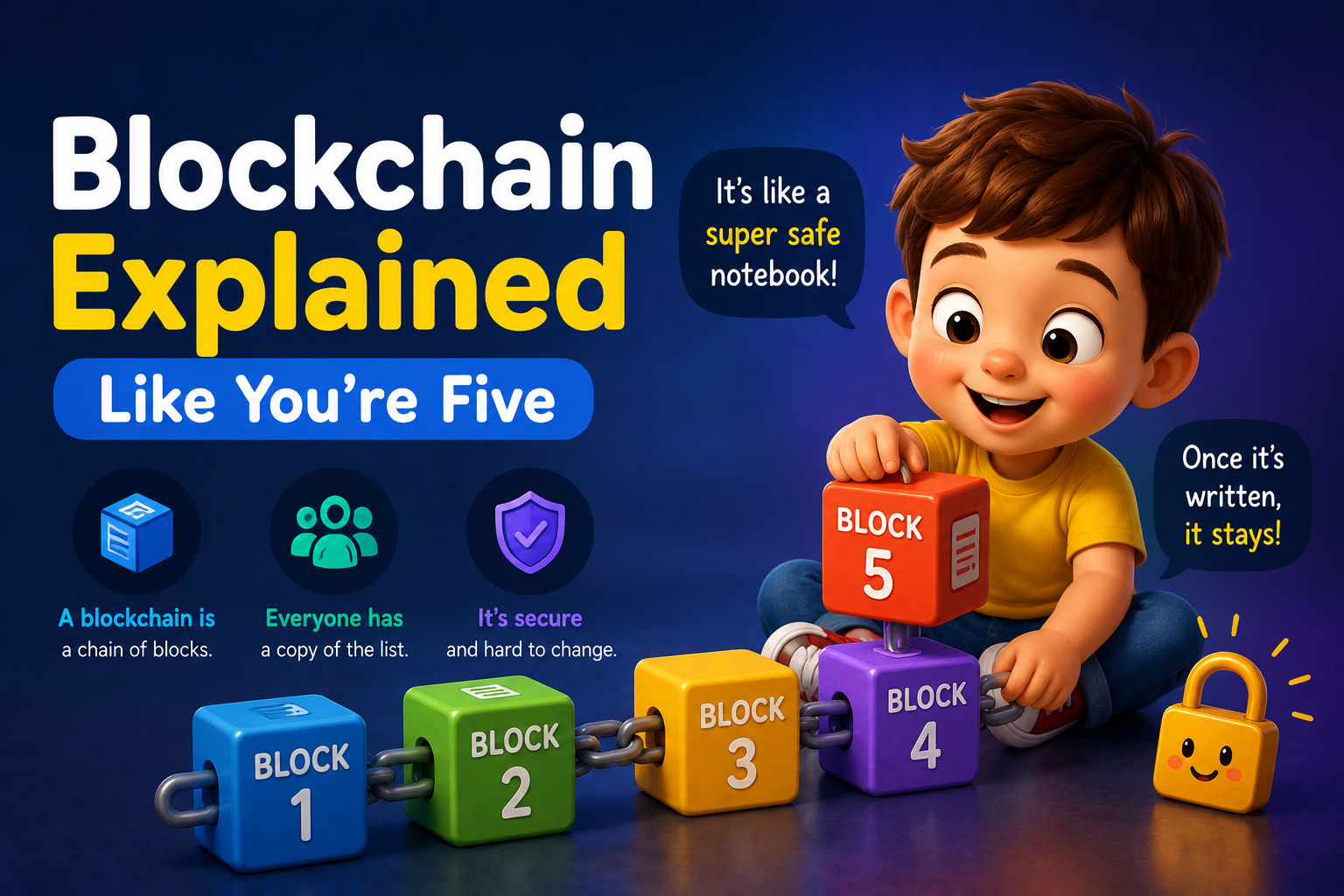
Crypto is internet money that runs on a network instead of through a bank.
When you send £100 by bank transfer, the bank checks if you have the money, debits your account, credits the receiver’s account, and updates a ledger they alone control. The bank is the middleman. They charge for the service, can freeze the transfer, and can refuse you an account.
When you send 100 USDT in crypto, the same job is done by a network of computers running shared software. They all hold a copy of the ledger. When you sign a transaction with your private key, the network agrees the transfer is valid and updates every copy of the ledger at once. No single party can freeze it. No bank approves it. The cost is a small network fee — usually a few cents.
That’s the entire trick. Money that moves without permission, on infrastructure no single party owns.
What you can do with it:
- Send value across borders in minutes for pennies
- Hold an asset (like Bitcoin) that nobody can print more of
- Earn yield on stablecoins outside the banking system
- Trade thousands of assets 24/7 without a broker
- Build apps that move money without a bank in the middle
What you cannot do with it:
- Reverse a transaction (if you send to the wrong address, the money is gone)
- Call customer service to recover a lost password (lose your keys, lose the coins)
- Avoid tax (every disposal is taxable in most jurisdictions)
Crypto is not magic. It’s a different infrastructure for the same thing money has always done. The mistake beginners make is thinking the rules of “money you control” are the same as the rules of “money the bank controls”. They are not.
Why Bitcoin exists and why people care
Bitcoin came first. Everything else followed. To understand crypto, you have to understand why Bitcoin happened.
The Bitcoin white paper was published in October 2008 by someone using the name Satoshi Nakamoto. The timing matters — the global financial system had just exploded. Banks were being bailed out. Central banks were printing money on a scale nobody had seen. A small group of people decided the next financial system needed to be one where no central party could inflate the supply or freeze accounts.
What Bitcoin actually does:
- Fixed supply. Only 21 million Bitcoin will ever exist. No central bank can create more. Every four years the rate of new Bitcoin production halves. Today, well over 19.5 million already exist.
- Open network. Anyone with internet can send and receive. No bank can refuse you.
- Public ledger. Every transaction is recorded on a chain of blocks (hence “blockchain”) that anyone can audit. Nobody can fake a balance.
- Proof of work. New blocks of transactions are added by miners who burn computing power to solve cryptographic puzzles. This makes the network extremely expensive to attack.
Why people care, in 2026:
- Inflation hedge. Bitcoin’s supply can’t be inflated. Government money can. Some people hold Bitcoin as a hedge against currency debasement.
- Censorship resistance. People in countries with capital controls, sanctions, or seized bank accounts use Bitcoin to hold and move value. Argentina, Venezuela, Nigeria, parts of Africa — Bitcoin is a real tool, not a speculation.
- Asymmetric upside. Even after the price run-ups, the bull case is that Bitcoin’s market cap grows toward gold’s market cap (roughly $15 trillion). If true, the upside from today is still meaningful.
- The exit ramp. A growing number of people simply want a savings instrument that doesn’t lose value to inflation and isn’t controlled by their government.
For a deeper look at Bitcoin specifically, read what is Bitcoin. For the practical “how do I actually own some” answer, how to buy crypto walks through the steps.
You don’t need to be a Bitcoin maximalist to take it seriously. You do need to understand it before you understand anything else in the space, because every other crypto in some way reacts to Bitcoin’s price, narrative, and cycle.
How crypto is different from stocks and bank money
A lot of beginners come from a stock-investing background. They assume crypto works the same way. It doesn’t. Five differences that catch people out.
Crypto trades 24/7. No opening bell, no weekends off, no public holidays. The market never sleeps. This is a feature when you want to react to news at 3am, a bug when you want a weekend without the price moving 20%.
You can hold the asset yourself. With stocks, your shares live in a brokerage account. With crypto, you can move the asset off the exchange to a wallet you control. Nobody can freeze it. Nobody can confiscate it without the keys. This is the entire point of crypto.
No insurance. Bank deposits are insured (up to a limit) by the government. Brokerage accounts are insured for fraud. Crypto wallets and exchanges are not. If you lose your keys, the money is gone. If the exchange collapses, you may get pennies on the dollar in bankruptcy, years later.
Volatility is extreme. Bitcoin can move 10% in a day. Altcoins can move 30%. New tokens can do 100% up and 100% down in a single session. If you’ve never seen your portfolio drop 50% in a month, you don’t yet know if you can handle crypto. Most people find out they can’t.
No fundamental valuation. A stock has earnings, revenue, and assets you can value. A crypto has none of that in the traditional sense. Bitcoin is valued on its narrative as a scarce digital asset. Ethereum on its transaction fee revenue. Most altcoins are valued on… vibes. This is why prices can move so violently.
If you’ve come from stocks, the closest mental model isn’t the stock market. It’s commodities and emerging-market currencies. Trade it with the same caution.
Public and private keys: the only crypto concept you must understand
If you only learn one technical idea, learn this one. It’s the entire foundation.
A public key is your account address. You can share it freely. Anyone can see it. Anyone can send crypto to it. Think of it like an email address or a bank account number you’re happy for anyone to know.
A private key is the password that proves you own the public key. Anyone who has it can spend the crypto in that account. There is no way to recover a lost private key. There is no customer service. There is no email reset.
When you “send” crypto, what actually happens: you use your private key to sign a transaction that says “the owner of address X is sending Y coins to address Z.” The network verifies the signature is valid, checks the balance, and updates the ledger.
Three rules that follow from this:
One. Possession of the private key is ownership. It does not matter what the exchange says. If somebody else has your private keys, those are their coins. This is why “not your keys, not your coins” is the most repeated phrase in crypto. When your coins are on an exchange, the exchange has the keys. You have an IOU.
Two. A leaked private key is unrecoverable theft. If your seed phrase ends up in a phishing site, a malicious browser extension, a photo on your phone that gets hacked — the attacker drains the wallet, signs a clean transaction with your key, and the network records it as legitimate. You cannot reverse it. You cannot complain to the network. The transaction was valid by every rule the network knows.
Three. A lost private key is unrecoverable loss. If you write your seed phrase on paper, your house burns down, and you have no backup — your coins are gone forever. They still exist on the blockchain. Nobody can ever access them. Estimates suggest 3–4 million Bitcoin are permanently lost this way.
Most wallets show you the private key as a 12- or 24-word seed phrase. The phrase generates the private key mathematically. Write it down on paper. Store it somewhere fireproof and secure. Never put it in a cloud document, a photo, an email, or anywhere connected to the internet.
That’s the whole concept. Master it and the rest of crypto makes sense.
Wallets: hot vs cold
Now you know what a private key is, the wallet conversation makes sense. A wallet is software (or hardware) that stores your private keys and lets you sign transactions.
There are two big categories.
Hot wallets are software wallets connected to the internet — MetaMask in your browser, BitGet Wallet on your phone, Phantom for Solana. The private keys are stored on the device. They’re convenient — you can connect to dApps, sign transactions in two taps, swap assets in seconds. They’re also exposed — if the device is compromised (malware, malicious browser extension, fake wallet drainer site you accidentally signed), the keys can be drained.
Cold wallets are hardware devices that hold the private keys offline — Ledger Nano X, Ledger Stax, Trezor Model T. The keys never touch an internet-connected device. To sign a transaction, you connect the hardware wallet to a computer or phone, review the transaction details on the device’s screen, and physically press a button to approve. If your computer is compromised, the attacker can’t sign anything without the device’s button press.
The honest version of when to use which:
| Use case | Storage | Why |
|---|---|---|
| Day trading float on exchange | Exchange account | You need it instantly accessible |
| Small holdings (£200–£1,000) | Hot wallet | Hardware wallet not worth the cost |
| Mid- to long-term holdings (£1,000+) | Hardware wallet | The security upgrade pays for itself many times over |
| dApp interactions (DeFi, NFTs) | Hot wallet | Hardware wallet possible but workflow gets clunky |
The hardware wallet I use is the Ledger Nano X. Roughly £130. Buy direct from Ledger (affiliate link). Never eBay or Amazon Marketplace — tampered devices are a real attack vector.
For the full breakdown of hot vs cold including the threat model behind each, read hot vs cold wallet. For the complete self-custody playbook, how to store crypto safely is the deeper post.
Exchanges: what they do, which to pick
A crypto exchange is where you swap fiat money for crypto, or one crypto for another. The exchange holds your funds in its own wallets and gives you a balance in your account. You trade against other users on the platform.
There are two main types.
Centralised exchanges (CEX) — BitGet, Binance, Coinbase, Kraken. A company runs the platform, holds custody of your funds, provides KYC-compliant fiat on-ramps, and offers products like spot, futures, copy trading, and yield. Easy to use. Custodial — meaning you do not control the private keys to the assets you “own” on the platform.
Decentralised exchanges (DEX) — Uniswap, PancakeSwap, Jupiter. No company runs them. You connect a wallet, trade peer-to-peer with liquidity pools, and the assets never leave your custody. Harder to use. Non-custodial. Often higher fees and slippage on small markets. No fiat on-ramp — you need crypto first.
For 95% of beginners, the right starting point is a centralised exchange. The on-ramp from fiat is the bottleneck, and DEXs can’t help with that. Use a CEX to acquire crypto, then move to a wallet or DEX for everything after.
The CEX I use is BitGet. It wins on fees, copy trading, native bot suite, and Proof of Reserves transparency. The full step-by-step on how to actually buy something there is in how to buy crypto.
What to check before signing up to any exchange:
- Available in your country. BitGet is geo-blocked in the US. Binance restricts certain regions. Coinbase doesn’t operate everywhere.
- Proof of Reserves. Can you verify the exchange has the funds it claims to hold? BitGet publishes monthly. Coinbase publishes none and relies on regulatory audits. Binance publishes quarterly.
- Fees. Spot maker/taker rates. Withdrawal fees. Card on-ramp markups.
- Security history. Has the exchange been hacked, frozen withdrawals, or lost customer funds?
Compare options head-to-head in best crypto exchanges.
The order to actually learn things
Most beginner content throws everything at you at once. Don’t do that. Crypto is a stack. Learn it in order or you’ll skip the foundations and overpay later.
This is the order I’d take a friend through if they wanted to be solid in six months.
Month 1 — Bitcoin and exchanges.
Learn what Bitcoin is and why it exists. Open an account on one major exchange. Complete KYC. Buy £50–£200 of Bitcoin. Watch how it moves. Read about the previous bull and bear cycles. Don’t trade. Don’t touch altcoins. Just hold.
Month 2 — Spot trading and wallets.
Make ten small spot trades to learn the interface. Get comfortable with market vs limit orders, slippage, fees. At the same time, open a hot wallet (BitGet Wallet, MetaMask). Move a small amount of crypto from the exchange to the wallet and back. Learn what gas fees are and how to estimate them.
Month 3 — Self-custody and Ethereum.
Buy a hardware wallet. Set it up properly. Practise sending a tiny amount to it from the exchange. Confirm the address, confirm the network, confirm it arrived. Move 80% of your holdings to it. Now buy a small amount of Ethereum. Learn the difference between Bitcoin and Ethereum at the network level.
Month 4 — Earn and stablecoins.
Learn about stablecoins (USDT, USDC) and how they’re pegged. Park 10–20% of your portfolio in BitGet Earn flexible savings to start earning yield. Understand the difference between flexible and locked products, and the risks of high-APY promos.
Month 5 — Bots and copy trading.
Now you understand the assets, look at automation. Run a small grid bot on BTC/USDT through the BitGet spot trading guide. Copy one trader with a small allocation. Watch how each performs through a real market move.
Month 6 — Tax, advanced products, review.
Export your trade history. Import to Koinly. Get a real tax picture. Review what worked and what didn’t. By now you’ve seen one mini bull and one correction. You know what 20% down feels like in your own portfolio. Now you can think about adding altcoins, staking, DeFi.
Futures and leverage: never in the first year. Some say never at all. The fastest way to wipe out an account is to short something or 20x long it. The slowest way to build a portfolio is to do nothing and just hold. Pick which speed you want.
If you skip steps, you pay for the missing steps later — usually in losses, sometimes in losing the whole portfolio.
Ready to take month one?
BitGet is the exchange I use. Sign-up takes 90 seconds, KYC usually clears same day, and the fees are among the lowest in the industry.
Affiliate link. I may earn a commission at no extra cost to you.
Common beginner mistakes I see every cycle
If I had a Bitcoin for every time I’ve watched a beginner make one of these. The pattern is so consistent it’s funny.
FOMO buying the top
The market runs hard. Twitter is on fire. The news is breathlessly covering Bitcoin. You buy. Two weeks later, you’re down 30%. You panic-sell. Then the price runs again and you missed it.
The fix: dollar-cost average. Buy a fixed amount every week or month, regardless of price. Boring. Statistically beats almost every “I’ll time the dip” approach an amateur tries.
Using leverage in the first year
You see someone made 400% in a day on a 20x long. You try it. The market moves 5% against you and you’re liquidated. That’s not bad luck, that’s the maths. Leverage amplifies both gains and losses, and the losses come faster because liquidation engines don’t wait.
Stay on spot. For a long time. The traders who survive five years rarely touch high leverage and never on a regular basis. The ones who don’t survive are the ones who treated 100x as a feature, not a warning.
Leaving everything on the exchange
You buy. You leave the coins in your exchange account. Six months later the exchange has problems. Withdrawals freeze. Six months after that, bankruptcy filings start. You get pennies on the dollar in two years.
This happened to Celsius users. Voyager users. FTX users. BlockFi users. Genesis users. The people who came out fine had moved long-term holdings off the platform before things broke. Self-custody isn’t paranoia. It’s the rule that’s saved the most people across the most cycles.
No backup of the seed phrase
You set up a wallet. You write the seed phrase on a Post-it. The Post-it goes missing. Your phone breaks. Your coins are gone forever.
The fix: write the seed phrase on paper. Store it somewhere fireproof. Make a second copy in a separate location. Some people use metal seed plates (Cryptosteel, Billfodl). For amounts over a few thousand, worth the £60.
Falling for shillers
A YouTuber with a million subscribers tells you a small-cap token is the next 100x. You buy. The token dumps. The YouTuber was paid to promote it. The YouTuber doesn’t even hold it. You learn the hard way.
Anyone telling you a specific small-cap coin is going to moon is either selling you something or is wrong. The bigger the promise, the bigger the lie. Trust Bitcoin’s track record, trust Ethereum’s, be skeptical of everything else.
No 2FA
You think “I’ll set up 2FA later”. You don’t. Your email is phished. The attacker uses the email to reset your exchange password. The account is drained. Support cannot help.
2FA on day one. Authenticator app, never SMS. Backup codes stored offline. Same setup on the email, the exchange, and the wallet.
Trading the news
You read a headline. You buy or sell based on it. By the time you’ve read the headline, the market has priced it in. You’re trading against people who saw the news three hours ago, or six hours ago, or who had a leak. You’re the exit liquidity.
News-driven trades work occasionally and lose money structurally. Pick a thesis and a time horizon and ignore daily headlines.
Money rules: only invest what you can lose, position sizing
The single most-broken rule in crypto. Everyone says it. Nobody applies it.
Here’s the operational version.
Only invest money you can lose entirely. Not “lose for a few months”. Lose. Permanently. To zero. If that number is £200, that’s your maximum crypto allocation. If you can’t bear to lose £200, stop reading and put it in a savings account.
Position sizing per asset. Within your crypto allocation, don’t put more than:
- 50–60% into Bitcoin
- 20–30% into Ethereum
- 10% into stablecoins
- 5% maximum into any single altcoin
- 1% maximum into anything you can’t explain to a friend in one sentence
Position sizing per trade. If you’re actively trading rather than just holding, no single trade should risk more than 1–2% of your portfolio. That means if you have £5,000, you accept losses of £50–£100 per trade as the cost of doing business. If a trade goes worse than that, your stop-loss should have already triggered. If you don’t use stop-losses, set one before every trade.
Never borrow money to invest in crypto. Don’t credit-card it. Don’t remortgage the house. Don’t take a payday loan. Every cycle, someone does this on margin and is wiped out. Crypto can be the best return in the market or the worst. You don’t get to pick which.
Liquidity buffer. Keep 3–6 months of living expenses in fiat or stable savings, outside crypto, before you put a meaningful amount in. The buffer is what stops you from panic-selling in a downturn because you need rent money.
If you follow these rules, the worst outcome of crypto is “you lose your allocation”. You go on living your life. If you ignore them, the worst outcome is a personal financial crisis. There is no middle ground.
Tax basics
Crypto is taxed in most countries. The rules vary, the basic shape is similar.
In the UK, US, Australia, Canada, and most EU countries, crypto is treated as property for tax purposes. That means every disposal — sale to fiat, swap to another crypto, spending crypto — is a capital gain or loss event.
The taxable events most beginners miss:
- Crypto-to-crypto swaps. Selling BTC for ETH is a sale of BTC at market value, even though you didn’t touch fiat.
- Staking rewards. Income at the value when credited.
- Airdrops. Income at the value when claimed.
- Earn product yield. Usually income.
- Bot trades. Each entry is a disposal.
What you actually do:
- Export trade history as CSV from each exchange quarterly. BitGet has a Reports section that gives you everything as separate files.
- Import to a tax tool. Koinly and CoinTracker are the two I’ve used. Free tiers handle small portfolios.
- Generate the tax report at year-end. File it or hand it to your accountant.
In the UK, HMRC’s crypto guidance is the official source. In the US, IRS Form 8949 and Schedule D. Other countries — check local guidance.
The rule that saves the most money: keep records as you go. The time cost of a quarterly CSV export is minutes. The time cost of reconstructing two years of trade history when you get a tax notice is days.
Resources to learn from (and ones to avoid)
This space is full of bad information. The people making the most noise are usually selling something. Here’s the source list I actually use.
Worth your time:
- CoinGecko — clean price data, market caps, historical charts. Free.
- CoinMarketCap — similar to CoinGecko. Use both, sometimes one has cleaner data on a specific asset.
- Coin Bureau (YouTube). Long-form, level-headed coverage. The closest thing to mainstream financial media in crypto. I’ve contributed work alongside the team.
- The Block, CoinDesk. Crypto news outlets. Some bias, but the breaking news is mostly accurate.
- Official project documentation. Want to understand Ethereum? Read ethereum.org. Want to understand Bitcoin? Read the white paper. The official sources are usually clearer than the third-party explainers.
- On-chain analytics: Glassnode, Dune Analytics. Once you have a real portfolio, on-chain data tells you what the price chart can’t.
Treat with skepticism:
- Crypto Twitter. A torrent of shilling, paid promotion, and survivorship bias. Useful for sentiment, dangerous for advice. Follow people who have been correct before they got famous.
- Telegram and Discord shilling groups. Nearly always pump-and-dump operations. If a group is telling you to buy a specific small-cap, the people running it are the ones selling.
- YouTube “price prediction” videos. Designed for clicks. The thumbnail says $1 million Bitcoin. The video says “could happen”. The viewer hears “will happen”. Don’t make trading decisions on these.
- Anyone promising fixed returns. “10% a week, guaranteed” is a Ponzi scheme. Always. There is no exception.
If you want a small inner circle, Trade Travel Chill is the trader community I’m part of. There are good ones and bad ones — pick on track record and culture, not marketing.
Ready to take month one?
If this post saved you weeks of YouTube research, signing up through my referral is the easiest thanks. Costs you nothing.
Affiliate link.
Frequently asked questions
Is crypto a good investment for beginners?
It can be, with two conditions: you only invest what you can afford to lose entirely, and you start with Bitcoin and Ethereum rather than small-cap altcoins. Treat it as a high-risk allocation (1–10% of investable net worth) for the first year. If you can hold through a 50% drawdown without selling, you’ve passed the real test.
How much should a beginner put into crypto?
A first allocation of £50–£500 is enough to learn the workflow and feel real market moves. After six months of experience and surviving a correction, a reasonable allocation is 1–5% of investable net worth. Going above 10% before you have at least a year of experience is a recipe for stress-selling at the wrong time.
Is Bitcoin the same as cryptocurrency?
Bitcoin is one specific cryptocurrency — the first one, and still the largest. Cryptocurrency refers to the whole asset class, which includes Bitcoin, Ethereum, stablecoins, and thousands of other tokens. All Bitcoin is crypto, but not all crypto is Bitcoin.
Do I need a wallet to buy crypto?
Not initially. When you buy on an exchange, the exchange holds the coins for you in their wallets. You only need your own wallet when you want to move coins off the exchange — usually for long-term storage on a hardware wallet, or to interact with DeFi apps.
Can I lose all my money in crypto?
Yes. Crypto prices can fall 70–90% in a bear market. Individual altcoins can go to zero. Exchanges can collapse with customer funds. Wallets can be hacked. Self-custody mistakes can lose seed phrases. The combined risk is much higher than stocks. Treat the allocation as money you can afford to lose entirely.
Is crypto legal?
In most countries, yes. Specific products (futures, certain stablecoins, certain exchanges) face regulation that varies by jurisdiction. The US, UK, EU, and most G20 countries allow individuals to hold and trade crypto with tax reporting requirements. A small number of countries (China, Bangladesh, a few others) restrict it more heavily. Check your local rules before signing up to an exchange.
What’s the difference between Bitcoin and Ethereum?
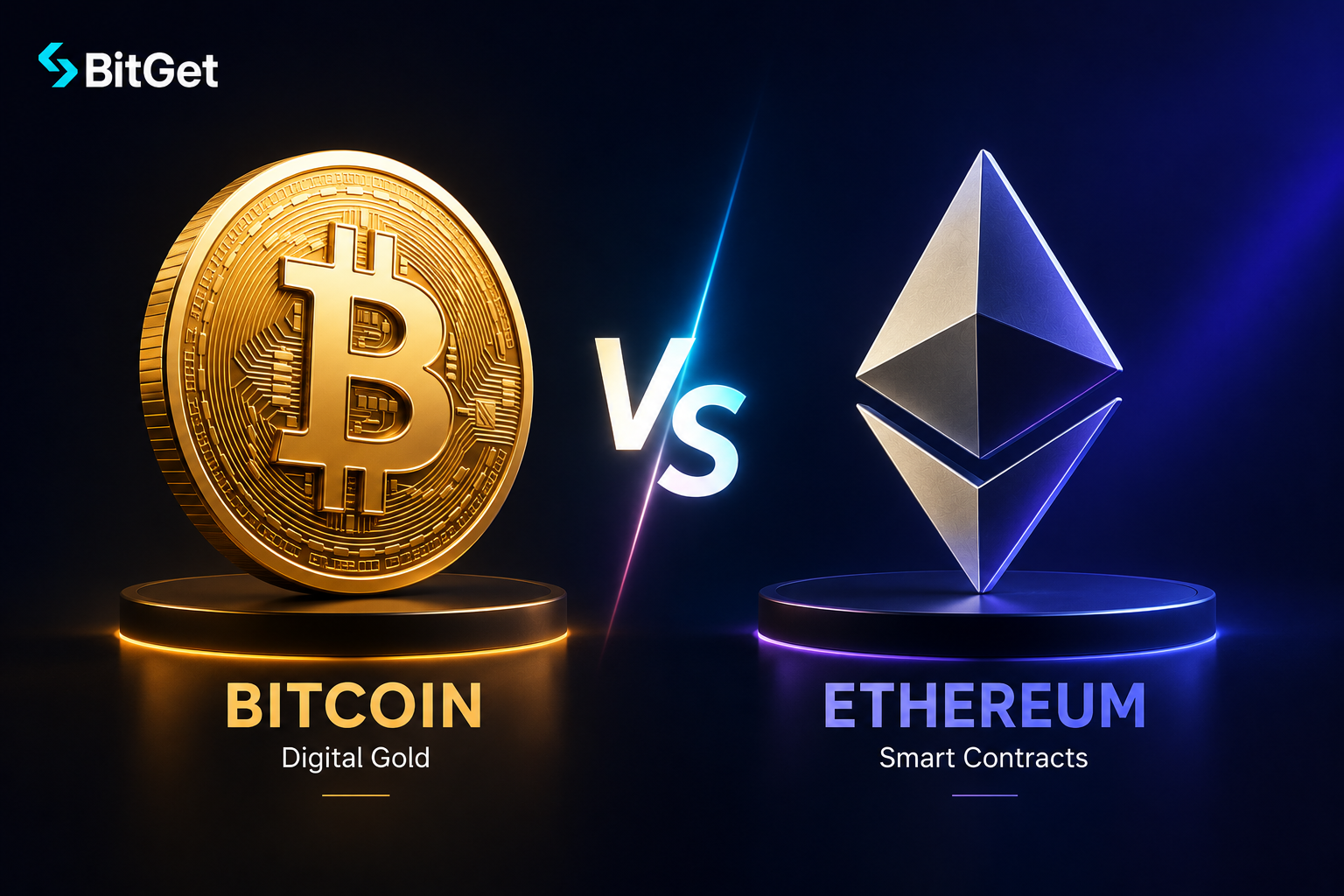
Bitcoin is digital scarcity — fixed supply, simple ledger, primary use case is store of value. Ethereum is a programmable network — variable supply, smart contracts, primary use case is hosting decentralised applications. Bitcoin is gold; Ethereum is closer to a global computer. Most portfolios hold both for different reasons.
What is a stablecoin?
A stablecoin is a crypto pegged to a fiat currency, usually the US dollar. USDT (Tether) and USDC (Circle) are the two main ones. One USDT is designed to always equal one US dollar. Stablecoins are used to park value between trades, earn yield without exposing yourself to crypto price moves, and move dollars between exchanges and wallets cheaply.
Final word
Crypto is not as complicated as the YouTubers want it to be. It’s not as life-changing as the influencers claim either. It’s a new financial infrastructure with real uses, real risks, and an industry full of people trying to take your money.
If you remember three things from this post: own Bitcoin before anything else, learn what private keys actually mean, and never put in money you can’t afford to lose. Get those right and you’ve already beaten the median beginner.
The rest is patience. Crypto rewards people who hold through cycles and punishes people who chase headlines. The boring strategy is the winning one. The flashy strategy is the loud one.
If you want the next step — actually buying coins, setting up the exchange, securing the wallet — start with how to buy crypto and work outward.
Right — over to you.
Related posts
- How to Buy Crypto: The Beginner’s Walkthrough
- BitGet Review: The Crypto Exchange I Actually Use
- How to Store Crypto Safely: The Self-Custody Guide