Ask ten retail traders what the difference is between USDT and USDC and you’ll get three answers, two shrugs, and one person telling you they’re identical and you’re overthinking it. They are not identical. After six years of moving money between exchanges, holding stables in DeFi, and using both coins to park profits during bear markets, I’ve got firm opinions on when to use which one. This post is the long version of those opinions, with the receipts.
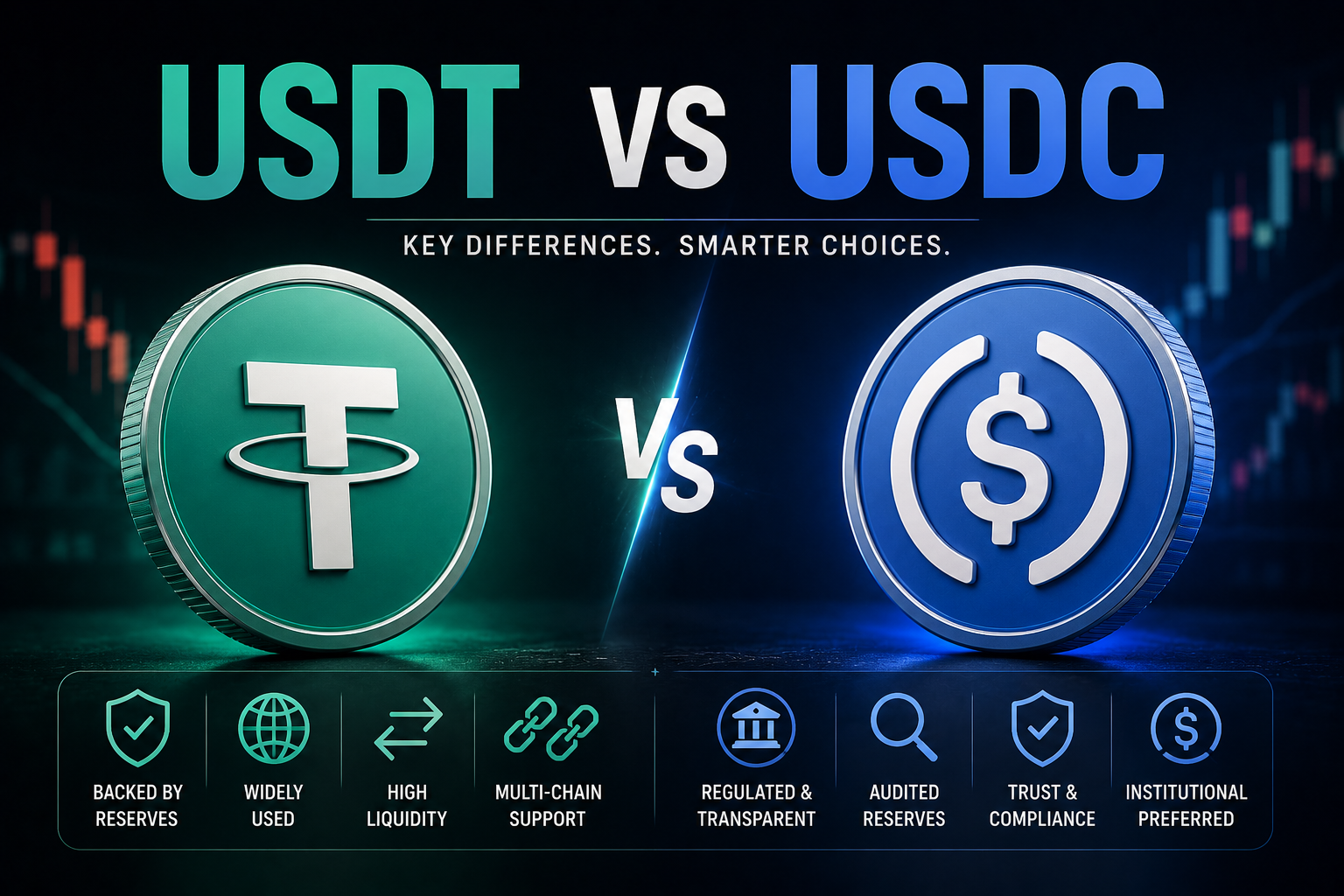
Short answer: USDT (Tether) and USDC (Circle) are both US-dollar stablecoins designed to trade 1:1 with the dollar. USDT is bigger (around $120B+ market cap), has more trading pairs, and is cheaper to move on TRC-20. USDC is smaller (around $40B+ market cap), more regulated, more transparent on reserves, and the default for institutional use. I use USDT for trading. I use USDC for longer holds and DeFi.
Open a BitGet account to trade either → (referral link)
Key takeaways
- USDT is roughly 3x the size of USDC by market cap — USDT around $120B+, USDC around $40B+, with the global stablecoin market crossing $48 trillion in transaction volume across the past year.
- USDC publishes monthly attestation reports from a Big Four firm. USDT publishes quarterly attestations from BDO. Different cadence, different depth.
- USDC reserves sit in a BlackRock-managed money market fund (the Circle Reserve Fund) plus cash at regulated US banks. USDT’s reserves are a mix of US Treasuries, secured loans, Bitcoin, gold, and other assets.
- USDC de-pegged to $0.87 in March 2023 when Silicon Valley Bank failed. USDT has wobbled below peg multiple times, most notably in May 2022 during the Terra collapse. Both recovered.
- For raw trading speed and cheapest fees, TRC-20 USDT wins. For DeFi, regulation, and institutional comfort, USDC wins.
TL;DR — USDT vs USDC at a glance
If you only read one section, read this one.
| USDT (Tether) | USDC (Circle) | |
|---|---|---|
| Issuer | Tether Limited | Circle (with Coinbase) |
| Launched | 2014 | 2018 |
| Market cap | ~$120B+ | ~$40B+ |
| Daily volume | $50B+ | $5B+ |
| Reserve audit | Quarterly attestation (BDO) | Monthly attestation (Big Four) |
| Reserve detail | T-bills, cash, BTC, gold, secured loans | T-bills, cash in regulated banks |
| Regulation | Mixed — some MiCA delisting in EU | GENIUS Act compliant, MiCA approved |
| Best chain for low fees | TRC-20 (Tron) | Solana or Base |
| ERC-20 fee (rough) | $5–25 in gas | $5–25 in gas |
| TRC-20 fee (rough) | ~1 USDT | Not native (limited) |
| Yield on BitGet Earn | Yes (flexible + fixed) | Yes (flexible + fixed) |
| DeFi support | Wide but uneven | Deepest in DeFi |
| De-peg events | May 2022 (Terra), Oct 2022, brief | March 2023 (SVB failure) |
| Use case | Trading, exchange transfers | Longer holds, DeFi, payments |
Now the long version. Skip to the section that matters for you.
What stablecoins actually are
Before comparing the two, the basics. A stablecoin is a cryptocurrency designed to hold a fixed value, usually $1. Instead of swinging 10% in a day like Bitcoin, a stablecoin is meant to sit at one dollar — give or take a fraction of a cent — regardless of what the broader market is doing.
There are three flavours:
- Fiat-backed stablecoins. Each token in circulation is meant to be backed by one US dollar (or equivalent) held in reserve. USDT and USDC both fall here.
- Crypto-backed stablecoins. Backed by other crypto held as collateral. DAI is the main one. Less relevant to retail traders day-to-day.
- Algorithmic stablecoins. Backed by code and arbitrage incentives rather than reserves. Terra/UST was the famous one. It collapsed in May 2022 and wiped out $40B+ in a week. Don’t touch these.
The whole point of a stablecoin is to give you a way to sit in dollars on a blockchain without exiting back to your bank. You can park profits during a market drop. You can move money between exchanges fast. You can earn yield on dollars without going through TradFi. You can pay people in crypto without making them eat volatility.
Both USDT and USDC do this. The differences are in who runs them, what backs them, and how transparent they are about it. That’s the rest of this post.
If you’re brand new to crypto and don’t even own any yet, the how to buy crypto walkthrough covers the basics first.
USDT (Tether) explained
USDT is the original stablecoin. It launched in 2014 under the name “Realcoin” before rebranding to Tether the same year. It is issued by Tether Limited, a company headquartered in the British Virgin Islands and operationally linked to the iFinex group — the same group that runs the Bitfinex exchange.
That last sentence has caused most of the controversy that’s surrounded Tether for a decade. The relationship between Bitfinex and Tether has been the subject of investigations by the New York Attorney General, the CFTC, and various journalists. We’ll get to the receipts shortly.
As of writing, USDT has a market cap of around $120 billion-plus. That makes it the third-largest crypto by market cap behind Bitcoin and Ethereum, and the largest stablecoin by a wide margin. According to CoinGecko, USDT trades at over $50 billion in daily volume on a normal day — more than any other crypto, including Bitcoin. Most of that volume is exchange-to-exchange transfers and trading pair quotes.
USDT runs on more chains than any other stablecoin. The big three are:
- TRC-20 (Tron): the cheapest and most popular network for retail. Transactions cost roughly 1 USDT and confirm in seconds. If you want the full breakdown, the how to buy Tron post covers the network.
- ERC-20 (Ethereum): the most secure and most accepted in DeFi, but transactions cost $5–25 in gas when the network is busy.
- Other chains: Solana, Polygon, Avalanche, BSC, Arbitrum, Optimism, and a dozen more.
USDT is the default trading pair on almost every centralised exchange. If you look at BitGet, Binance, Bybit, OKX, or any other major venue, the vast majority of spot pairs are quoted in USDT. That dominance is why even traders who prefer USDC end up holding USDT during active trading sessions.
The full breakdown of how USDT works, its history, and how to actually use it is in the what is USDT explainer.
USDC (Circle) explained
USDC launched in 2018 as a joint venture between Circle Internet Financial and Coinbase, under an entity called the Centre Consortium. The Consortium was dissolved in 2023 and Circle now solely issues USDC, though Coinbase still earns a share of the reserve interest as a distribution partner.
Circle is headquartered in Boston and Dublin. It went public on the New York Stock Exchange in 2025 under the ticker CRCL. That listing matters because it means Circle now files financial statements with the SEC — adding a layer of transparency USDT does not have.
As of writing, USDC has a market cap of around $40 billion-plus. That’s roughly one-third the size of USDT. Daily volume sits in the $5–10 billion range — much lower than USDT’s $50 billion, but still substantial.
USDC’s pitch from day one has been transparency and regulation. Circle publishes monthly attestation reports from a Big Four accounting firm (Deloitte). The reports detail the composition of reserves to the dollar. You can read them on the Circle Transparency page.
USDC runs on fewer chains than USDT — Ethereum, Solana, Base, Polygon, Avalanche, Arbitrum, Optimism, and a handful of others. The two cheapest practical options for retail are Solana and Base. Both cost cents per transaction.
USDC is the dominant stablecoin in DeFi. Aave, Compound, Curve, Uniswap, and most major protocols quote pairs in USDC. If you’re earning yield on stables through DeFi rather than a centralised exchange, you’re almost certainly holding USDC.
The full breakdown is in the what is USDC explainer.
Reserve composition compared
This is the question that actually matters. If a stablecoin claims to be backed 1:1 by dollars, what is it actually backed by?
Both Tether and Circle publish reserve breakdowns. The detail and frequency differ.
USDT reserves (latest public attestation)
According to Tether’s quarterly attestation reports from BDO, USDT reserves break down roughly as follows:
- US Treasury bills: ~65% of reserves. Short-duration T-bills held either directly or through repurchase agreements.
- Cash and bank deposits: ~5–10%.
- Secured loans: ~5–8%. Loans made to third parties, secured by collateral.
- Bitcoin: ~3–5%. Yes — actual BTC, treated as a reserve asset.
- Gold: ~3–5%.
- Other investments: the remainder. Corporate bonds, money market funds, “other”.
The total reserve value reported has consistently exceeded the total USDT in circulation since 2022 — Tether claims a surplus that hovers between $5B and $10B above what would be needed to back every USDT 1:1. You can verify the most recent Tether attestation on their site.
The criticism that still hangs over USDT is that it’s an attestation, not an audit. An attestation says “as of a specific date, the assets exist.” An audit examines processes, controls, and any related-party transactions. No Big Four firm has done a full audit of Tether. BDO is a top-six firm and the work is credible, but it’s not the same as a full PCAOB-grade audit.
USDC reserves (latest public attestation)
USDC reserves break down very differently:
- Circle Reserve Fund (managed by BlackRock): ~80–85% of reserves. This is a SEC-registered money market fund holding short-duration US Treasuries. You can see the fund’s holdings on the BlackRock website.
- Cash deposits at regulated US banks: ~15–20%. Held at “Globally Systemically Important Banks” (G-SIBs) like BNY Mellon, JPMorgan, and others.
That’s it. No BTC. No gold. No secured loans. No corporate bonds. Just T-bills and cash in big banks.
Circle publishes the monthly attestation reports from Deloitte on its transparency page. The reports break down holdings to the CUSIP level for the T-bills.
The trade-off: USDC has a simpler, more conservative reserve mix. USDT has a wider mix that includes assets that fluctuate in value (BTC, gold). In a bull market, the BTC reserves help Tether’s bottom line. In a bear market, they’re a vulnerability. Circle’s structure eliminates that variable.
For long-term holds where I care about reserve quality, USDC wins. For trading where I just need the peg to hold for the next 48 hours, both are fine.
Regulatory status compared
This is where the gap has widened over the past few years.
USDC and regulation
Circle has positioned USDC as the regulated stablecoin from the start. The company holds money transmitter licences in 49 US states, an EMI licence in the EU, and is one of the few stablecoin issuers approved under the EU’s Markets in Crypto-Assets (MiCA) regulation.
In 2025, the US passed the GENIUS Act — the first comprehensive federal stablecoin framework. USDC was already structured to comply with the Act’s requirements: 1:1 backing by cash and short-duration Treasuries, monthly attestation, segregated reserves, and bankruptcy-remote structure. Circle was one of the first issuers granted federal payment stablecoin status under the new law.
In the EU under MiCA, USDC is one of a small number of stablecoins approved for unrestricted trading. Several major exchanges had to delist non-compliant stablecoins for EU users when MiCA enforcement kicked in.
USDT and regulation
Tether’s regulatory position is messier. The company is registered as a financial business in El Salvador and the British Virgin Islands but has historically resisted operating under US or EU stablecoin frameworks.
Under MiCA, Tether opted not to seek issuer authorisation in the EU. Several EU-licensed exchanges delisted USDT pairs for EU users in 2025 as a result. Tether’s position is that the MiCA reserve requirements (75% of reserves must be in EU bank deposits) are too restrictive — they say the rules force concentration risk rather than reducing it.
Under the US GENIUS Act, Tether has not registered as a federal payment stablecoin issuer, though the company has stated it intends to launch a separate US-domiciled, GENIUS-compliant stablecoin for US users.
The result: USDC is welcome anywhere. USDT is restricted or delisted in some EU venues and faces ongoing scrutiny in the US. For traders outside those jurisdictions, the practical effect is zero. For users inside them, it matters.
What this means for you
If you’re a US or EU retail trader and you want to stay clean of regulatory friction, USDC is the safer default. If you’re trading on a non-US, non-EU exchange and just want the cheapest, deepest stablecoin liquidity, USDT is still the practical choice.
Supported chains compared
Both stablecoins live on multiple blockchains, but the spread is different.
USDT chains
USDT exists on more than ten chains. The major ones for retail:
- Tron (TRC-20): the cheapest. About 1 USDT per transfer, confirms in 3–5 seconds. The default for cross-exchange transfers.
- Ethereum (ERC-20): the most secure, the deepest DeFi support, the most expensive. Gas fees vary from $2 to $30 depending on network congestion.
- Solana: fast and cheap. Under a cent per transfer, confirms in 1–2 seconds.
- BNB Smart Chain (BEP-20): cheap, fast, used heavily on BSC-native DeFi.
- Polygon, Arbitrum, Optimism, Avalanche: all supported, all under a dollar per transfer.
If you’re sending USDT between two exchanges and both support TRC-20, use TRC-20. It is the cheapest path that has ever existed in crypto for moving dollars.
USDC chains
USDC exists on fewer chains but the major ones overlap:
- Ethereum: the deepest USDC liquidity, the most expensive.
- Solana: cheap, fast, growing fast as a USDC home base.
- Base: Coinbase’s L2. Native USDC, lowest fees, deepest integration with Coinbase.
- Polygon, Arbitrum, Optimism, Avalanche, Stellar: all supported.
USDC is not native on Tron, which removes the cheapest cross-exchange path that USDT has.
Practical takeaway
If your two exchanges both support TRC-20, USDT-TRC20 is the cheapest transfer in crypto. If you’re working in DeFi or on Coinbase, USDC on Base or Solana is just as cheap and has lower regulatory risk.
I run both. USDT for exchange-to-exchange. USDC for everything that touches DeFi.
Transaction fees by chain
Real numbers, rounded to the nearest cent or dollar.
| Chain | USDT fee | USDC fee | Confirmation time |
|---|---|---|---|
| Tron (TRC-20) | ~1 USDT | Not native | 3–5 sec |
| Ethereum (ERC-20) | $5–25 (gas) | $5–25 (gas) | 12–60 sec |
| Solana | <$0.01 | <$0.01 | 1–2 sec |
| Base | Not native | <$0.01 | 2–4 sec |
| Polygon | ~$0.01 | ~$0.01 | 2–3 sec |
| BNB Smart Chain | ~$0.20 | ~$0.20 | 3–5 sec |
| Arbitrum | $0.10–0.50 | $0.10–0.50 | 1–2 sec |
| Optimism | $0.10–0.50 | $0.10–0.50 | 1–2 sec |
A few notes:
- Always send to the same network on both ends. If you send USDT TRC-20 to an ERC-20 address, the money is gone. Most exchanges flag this with a warning, but the warning is easy to miss. The BitGet withdrawals post covers the safety checks.
- Some exchanges charge a flat fee on top of the network fee. BitGet charges 1 USDT for a TRC-20 withdrawal. Binance charges 1 USDT. The fee covers gas plus a small margin.
- Internal transfers between exchange users are usually free. Sending USDT from one BitGet account to another is free and instant.
For more on moving crypto cheaply between accounts, the BitGet on-ramp guide covers the full deposit/withdrawal flow.
Yield opportunities — earning on stables
Both USDT and USDC can earn yield. The rate and the platform depend on which one you’re holding.
On centralised exchanges
BitGet Earn supports both. Typical rates for flexible savings sit at 2–4% APY on USDT and 2–4% on USDC. Fixed-term and promotional rates can climb to 8–12% during launches, capped at low deposit limits.
Full breakdown in the BitGet Earn products post and the dedicated BitGet savings walkthrough.
If you’re sitting on stables waiting for a buying opportunity, parking them in flexible savings is essentially free yield. Withdrawal is usually instant, so you can move back to spot the moment the chart moves.
In DeFi
USDC dominates DeFi yield. Aave, Compound, Morpho, and Spark all offer USDC supply yields ranging from 3% to 8% APY depending on demand. USDC is also the most common borrow asset, so supply rates stay relatively stable.
USDT in DeFi exists but is less liquid. Curve’s USDT pools, Aave’s USDT market, and a few others run, but rates are lumpier and the protocols often skew towards USDC.
The general rule: if you want to earn yield on stables through DeFi, hold USDC. If you want yield through a centralised exchange, either works.
The yield farming explained post covers the DeFi side. The passive income crypto breakdown covers the wider landscape.
Trade Travel Chill mention — learning to read stablecoin risk
Knowing which stablecoin to use, and when to rotate out, is part of trading discipline. The traders who got nuked in the Terra/UST collapse weren’t holding the algorithmic stablecoin because it was good — they were chasing 20% yields and ignoring the structural risk.
If you want to actually learn this kind of risk reading — not just from blog posts, but from a community of traders who post their thinking — I’d point you at Trade Travel Chill (affiliate). It’s the trading community I’m part of and the one structured education source I trust. Not free, but real signal in a space drowning in noise.
Which I use for what
After six years and a few uncomfortable lessons, here’s my actual rotation.
USDT for active trading
When I’m actively trading on BitGet, my settlement currency is USDT. The reason is simple: 90% of the pairs I want to trade are quoted in USDT. If I want to switch from BTC to SOL to a mid-cap altcoin and back, USDT is the liquidity that connects them all.
I keep a working balance in TRC-20 USDT for moving between exchanges, and an ERC-20 USDT balance for anything that touches Ethereum DeFi.
USDC for medium-term holds
When I want to sit in stables for weeks or months — waiting for a re-entry, holding profits between cycles, parking dry powder — I rotate to USDC. The reserve mix is simpler. The regulatory position is cleaner. The de-peg risk over a long window is lower in my opinion.
I hold USDC in BitGet Earn flexible savings or in Aave on Base.
USDC for DeFi
Anything that touches DeFi protocols, I hold in USDC. The pools are deeper, the rates are more consistent, and the protocols are USDC-first.
USDT for cross-border transfers
If I’m sending money to someone in another country and they don’t have a sophisticated wallet setup, USDT on TRC-20 is the simplest path. Cheap, fast, and they can offload to their local exchange easily.
The mix
In rough percentages, my stable balance sits roughly 60% USDT (mostly TRC-20, working capital), 40% USDC (medium-term holds + DeFi positions). The split shifts based on what the market is doing.
That’s the rotation. If you only hold one, USDT covers more trading scenarios. If you want one with the cleanest regulatory and reserve position, USDC. There’s no wrong answer for retail — there’s a question of what you’re optimising for.
If you store stables for the long haul, the safest path is a hardware wallet. I keep larger USDC positions on a Ledger Nano X. For the full security playbook, the how to store crypto safely guide is the place to start.
Want to earn yield on USDT or USDC?
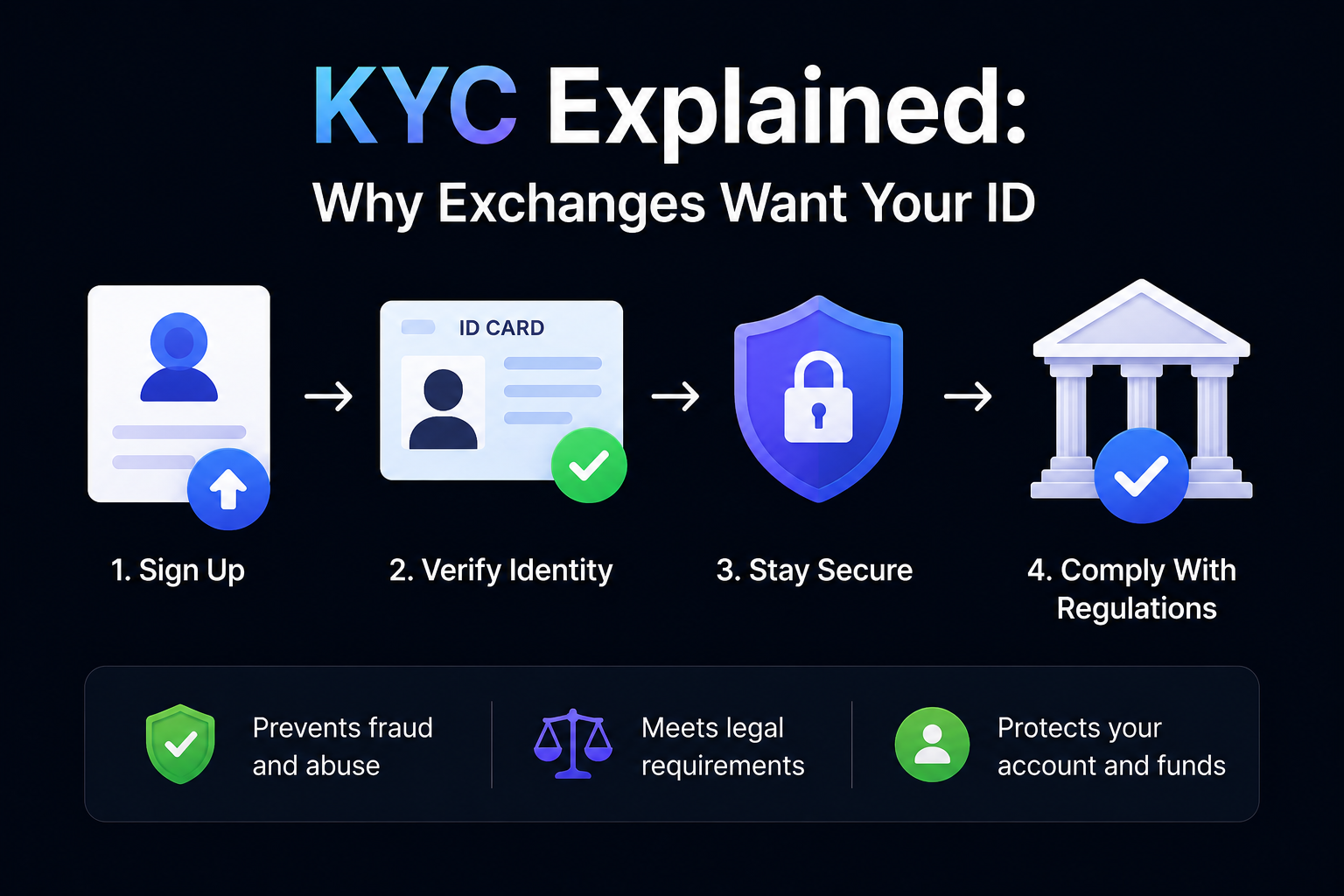
BitGet Earn supports both with flexible savings. Sign-up takes 90 seconds. KYC usually clears the same day.
Affiliate link.
Risks — de-pegging history and what it teaches
A stablecoin is only stable if the market believes it. When that belief cracks, the peg breaks. Both USDT and USDC have lost their peg before. Knowing the pattern is the only way to react fast when it happens again.
USDC de-peg — March 2023
On March 10, 2023, Silicon Valley Bank failed. Circle disclosed that $3.3 billion of USDC’s cash reserves (around 8% of the total) were held at SVB and were not accessible. The market priced in the worst case immediately. USDC traded down to roughly $0.87 over the weekend on some venues — a 13% de-peg.
The recovery came when the FDIC stepped in on Monday morning, March 13, and announced that all SVB depositors would be made whole. USDC returned to peg within 48 hours. Reuters covered the full timeline.
The lesson: even a fully-reserved stablecoin can crack if a chunk of its reserves becomes momentarily inaccessible. The structural fix Circle made afterwards — moving most reserves into the BlackRock-managed Circle Reserve Fund instead of cash deposits at smaller banks — was a direct response to this event.
USDT de-peg events
USDT has wobbled below peg multiple times. The most notable were:
- May 2022, Terra/UST collapse. As UST imploded, panic spread to other stablecoins. USDT traded as low as $0.95 on some venues over a few hours. Tether processed $10B+ in redemptions over a week without breaking the peg back down. Bloomberg covered the redemption wave.
- October 2022, FTX collapse. Brief dip to around $0.98 as exchange-related panic spread.
- 2018, Bitfinex banking issues. Multiple wobbles below peg as concerns about Tether’s banking relationships circulated.
None of these have permanently broken USDT. Every time, the peg has been defended by Tether’s willingness to process redemptions at $1.00 — eventually arbitrageurs buy USDT below $1 and redeem at $1, dragging the market back.
What this teaches
No stablecoin is risk-free. The risk of holding a stablecoin is the risk that the issuer or its reserve structure breaks. The mitigation is:
- Don’t hold huge amounts in one stablecoin for years on end. Rotate. Diversify.
- Have a plan for what you do if your stablecoin de-pegs by 5%. The right answer is usually “do nothing” — most de-pegs recover. The wrong answer is “panic-sell at $0.93”.
- Don’t store all your stables on one exchange. If the exchange goes down with your stables on it, the peg of the underlying token doesn’t matter.
The same logic applies to all assets you can’t print yourself: diversify, custody properly, and don’t sell into panic.
Buying stables on BitGet — quick walkthrough
If you want either coin and don’t have any yet, the fastest path:
- Open a BitGet account. Sign-up link here (referral). KYC usually clears within a few hours.
- Fund the account. Three options: crypto deposit (free), card on-ramp (1–3% fee), or P2P (often the best rate — see the BitGet P2P guide).
- Buy USDT or USDC on spot. Both are listed in dozens of pairs. The simplest path is to buy USDT directly with fiat in the on-ramp, then swap to USDC on spot if you want USDC.
- Withdraw to your wallet or move to Earn. If you want yield, drop straight into BitGet Earn flexible savings. If you want self-custody, withdraw to a Ledger.
The BitGet on-ramp post covers the fiat-to-crypto step in full. The BitGet P2P post covers the cheapest path if you’re price-sensitive.
If you’re cashing out from stables back to your bank account at some point, the how to cash out crypto guide is the next post to read.
Common mistakes — and how to avoid them
The mistakes I see most often, made by traders ranging from total beginners to people who should know better.
Sending on the wrong network
The number one cause of permanent stablecoin loss. You send USDT TRC-20 to an address that only supports ERC-20. The money lands in a wallet that has no key control on the destination chain. Gone.
The fix: always confirm the network on both sides before you click send. BitGet flashes a warning if the network you select doesn’t match the destination address format. Read the warning. Pause. Reread.
Holding stables on a failing exchange
Stablecoins on Mt. Gox, FTX, Celsius, BlockFi, and Voyager all disappeared along with the rest of customer balances. The peg of the underlying coin didn’t matter. The exchange went down and customer funds went with it.
The fix: don’t store large stable balances on exchanges you don’t actively use. If you have $50,000 in USDC parked for “later”, that money belongs in a wallet or in a regulated venue with proper custody. Read how to store crypto safely.
Confusing USDT and USDT.e (or USDC and USDC.e)
When stablecoins are bridged to alternative chains (Avalanche’s USDT.e, for example), the bridged token is not the same as the native one. Bridges have failed. Bridged tokens have de-pegged independently of the underlying. Always use the native-issued version of the stablecoin on the destination chain where possible.
Chasing 20%+ APY on stables
If a platform is offering 20% APY on USDT or USDC during a normal market, the yield is coming from somewhere. Usually that “somewhere” is leverage on borrower side, structured products with hidden risk, or the platform burning through investor capital to acquire users. Anchor Protocol on Terra paid 20% on UST and the whole thing collapsed in 72 hours.
For sustainable yield, expect 3–8% APY on stables in a normal market. Anything materially above that, read the small print before you commit.
Treating both stablecoins as identical
USDT and USDC are not interchangeable in every scenario. If you need to swap them on an exchange there’s usually a tight spread. If you bridge between chains, fees differ. If you trade pairs that only exist in one quote currency, you’ll need to convert.
Knowing which to hold for which use case is the trader’s job. That’s the whole point of this post.
NordVPN note — protecting your account
Most stablecoin losses happen at the account level, not the chain level. Someone gets phished, an attacker logs in, drains funds to their own wallet, and the stablecoin’s reserves never come into it.
I use NordVPN (affiliate) on any device I trade from. Public WiFi networks are where account takeovers happen — attackers run packet sniffers and capture session cookies. A VPN encrypts the traffic. It is not a magic fix but it closes one of the easiest attack vectors.
The bigger security playbook — hardware wallets, 2FA, whitelisted withdrawal addresses, seed phrase storage — is covered in how to store crypto safely.
Pros and cons — both at once
USDT pros and cons
| Pros | Cons |
|---|---|
| Largest market cap and deepest liquidity | Less transparent reserves than USDC |
| Cheapest transfers on TRC-20 | No US/EU regulated issuer status |
| Most trading pairs on every CEX | Delisted in some EU venues post-MiCA |
| Multi-chain support unmatched | History of CFTC enforcement (2021 settlement) |
| Quarterly attestations from BDO | Reserve mix includes BTC and gold (volatile) |
USDC pros and cons
| Pros | Cons |
|---|---|
| Monthly attestation from Big Four firm | Smaller market cap and less liquid pairs |
| Simple reserve mix (T-bills + cash) | No native TRC-20 — fewer cheap transfer paths |
| Regulated under MiCA and GENIUS Act | March 2023 SVB de-peg showed bank concentration risk |
| Dominant in DeFi | Coinbase profit-share creates a soft dependency |
| Issued by NYSE-listed company (Circle) | Less common as a quote currency on non-US exchanges |
My honest take — which one I actually use
If I had to pick one, I’d pick USDT for trading and USDC for storage. That’s the split I actually run.
The reason is practical, not ideological. I trade across multiple exchanges. Most of the pairs are quoted in USDT. The cheapest cross-exchange path is TRC-20 USDT. If I held only USDC, I’d be converting back and forth constantly and paying spread on every conversion.
For longer-term holds — money I’m sitting on for weeks or months — USDC is the better risk-adjusted choice. The reserve quality is higher in my opinion. The regulatory clarity is better. The DeFi yield is more accessible. The de-peg event in 2023 was scary in the moment but the structural response Circle made afterwards (consolidating reserves into the Circle Reserve Fund) was the right one.
If you’re new and you want to pick one to start with — pick the one that matches the exchange you’ll trade on. If that’s BitGet or any non-US exchange, USDT will cover 90% of what you do. If that’s Coinbase or any US-regulated platform, USDC is the native choice.
Right — over to you.
Ready to trade USDT or USDC?
BitGet supports both with deep pairs and Earn yield. Costs you nothing to open an account.
Affiliate link.
Frequently asked questions
Is USDT safer than USDC?
Neither is categorically safer. USDC has more transparent reserves and stronger regulatory standing. USDT has larger circulation and more liquid markets. USDC’s main risk is the bank deposit concentration that caused the 2023 SVB de-peg. USDT’s main risk is the wider asset mix in reserves and the historical lack of a full audit. For long holds I prefer USDC; for trading I use USDT.
Which stablecoin has the lowest fees?
USDT on Tron (TRC-20) is the cheapest in absolute terms — roughly 1 USDT per transfer with sub-5-second confirmation. USDC on Solana or Base is similarly cheap (under a cent) but the on/off ramp from those chains is more limited than Tron’s.
Can USDT or USDC ever drop to zero?
In theory yes, if the issuer’s reserves are wiped out or seized. In practice both are heavily backed by US Treasury bills, which are the most liquid asset in the world. A USDT or USDC collapse would require a coordinated failure of the issuer plus the inability to redeem reserves — a tail-risk event but not impossible. Historically both have recovered from every de-peg they’ve had.
Should I hold USDT or USDC long-term?
For long-term storage (months or years), USDC is my default because of cleaner reserves and regulatory standing. For active trading (days or weeks), USDT covers more pairs and cheaper transfers.
What happens if Tether is shut down?
If Tether’s banking relationships were cut, redemptions would slow or freeze. The market price of USDT would likely drop sharply. Holders who could still redeem would do so at face value; holders who couldn’t would face the secondary market price. This is the structural risk of holding USDT in size.
Is USDC backed 1:1 by dollars?
USDC is backed roughly 85% by short-duration US Treasury bills held in the BlackRock-managed Circle Reserve Fund, and 15% by cash deposits at large US banks. The total value of reserves matches the total USDC in circulation. You can verify this in Circle’s monthly attestation reports.
Can I earn interest on USDT or USDC?
Yes. Centralised platforms like BitGet Earn pay 2–4% APY on flexible savings for both, higher on fixed terms. DeFi protocols like Aave pay 3–8% APY depending on demand. The BitGet Earn products post covers the centralised options.
Why is USDT still the dominant stablecoin?
Network effects. USDT has the most trading pairs, the deepest order books, the widest chain support, and the longest history as a market liquidity provider. Switching costs are real — every exchange and market maker built its plumbing around USDT first. USDC has caught up on quality but not on raw distribution.
What’s the difference between USDT and USDC for DeFi?
USDC is the dominant stablecoin in DeFi. Most lending markets, liquidity pools, and protocols quote in USDC by default. USDT exists in DeFi but the pools are usually shallower and the rates more volatile.
Does it matter which chain I hold USDT or USDC on?
Yes. The token on Ethereum is a different on-chain asset from the token on Solana or Tron — even though they’re both “USDT” or both “USDC”. You can bridge between them but each bridge adds risk. For day-to-day use, hold on the chain that matches where you’ll spend the money.
Related posts
- What is USDT? Tether Explained
- What is USDC? Circle’s Stablecoin Explained
- How to Cash Out Crypto: Withdraw to Bank Account