The first time I yield farmed I made 240% APY for about three weeks. Then the token I’d been earning collapsed 90%, and the LP position I was holding lost a quarter of its value to impermanent loss. Net result: I lost money on a “240% APY” strategy.
That’s yield farming in one paragraph. The headline numbers are real. So are the ways you lose. This post explains what’s actually happening under the hood, where the yield comes from, and why I now keep DeFi to a tiny portion of my portfolio. Some links here are affiliate. I’ll flag them.
Short answer: Yield farming is providing liquidity or tokens to a DeFi protocol in exchange for rewards — usually paid in the protocol’s own token plus a share of trading fees. Headline APYs of 50%, 200%, or 1,000% are real but mostly come from token emissions that dilute the reward token over time. The big risks are impermanent loss (your LP position underperforms simple holding), smart contract exploits (Ronin, Wormhole, Euler, and others have lost hundreds of millions), and yield collapse when emissions end. For most retail users, centralised earn products on a regulated exchange offer 80% of the yield at 5% of the operational risk.
Compare BitGet’s centralised earn products → (referral)
Key takeaways
- Yield farming pays you for providing capital to a DeFi protocol — usually as a liquidity provider (LP) on a DEX or as a lender on a money market.
- Headline APYs of 50-1,000%+ are real but usually dominated by token emissions that dilute over time. The “real” sustainable yield is typically 2-15%.
- Impermanent loss is a real cost. Holding two tokens in an LP often underperforms simply holding the tokens in your wallet.
- Smart contract exploits have lost the DeFi industry over $10 billion across the last few years according to Chainalysis and DefiLlama incident data.
- For most retail users, a centralised exchange’s earn product offers most of the yield at a fraction of the operational complexity and risk.
What yield farming actually is
At the simplest level: you put crypto into a DeFi protocol, the protocol pays you rewards.
The catch is “yield farming” covers a lot of distinct activities under one label, and the risks differ dramatically between them.
The three main categories
1. Lending. You deposit crypto into a money market (Aave, Compound, Morpho). Borrowers pay interest, the protocol takes a cut, you receive the rest. Returns: typically 1-8% on stablecoins, 0.5-3% on majors. This is the most boring and the safest.
2. Providing liquidity to a DEX. You deposit a pair of tokens (e.g., USDC/ETH) into a Uniswap or Curve pool. The pool facilitates trades. You earn a share of trading fees. Returns: typically 5-30%, sometimes more, depending on volume and pool. Risk: impermanent loss.
3. Yield farming with incentives (the “farm”). A new protocol wants liquidity. They pay extra rewards in their own token to anyone who provides capital. Headline APYs can be 100%+ for a few weeks. Risk: the reward token usually dumps once emissions end. Pool composition matters more than the headline number.
The DeFi industry has spent years blending these into bigger products — vault aggregators (Yearn, Beefy), leveraged farms (Pendle, Gearbox), restaking strategies (Eigenlayer-based), and more. The risk multiplies as you layer.
Where the yield comes from (token emissions vs real fees)
This is the question nobody asks loudly enough.
If you’re earning 12% APY in DeFi, where does that money come from? There are three possible sources, and most farms blend them.
Real source 1: Trading fees
A liquidity pool earns fees from every trade against it. On Uniswap V3 with USDC/ETH at 0.05% fee tier, the fee revenue scales with volume. If a pool has $10M TVL and does $100M daily volume, the fee revenue is $50,000 per day — that’s a real 180% APY paid by traders.
This source is sustainable. The volume can drop, but the mechanism is genuine.
Real source 2: Interest from borrowers
In a lending protocol, borrowers pay interest to use the capital you deposited. The protocol takes a cut, you get the rest. The yield scales with demand to borrow. When borrow demand drops, your yield drops.
This source is also sustainable. The borrower has to pay.
Source 3: Token emissions (the unsustainable one)
This is where the eye-catching APYs come from. The protocol mints new tokens (or unlocks tokens from a reserve) and pays them out to liquidity providers. The “APY” is the dollar value of those tokens at the current price.
The problem: those tokens are pure dilution. Every new token reduces the value of every existing token. The headline APY is the rate at which the protocol is printing currency to pay you.
If everyone takes their farm rewards and dumps the token, the token price collapses and the APY drops. If the protocol generates real revenue, the token might hold value and the emissions become “real” rewards. But most farm tokens fall into the first category, not the second.
How to tell the difference
Before depositing into any farm, ask: what percentage of the headline APY is fees/interest, and what percentage is token emissions?
- If 80%+ is fees/interest: sustainable. Yield will fluctuate with market activity but won’t collapse.
- If 80%+ is emissions: time-limited. Your effective return depends on when the emissions end and where the token price goes.
Most farm dashboards show the breakdown. If they don’t, treat the whole APY as emissions until proven otherwise.
The big DeFi protocols (brief overview)
Quick rundown of the main protocols you’ll encounter. Not exhaustive — there are hundreds — but these cover most of the legitimate yield universe.
Aave
The largest lending protocol on Ethereum and several L2s. Deposit assets, earn interest. Borrow against deposits. Liquidations happen automatically if your collateral ratio drops too low. Used by institutions and retail. Around $10-20 billion TVL depending on market conditions.
Use case: stable, low-yield deposits. USDC at 2-6% APY is typical.
Compound
Predecessor to Aave’s model and still active. Similar lending mechanics. Slightly less feature-rich, slightly more conservative. Around $2-4 billion TVL.
Uniswap
The dominant DEX on Ethereum. V3 introduced concentrated liquidity — LPs can specify a price range, earning more fees but bearing more impermanent loss risk if the price moves outside the range.
Use case: LPing pairs you’re happy to hold both sides of. Stablecoin pairs (USDC/USDT) and ETH/stETH are popular because they correlate.
Curve
Specialised for stablecoin and pegged-asset swaps (USDC/USDT/DAI, ETH/stETH, etc.). Lower fees, lower volatility, lower impermanent loss risk. Curve has been hacked at least once and is more complex than it looks once you start layering veCRV mechanics.
Pendle
Splits yield-bearing tokens into principal and yield components. You can buy and sell future yield separately from the underlying. Used by sophisticated DeFi farmers. Complex enough that beginners should not start here.
Others
Lido (liquid staking), Convex (curve metagaming), Morpho (peer-to-peer overlay on Aave/Compound), Pendle (yield trading), Gearbox (leveraged farming), Eigenlayer (restaking). All have their place, all have their risks.
My rule
If a protocol has been live for under 12 months, has been audited by fewer than two reputable firms, or has had a security incident in the last 6 months — I don’t use it. The TVL graveyard is full of protocols that looked great until they didn’t.
Impermanent loss explained with maths
This is the cost that catches LP newcomers.
When you provide liquidity to a 50/50 pool (say USDC/ETH), you deposit equal value of both tokens. As traders swap, the pool’s composition changes. If ETH goes up, the pool sells some ETH (now more valuable) for USDC (now relatively cheaper). You end up holding less ETH and more USDC than you started with.
The result: when you withdraw, your position is worth less than if you’d just held both tokens in your wallet. The gap is called impermanent loss.
The numbers
For a 50/50 pool, the impermanent loss as a function of price ratio change (starting ratio = 1):
| Price ratio change | Impermanent loss |
|---|---|
| 1.25x | 0.6% |
| 1.5x | 2.0% |
| 1.75x | 3.8% |
| 2x | 5.7% |
| 3x | 13.4% |
| 4x | 20.0% |
| 5x | 25.5% |
So if ETH 2x’s while you’re providing USDC/ETH liquidity, your LP position is 5.7% lower than if you’d just held the original ETH and USDC. That gap needs to be more than covered by the fees and rewards you earn for the trade to be worth it.
When IL doesn’t matter (much)
- Stablecoin pairs (USDC/USDT/DAI): the price ratio barely changes, IL is negligible
- Pegged-asset pairs (ETH/stETH, BTC/WBTC): same logic
- Pairs you would have rebalanced anyway: if you’d planned to sell some ETH on the way up, the LP is doing that automatically
When IL kills the trade
- Volatile pair where you’d rather have held the asset that pumps (you sold it on the way up)
- Long-term LP on a token that’s going parabolic — IL gets worse the further the price moves
- LPs into new token launches — the new token usually swings hard, and you usually want to hold whichever side wins
Tools like impermanentloss.com and the calculators inside most LP dashboards show the real-time IL on your position. Check before you deposit and check during the position.
Smart contract risk (real exploit examples)
This is the risk that comes from how DeFi actually works under the hood. Every protocol is code. Code can be exploited. Money disappears.
Real examples, real numbers
Ronin (Axie Infinity bridge), March 2022. $625 million stolen. The Ronin bridge used a 5-of-9 multisig for validation. The attacker (North Korea’s Lazarus Group) compromised five of the nine validator keys via social engineering on Axie Infinity employees. Ethereum and USDC were drained before anyone noticed (six days later). Reuters and CoinDesk covered this extensively.
Wormhole bridge, February 2022. $325 million stolen. A vulnerability in the Solana-to-Ethereum bridge let the attacker mint 120,000 wrapped ETH without depositing the collateral. Jump Crypto covered the loss to keep Wormhole solvent — but the original users would have been wiped out otherwise.
Euler Finance, March 2023. $197 million stolen via a vulnerability in a lending mechanism. Negotiated return: the hacker eventually returned most of the funds after a public negotiation, which was unusual.
Mango Markets, October 2022. $114 million drained via price manipulation. The attacker pumped the MNGO token using leveraged positions and then borrowed against the inflated collateral. Highly visible, partially refunded.
Curve Finance, July 2023. Multiple pools exploited via a Vyper compiler bug. Around $70 million at peak.
Multichain bridge, July 2023. $130+ million lost in a series of unexplained withdrawals after the CEO was reportedly detained. Funds were not recovered.
Across recent years, Chainalysis and DefiLlama have tracked DeFi exploit losses well into the billions. Bridges are the most exploited category. Lending protocols and DEXes follow.
What this means
Every dollar in DeFi is one smart contract bug away from disappearing. The bigger and older protocols (Aave, Curve, Uniswap) have stronger audit histories and more eyes on the code. Newer protocols, especially those with novel mechanics, are higher risk.
The defence:
- Stick to protocols with multiple audits, long live history, and significant TVL
- Size positions so a single protocol exploit doesn’t ruin your portfolio
- Avoid bridges unless you have to use them — they’re the highest-risk category
- Use hardware wallet for signing every DeFi transaction
- Use a separate wallet for DeFi from your main holdings
Token emission risk (the yield collapses when emissions end)
The other risk that catches newcomers: the headline APY ends.
Most farms have a scheduled emissions plan. Token X is emitted to farmers at 100,000 per day for the first three months, then 50,000 per day for the next three months, then 25,000, and so on. The dollar-denominated APY at launch is enormous. After six months, it’s normal. After 12 months, it’s negligible.
What happens to your position
- You enter at launch with 200% APY
- For three months, you earn the headline rate. You start dumping the reward token as you receive it (smart) or hold it (risky).
- Emissions step down. APY drops to 60%.
- Other farmers exit, pulling liquidity, which can make the pool worse for trading and your fees drop too.
- Reward token price drops as emissions selling pressure outweighs new demand.
- 12 months in, your position is earning 8% APY in a thinly-traded pool with a token that’s down 80% from launch.
If you didn’t sell the reward token, your headline APY for the whole period was much lower than the rate at launch. If you did sell, you locked in real returns but probably contributed to the token’s decline.
How to play it (if you must)
- Always sell rewards as you receive them, unless you really believe in the protocol long term
- Set an exit trigger: “if APY drops below X%, I withdraw”
- Never enter a farm where the headline APY is the whole reason — you’re just food for the early farmers
- Track the emissions schedule. If half the reward token unlocks in the next quarter, the price is about to take serious selling pressure
Yield farming vs centralised earn products
This is where most retail users overlook the simpler option.
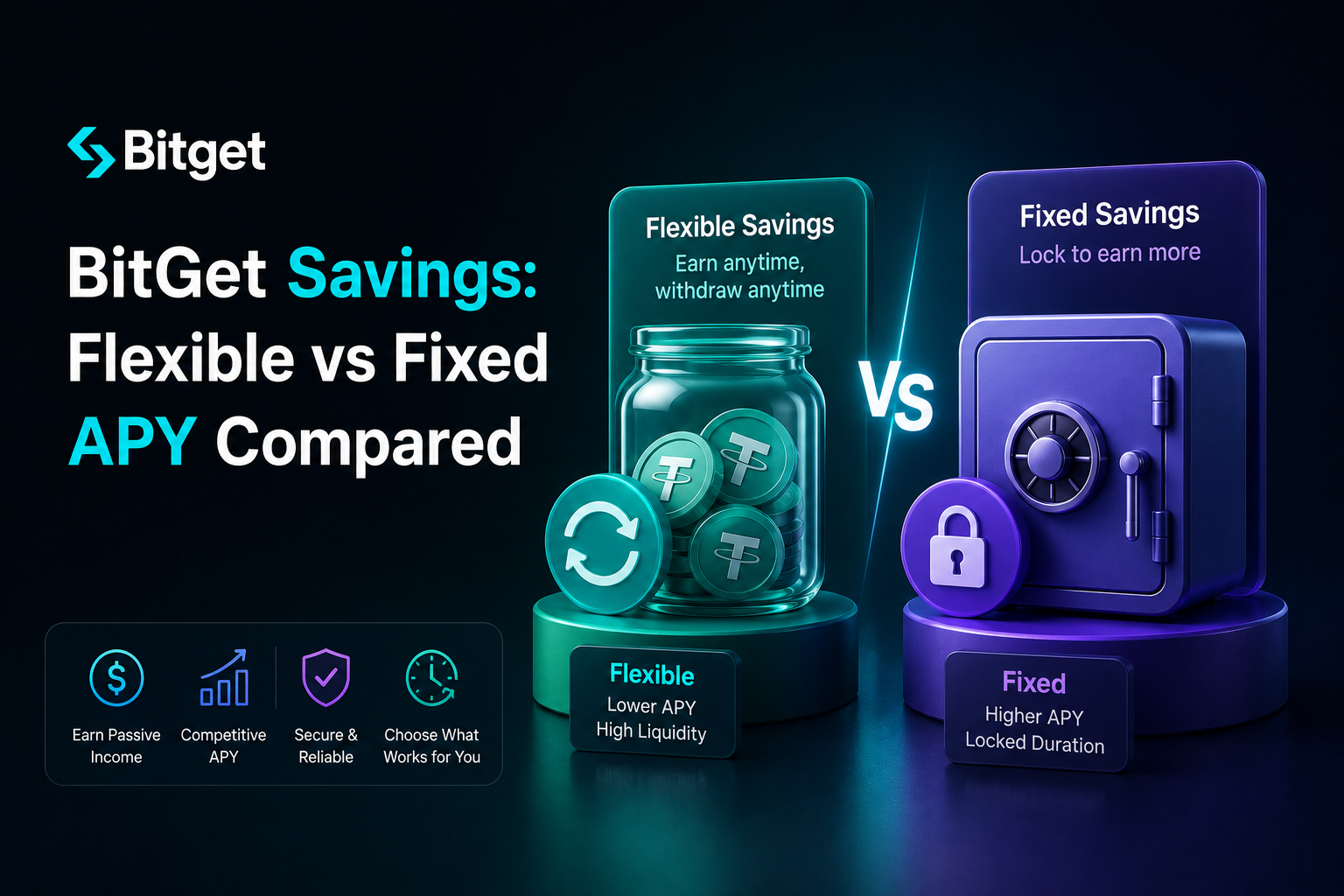
A centralised exchange’s earn product — like BitGet Earn — offers many of the same yields without the smart contract risk, impermanent loss, gas costs, or operational complexity.
How they compare
| Aspect | DeFi yield farm | Centralised earn (BitGet/similar) |
|---|---|---|
| Typical yield | 5-30% headline (often lower real) | 2-15% advertised |
| Smart contract risk | Yes (the protocol can be exploited) | No (the exchange custody risk applies instead) |
| Impermanent loss | Yes in LPs | No |
| Gas fees | Yes (often expensive) | None |
| Operational complexity | High (wallet management, signing, etc.) | Low (toggle in the app) |
| Lockup terms | Often flexible | Flexible or fixed term |
| Counterparty risk | Smart contract bugs | Exchange insolvency |
| KYC required | No | Yes |
When DeFi wins
- You’re earning yield on an asset that’s not supported on any centralised platform
- You want to use a specific strategy (concentrated LPing, leveraged yield, structured products) not available off-chain
- You’re a sophisticated user who can manage the complexity
- The yield differential after gas and IL is meaningfully larger than what a centralised platform offers
When centralised wins
- You want simple, accessible yield on majors and stablecoins
- You don’t want to manage gas, wallet security, and protocol research
- You’re holding a smaller portfolio where DeFi gas costs eat a meaningful chunk of returns
- You value time spent doing other things
For my portfolio split, the BitGet Earn products cover the mid-term and stable yield. DeFi is a small, deliberate slice for assets and strategies the centralised side can’t replicate.
How I actually approach DeFi yield (tiny size, blue-chip protocols only)
This is the honest playbook from someone who’s been burned by yield farming and is more careful now.
The rules I run
1. Size is tiny. I cap total DeFi exposure at under 10% of my portfolio. A protocol exploit or stablecoin depeg hurts but doesn’t ruin me.
2. Blue-chip protocols only. Aave, Curve, Uniswap, Lido, Pendle (for the more sophisticated stuff). If a protocol isn’t in the top 30 by TVL, I’m not interested. The graveyard of “next big thing” protocols is too well-populated.
3. Stable pairs or pegged assets only. USDC/USDT, ETH/stETH, BTC/WBTC. I don’t do volatile-pair LPing — the impermanent loss eats the yield.
4. Sell rewards as I receive them. If a protocol pays me in their token, I treat it as immediate income and sell to the asset I actually want to hold (usually USDC or ETH).
5. Separate wallet, hardware signed. My DeFi wallet is not my main holdings wallet. Each transaction is signed on a Ledger Nano X (affiliate). The seed for that wallet has never touched a connected device.
6. Track everything. I export transactions monthly to Koinly for tax. DeFi tax accounting is the worst part of the experience.
7. Quarterly review. Every quarter I look at the position. If yields have dropped meaningfully, if a protocol has had a security issue, if a depeg has happened nearby — I exit.
That’s the entire playbook. It’s deliberately boring. It means I haven’t been in the “next 100x farm” since 2021. It also means I haven’t been wiped out by a protocol exploit since 2021.
The 5-step due diligence on any farm
Before you put a single dollar into any DeFi yield, work through this list.
Step 1: Confirm the protocol’s age and audit history
- Live for at least 12 months on mainnet
- Audited by at least two reputable firms (Trail of Bits, OpenZeppelin, ConsenSys Diligence, Quantstamp)
- TVL above $100 million for a meaningful period
- No security incidents in the last 12 months
If any of those are missing, skip.
Step 2: Break down the APY
- What percentage is fees/interest (sustainable)?
- What percentage is token emissions (unsustainable)?
- What is the emissions schedule? When do they drop?
- What is the FDV (fully diluted valuation) of the reward token vs current market cap? High dilution means the headline APY is mostly illusion.
Step 3: Calculate impermanent loss exposure
- For LP farms, what pair are you holding?
- How correlated are the two assets?
- Use an IL calculator to model the loss at +50% / -50% price moves
Step 4: Audit the contract addresses
- Is the contract verified on Etherscan?
- Has the deployer renounced ownership, or can they still upgrade the contract?
- Are there any admin keys that could drain user funds?
- Does the protocol use a time-locked governance for upgrades?
Step 5: Plan your exit
- What are the lockup terms (flexible, time-locked, vested)?
- What’s the gas cost to enter and exit?
- At what APY drop would you withdraw?
- At what price drop in the reward token would you withdraw?
If you can’t answer all five with confidence, you don’t understand the position well enough to take it.
Tax: complicated, expensive, mandatory
DeFi tax accounting is by far the most painful part of the experience.
Why it’s complicated
- Every LP deposit is sometimes a taxable disposal of the underlying tokens (depending on jurisdiction)
- Every reward distribution is income at the value received
- Every reward sale is a separate disposal
- Bridge transactions can trigger taxable events
- Wrapping (ETH to WETH, USDC to aUSDC) sometimes triggers taxable events
- A single yield farm can generate hundreds of taxable events per month
- Stablecoin depegs can create realised losses you’d rather not have
Tools
Koinly, CoinTracker, Accointing, CryptoTaxCalculator — pick one and connect your DeFi wallets. They scrape on-chain history and categorise transactions. None of them are perfect; expect to manually adjust 5-10% of transactions.
Budget time for this. A heavy DeFi user can spend 5-15 hours per quarter just on tax accounting. That’s a real cost that nobody includes in the “yield” calculation.
Jurisdiction notes
UK: HMRC treats DeFi yield as either income or capital gains depending on the structure. Rules are evolving. Consult an accountant who specialises in crypto.
US: IRS treatment of DeFi is similarly murky. Conservative interpretation is to treat almost every interaction as a taxable event.
Most other jurisdictions: check the official guidance and ideally an accountant. Tax authorities have got significantly better at on-chain analysis over the last few years.
TTC mention: structured education on this stuff
DeFi yield farming is one of those topics where reading scattered Reddit threads and Twitter threads will teach you the wrong things in the wrong order. If you want to actually understand how the yields are generated, how to size positions, and how to avoid the patterns that lose money, the community I’m part of is Trade Travel Chill (affiliate). Structured education on this stuff from traders who’ve been through cycles. Personal recommendation, not a pitch.
For the trading side specifically, the best crypto trading courses post is the wider comparison.
The simpler alternative most yield farmers should consider first.
A centralised earn product gives you 80% of the yield at 5% of the operational complexity. BitGet’s Earn section has flexible savings, structured products, and Launchpool — start there before you touch DeFi.
Referral link.
FAQ
What is yield farming in DeFi?
Yield farming is providing capital (usually liquidity to a DEX or deposits to a lending protocol) in exchange for rewards — typically a mix of trading fees, interest, and the protocol’s own token. The phrase is often used to describe the most aggressive incentive farms, where token emissions drive the headline APY.
Is yield farming still profitable in 2026?
It can be. Real, sustainable yields on stablecoins in the top protocols range 4-12% depending on conditions. Headline APYs of 50%+ are usually emissions-driven and often net out lower once you sell the reward token. Profitability depends heavily on position size, gas costs, and timing.
What is impermanent loss?
The gap between the value of an LP position and the value of simply holding the underlying tokens. It happens because LPs automatically rebalance — selling the appreciating token, buying the depreciating one. The loss is “impermanent” only if prices return to the entry ratio. Usually they don’t.
What is the safest yield farm?
The safest yield is supplying stablecoins to a top-tier lending protocol like Aave or Compound. Yields are lower (2-6%) but smart contract risk is minimised, impermanent loss is zero, and the protocols have long live track records and multiple audits.
How much can I make yield farming?
Sustainable real returns on stablecoins are 2-12% APY depending on protocol and market conditions. On riskier farms the headline can be 100%+ but real returns after token dumps, gas costs, and IL are usually lower. Many farmers lose money over a full cycle.
Is DeFi yield farming taxed?
Yes in almost every jurisdiction. Rewards are typically taxed as income at the value received. Disposals (selling, swapping, withdrawing LPs in some cases) trigger capital gains. Expect to spend significant time on tax accounting if you do meaningful DeFi farming.
What is the difference between yield farming and staking?
Staking is locking tokens to secure a proof-of-stake blockchain in exchange for protocol rewards (typically 3-10% APY). Yield farming is broader — it covers any DeFi activity that generates returns, including LP fees, lending interest, and incentive emissions. Staking is generally safer than farming.
Should beginners try yield farming?
No, not until they fully understand impermanent loss, smart contract risk, and tax implications. A centralised exchange’s earn products are a much better starting point. Once you understand those, DeFi yield can be a small, deliberate slice of a more advanced portfolio.
Final word
Yield farming is real. The yields are real. So are the ways you lose money — and the loss vectors are not the obvious ones. Most beginners blow up not from a hack but from impermanent loss, reward-token collapse, and gas costs eating the returns.
If you’re tempted by the headline APYs, work through the 5-step due diligence above before you deposit a dollar. If you can’t answer all five steps with confidence, the position isn’t for you yet.
For most retail users, the right move is to take 80% of the yield from a centralised earn product, hold the rest of your portfolio in cold storage on a Ledger, and reserve DeFi for a small, deliberate slice — sized so a protocol exploit doesn’t ruin you.
If I were starting again today, this is the order I’d do it in: BitGet Earn for stable yield, single Ledger for long-term holdings, multisig once holdings cross a threshold, and DeFi as a small allocation once I actually understood every risk in this post.
Right — over to you.
Related posts