Important: Anything resembling a prediction in this article is speculation based on publicly available data and market analysis. Nobody knows where crypto prices will go. Treat all observations as opinion, not forecast. Past performance does not predict future results. This is not financial advice.
Every week, two or three people message me asking “what’s the best crypto to buy right now?” I used to try to answer the literal question. The longer I’ve been in this market, the more I realise the question itself is the trap.
The right question isn’t “what should I buy this Tuesday.” It’s “what categories should I have exposure to, in what allocation, for what timeframe.” Get that right and the individual token picks matter less than people think. Get that wrong and the best token in the world won’t save you.
This post is the framework I actually use to decide what’s in my own portfolio. It’s not a price prediction. It’s not a top-10 list of moonshots. It’s the structure underneath the structure.
Short answer: The “best crypto to buy now” depends on your timeframe, your risk tolerance, and how diversified you already are. A balanced retail crypto portfolio usually splits across five categories: Bitcoin (the anchor), Ethereum (the productive base layer), blue-chip Layer 1s (SOL, AVAX, NEAR, DOT, ATOM), sector bets (AI, DePIN, RWA narratives), and a small speculation slot. Allocation matters more than picking. Most retail investors should be 50%+ BTC and ETH combined, with smaller allocations to everything else. Do not buy what an influencer told you to buy without doing the position sizing maths first.
I buy and hold spot positions on BitGet → (referral link)
Key takeaways
- “Best crypto to buy now” is the wrong question. The right question is allocation across categories, given your timeframe and risk tolerance.
- For most retail portfolios, BTC + ETH should be at least 50% combined. The volatility-to-fundamentals ratio on majors is structurally better than on altcoins over multi-year holds.
- The FDV (Fully Diluted Valuation) trap is one of the most common mistakes in crypto — buying a “low cap” token whose true cap is 10x bigger after token unlocks.
- Position sizing matters more than pick selection. A 1% position in a 100x is a 1x return on portfolio. A 50% position in a 2x is the same return with less stress.
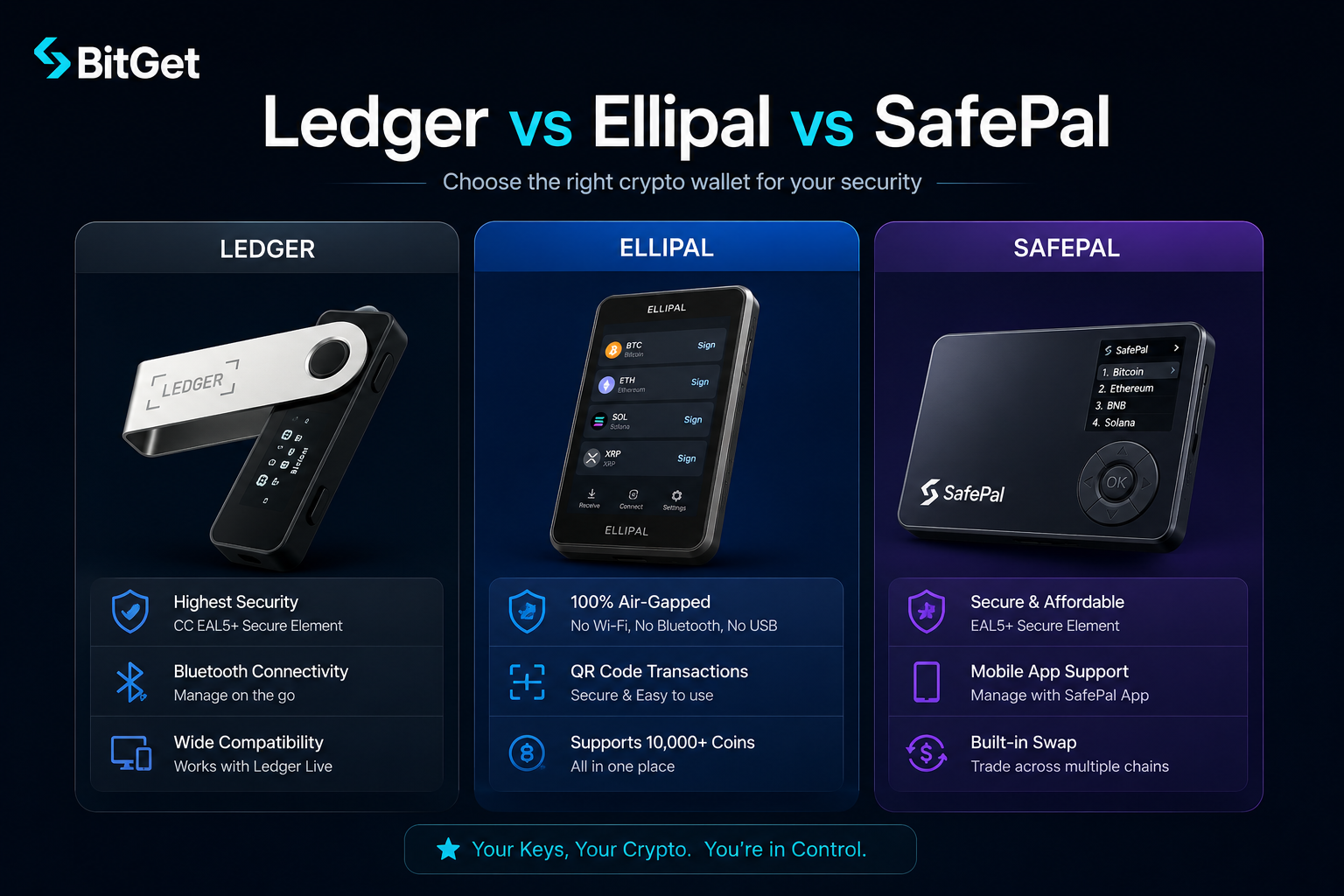
- I store the long-term core of any allocation on a Ledger Nano X, not on an exchange.
Table of contents
- Why “best crypto to buy now” is the wrong question
- The right question to ask instead
- The 5 categories I split a portfolio across
- Category 1: Bitcoin (the anchor)
- Category 2: Ethereum (the productive base layer)
- Category 3: Blue-chip Layer 1s
- Category 4: Sector bets (AI, DePIN, RWA)
- Category 5: Speculation
- The FDV trap to avoid
- Position sizing — the rule I actually follow
- Storage strategy for long-term picks
- Why I don’t shill specific moonshots
- How to update your watchlist every quarter
- Frequently asked questions
Why “best crypto to buy now” is the wrong question
The phrase assumes there’s a single correct answer. There isn’t. The right answer for a person with a 10-year horizon and a six-figure portfolio is different from the right answer for someone with three years of savings and a £2,000 first crypto stake.
The phrase also assumes the picking matters more than the framework around the picking. In practice, the framework wins. The traders I’ve watched build real wealth in crypto over six years are not the ones who picked the perfect altcoin. They’re the ones who:
- Bought Bitcoin and Ethereum early and held through drawdowns
- Sized positions so they could sleep through 80% pullbacks
- Sold into strength at least partly, in tranches
- Rotated profits into stables in bear markets
- Stayed in the game long enough for compounding to do its thing
The traders I’ve watched lose money are usually the ones who picked the perfect altcoin too late, sized too big, and panic-sold near the bottom.
Picking matters. But picking is the easy bit. Allocation, sizing, and discipline are the hard bits, and they’re the bits this article is mostly about.
If you’re brand new and haven’t bought anything yet, the how to buy crypto guide covers the mechanics first. This post assumes you’ve decided you want exposure and need a framework for what to actually own.
The right question to ask instead
Replace “what’s the best crypto to buy now?” with these three:
1. What’s my timeframe?
A 30-day timeframe is a trade, not an investment. The “best” thing to hold for 30 days is whatever’s trending — and that’s basically gambling unless you have a real trading edge.
A 1-3 year timeframe is a swing position. You need to be right about narrative, cycle, and entry. Hard but doable.
A 5-10+ year timeframe is an investment. The set of tokens worth owning at this horizon is narrow — basically BTC, ETH, and maybe a small handful of others that you really believe will exist with material network value in a decade.
2. How much can I afford to lose?
The standard answer is “what you can afford to lose to zero.” If putting £5,000 into crypto would wreck your financial position, that’s not money that belongs in crypto.
This sounds obvious until you realise how many retail investors size positions based on “what I want to make,” not “what I can afford to lose.”
3. How diversified am I already?
If you already own a house, contribute to a pension, and have an emergency fund, you can take more crypto risk. If crypto is your only investment and you’re 80% in altcoins, your portfolio is probably reckless even if the picks are sound.
Diversification is across asset classes (crypto, stocks, bonds, property), not just within crypto.
The right answer to “best crypto to buy now” depends entirely on your answer to these three questions. There is no universal answer.
The 5 categories I split a portfolio across
This is the framework I use for my own crypto portfolio. The percentages below are illustrative — adjust to your own risk tolerance. They are not advice.
| Category | What it is | Typical allocation | Time horizon |
|---|---|---|---|
| Bitcoin | The anchor. Lowest-risk crypto asset. | 30–50% | 5–10+ years |
| Ethereum | Productive base layer. Yields via staking. | 15–30% | 5–10+ years |
| Blue-chip L1s | SOL, AVAX, NEAR, DOT, ATOM. | 10–20% | 3–5 years |
| Sector bets | AI, DePIN, RWA narrative plays. | 5–15% | 1–3 years |
| Speculation | Small-cap moonshots, meme coins. | 0–5% | Days to months |
Notice that the riskier the category, the smaller the allocation and the shorter the time horizon. That’s not coincidence. High-risk assets in crypto rarely survive long enough to be held for a decade.
Notice also that at least 50% is in BTC and ETH combined. Whatever your specific weights, the core should dominate. This is the unfashionable truth that costs me YouTube views but saves people money: most retail investors should own less altcoin exposure than they think they should.
Category 1: Bitcoin (the anchor)
Bitcoin is the anchor of any crypto portfolio. Largest market cap, longest track record, deepest liquidity, most institutional adoption.
Why Bitcoin first
- Survived multiple cycles. BTC has been through three full bull/bear cycles. Nothing else in crypto has.
- Institutional channel is real. Spot Bitcoin ETFs have brought tens of billions in inflows since launch. The Bitcoin ETF explained post covers the mechanics.
- Halvings reduce supply. The Bitcoin halving cuts new BTC issuance every 4 years. Supply pressure on price is structural.
- Regulatory clarity. In most major jurisdictions, Bitcoin’s commodity classification is settled. Altcoins still face securities-law uncertainty.
What to buy
Just Bitcoin. No leverage, no wrapped versions, no derivatives. Spot BTC, held in self-custody for the long-term portion.
The how to buy Bitcoin post covers buying. The how to store crypto safely guide covers custody.
Position size
For most retail crypto portfolios I see work over time, BTC is 30–50% of the crypto allocation. If you can’t bring yourself to put that much in BTC because “it’s boring,” that’s a signal you might be over-allocated to altcoins.
Buying approach
Dollar-cost averaging (DCA) over weeks or months, rather than lump-sum at one moment. Reduces timing risk. A BitGet DCA bot can automate this if you don’t want to do it manually.
Category 2: Ethereum (the productive base layer)
Ethereum is the second anchor. Different value proposition from Bitcoin — Ethereum is the settlement layer for DeFi, NFTs, RWAs, and most of the actual “use case” surface in crypto.
Why Ethereum
- Network effects. Most DeFi, most stablecoins, most NFTs, and a huge share of tokenized assets live on Ethereum or its L2s.
- Productive asset. Staked ETH earns yield (~3-5% APY depending on conditions). BTC does not natively.
- Deflationary dynamics. Post-merge, ETH supply growth has been near zero or negative during high-activity periods.
- Institutional ETF channel opened more recently than Bitcoin’s but is real.
The Bitcoin vs Ethereum post covers the contrast in more depth.
What to buy
Spot ETH. Optional: stake a portion of it directly (or via a liquid staking protocol) for yield. Note that staking creates a taxable income event — see the crypto tax UK and crypto tax USA posts.
The how to buy Ethereum post covers the buying side.
Position size
For most retail crypto portfolios, ETH is 15–30% of the crypto allocation. Combined with BTC, that’s a 45–80% core. The exact split between BTC and ETH is a personal call — BTC-maxis lean 70/30 BTC, ETH-maxis lean 60/40 ETH.
A note on ETH vs L2 tokens
Arbitrum (ARB), Optimism (OP), Base, and other Ethereum L2s have their own tokens. Owning L2 tokens is not the same as owning ETH. The L2 tokens may or may not capture value over time depending on tokenomics. If you want ETH ecosystem exposure, ETH itself is usually the safer bet than betting on which L2 wins.
Category 3: Blue-chip Layer 1s
After BTC and ETH, the next tier is large established Layer 1 chains with multi-year track records.
The names I’d consider
Not advice — these are the chains most retail portfolios I’ve watched include in this tier:
- Solana (SOL) — fast, cheap, large user base, real DeFi and consumer activity. The how to buy Solana post covers the buying side.
- Avalanche (AVAX) — subnet architecture, real enterprise traction, smaller cap.
- NEAR Protocol (NEAR) — usability-focused, sharded architecture.
- Polkadot (DOT) — parachain architecture, large developer ecosystem.
- Cosmos (ATOM) — interoperability hub, large multi-chain ecosystem.
There are others (Aptos, Sui, Sei, etc.) — these are newer and less proven. Most retail portfolios don’t need exposure to all of them.
Why this tier
These are chains that have proven they can run at scale for multiple years, have real developer communities, and have meaningful TVL or user activity. They could still go to zero — many L1s have — but the probability is lower than for newer chains.
Position size
For most retail crypto portfolios, this entire category combined is 10–20% of the allocation. Within the category, no single L1 should be more than ~5% of total portfolio.
How to choose between them
Filter by:
– Years live (the longer the better)
– Daily active users (real users, not just bot transactions)
– TVL stability (a chain that holds its TVL through bear markets is more durable than one that loses 90% of its TVL)
– Developer activity (commits, ecosystem grants, new projects launching)
You can pull these from CoinGecko, DefiLlama, and Electric Capital‘s developer report.
Category 4: Sector bets (AI, DePIN, RWA narratives)
This is where things get interesting. Specific narratives in crypto have outperformed the broader market in past cycles. The challenge is that the narrative usually plays out faster than the fundamentals catch up.
Current narratives worth understanding
Not predictions about which will win — just the categories I track.
AI crypto. Tokens at the intersection of AI and blockchain. Examples include Bittensor (TAO), Render (RNDR), Fetch.AI, SingularityNET. The narrative is real but valuations have been frothy.
DePIN (Decentralized Physical Infrastructure). Networks that incentivize real-world infrastructure (WiFi, storage, compute, bandwidth). Helium (HNT), Filecoin (FIL), Render (overlap with AI). Some of these have genuine cash flow models; others are pure speculation.
RWA (Real World Assets). Tokenizing things like treasuries, real estate, and credit. Ondo Finance, Centrifuge, Maple Finance. Long-term story is real — short-term price action driven by hype cycles.
Bitcoin DeFi. New protocols enabling DeFi natively on Bitcoin (via Ordinals, BRC-20s, Stacks). Still very early. High variance.
Position size
For most retail portfolios, sector bets are 5–15% of the allocation combined. Within the category, no single sector should be more than 5% of total portfolio. Within a sector, no single token more than 2%.
The math: if you’re 5% in AI tokens split across 3-4 names, no single token is more than ~1.5% of your portfolio. A 90% drawdown on any one token costs you 1.5% — annoying but not portfolio-destroying.
When to enter and exit
Sector narratives have a lifecycle:
1. Quiet early stage (small cap, low attention)
2. Narrative emerges (media coverage, prices start moving)
3. Mainstream attention (everyone’s buying, prices vertical)
4. Distribution to retail (early money sells, narrative tops)
5. Long retracement (price falls 80-95%, narrative dies)
You make money in stages 1-3. You lose it in stages 3-4. The hardest skill in crypto is selling in stage 3 while everyone is still buying. Most people sell in stage 4 after the top is in.
Category 5: Speculation
The smallest category. The fun money. The 0–5% slot for tokens that might 10x or might go to zero — meme coins, micro-caps, early projects.
What goes here
- Meme coins (current names rotate too fast to list — when DOGE, SHIB, PEPE, BONK, WIF were in their early breakout phase, this is what they looked like)
- Brand-new launches in promising sectors
- Micro-caps that haven’t yet had their narrative moment
- Anything you’d describe to a friend as “this might 100x”
Position size
Total this category: 0–5% of crypto portfolio. Single names within it: 0.5–1% each, max.
If you’re new and tempted to put 30% of your crypto stack into meme coins because “this one will run” — you’re making the classic mistake. The meme coin that goes 100x makes you very rich on a 1% position. It still makes you something on a 0.5% position. It bankrupts you on a 30% position when it goes to zero, which is the more likely outcome.
Where I deploy this
This is where I’d put a small allocation to whatever narrative looks early. Right now (May 2026) — that mix shifts month to month. I update my own list quarterly. The point of writing the categories is that the framework doesn’t shift even when the specific tokens within it do.
The FDV trap to avoid
This is the most important paragraph in this post.
When you look at a token on CoinGecko or CoinMarketCap, you see two numbers that matter:
- Market cap — current circulating supply × current price
- Fully Diluted Valuation (FDV) — total max supply × current price
A token with $100M market cap but $2B FDV has 95% of its supply not yet released. When those tokens unlock — to early investors, team, treasury, ecosystem rewards — the supply hitting the market dilutes existing holders.
Why this matters
Many “low cap” altcoins in 2024-2025 launched with only 5-15% of supply circulating. The headline market cap was attractive. The fully diluted picture was not. As tokens unlocked, sustained selling pressure crushed prices even as the “narrative” remained strong.
Aptos, Sui, Sei, and several other tokens went through this dynamic. The lesson isn’t that those projects are bad — it’s that the entry price was wrong for the dilution schedule.
The market cap explained post covers this in more detail. Always check FDV before buying.
What to actually do
Before buying any token outside the top 20:
- Check market cap and FDV on CoinGecko.
- If FDV is more than 3x the market cap, look up the unlock schedule. Most projects publish vesting curves on their docs site.
- Identify when major unlocks happen. A 10% supply unlock to early investors in 3 months is a structural headwind on price.
- If the unlock schedule is heavy in the next 6-12 months, either size very small or wait.
This single discipline would have saved retail buyers billions of dollars across 2023-2025.
Position sizing — the rule I actually follow
The single most important variable in crypto isn’t what you buy. It’s how much.
My rule
No single non-BTC/ETH position is more than 5% of the crypto portfolio. No single speculative position is more than 1%.
That’s it. Apply this and the worst-case outcomes get much less painful.
Why it works
If a 1% position 100x’s, that’s a 1x return on the entire portfolio. Life-changing.
If a 1% position goes to zero, that’s a -1% return on the portfolio. Annoying but survivable.
Now consider: if a 30% position 3x’s, that’s a 90% return on portfolio. If the same 30% position goes to zero, that’s -30%. Asymmetric in the wrong direction for an asset that has meaningful zero-risk.
The math says: take small positions in many high-variance things, and a large position in the lowest-variance thing (Bitcoin).
Sizing for risk, not for hope
The trap retail traders fall into: sizing for the upside they hope for. “If this goes 50x, my position would be life-changing, so I’ll put 20% in.”
The right approach: size for the downside you can survive. “If this goes to zero, I lose 1%. That I can live with.”
The first framing optimizes for the rare best case. The second framing keeps you in the game long enough to enjoy any best case.
Storage strategy for long-term picks
If you’re buying for years, store like you’re buying for years.
My split
- Exchange (BitGet): trading float and short-term tactical positions. Rotation, DCA, taking advantage of price action.
- Hardware wallet (Ledger Nano X): the long-term core. BTC, ETH, large L1 positions, anything I plan to hold 12+ months.
- Hot wallet (MetaMask/equivalent): DeFi interaction wallet for small ecosystem participation. Small balance.
The how to store crypto safely guide goes deeper.
Why this matters
Exchange-failure risk is real. FTX, Celsius, BlockFi all had customers who lost the majority of their holdings because everything sat in one venue. The people who lost least were the ones who only had their trading float on those platforms.
For positions you plan to hold for years, the answer is always self-custody. A Ledger Nano X costs ~£130 and is the cheapest insurance policy in crypto.
Why I don’t shill specific moonshots
You’ll notice this post doesn’t tell you “buy XYZ now and watch it 10x by Q4.” That’s deliberate.
I’ve watched dozens of YouTubers and influencers shill specific tokens and watched their followers buy at the top of those calls. The pattern is consistent:
- Influencer accumulates the token quietly
- Influencer publishes “this is my next 100x” content
- Followers buy, pushing the price up
- Influencer sells into the wave of buying
- Token retraces, followers hold bags
Even when this isn’t deliberate (and sometimes it isn’t), the outcome is the same. Information shared with thousands of viewers doesn’t stay edge.
The framework I’d rather give you:
- Understand the categories
- Allocate by risk and timeframe
- Size positions so you can sleep
- Verify FDV before buying
- Store the long-term core safely
That framework keeps working in any market cycle. A specific token call is right or wrong once, and after that it’s noise.
If you want to learn to actually trade — read charts, manage risk, position-size, exit profitably — the community I’m part of and would actually point you at is Trade Travel Chill (affiliate). It’s structured education, not random Discord shilling. The value is in the framework, same principle as this post.
How to update your watchlist every quarter
A static watchlist goes stale fast. The categories don’t change much. The specific names within them rotate every cycle. My quarterly process:
Step 1: Review category allocations
Has the market moved enough to put your weights off target? If BTC has run 50% while your altcoins are flat, your BTC weight is up. Rebalance back toward target.
Step 2: Re-evaluate each non-core position
For every non-BTC/ETH position you hold, ask:
– Is the thesis still intact?
– Has the project shipped what they promised?
– Is the team still working on it?
– Has the FDV picture changed (new unlocks)?
If the answer to any of those is “no, materially,” consider reducing or exiting.
Step 3: Scan for new entries
Look at:
– New tokens in your existing watch categories
– Emerging narratives (last quarter’s nothing might be next quarter’s something)
– L2s, app chains, infrastructure that’s hit traction
Add to watchlist; don’t necessarily buy. Watching for 1-2 quarters before buying is a discipline that filters out hype.
Step 4: Trim winners, add to laggards (within reason)
Classic rebalancing. If a sector bet has 5x’d and is now 10% of portfolio instead of 1%, you might trim half. If a core position is below target weight, consider adding.
This sounds counter-intuitive but it’s what wealthy investors have done with traditional portfolios for decades.
Step 5: Set a calendar reminder for 90 days
The single biggest improvement to most portfolios is doing the review at all. Most retail crypto holders never rebalance. They buy, hold, watch losers run to zero, and watch winners overweight the portfolio.
Where I actually trade spot.
BitGet handles 800+ spot pairs across BTC, ETH, all the major L1s, and most of the AI and DePIN names. Competitive fees, fast withdrawals, full breakdown in my BitGet review.
Referral link.
What about stablecoins?
Stablecoins (USDT, USDC) aren’t “crypto investments” in the speculation sense — they’re a parking spot. Their role in a portfolio:
- Dry powder for buying dips
- Safety position during bear markets when you want to be out of volatile assets
- Yield-earning instrument via Earn products
A common pattern: trim 10-30% to stables when the market looks extended, deploy back into BTC and ETH when prices fall. That’s tactical allocation, not picking.
The USDT vs USDC post covers the differences between the two main stablecoins. Tax-wise, swapping between them is technically a disposal — see the tax posts.
What about Bitcoin maximalism?
A subset of crypto holders argue you should own only Bitcoin. The thesis: Bitcoin has the longest track record, the most institutional adoption, the clearest regulatory status, and the only sound monetary policy in crypto. Everything else is a distraction or a fraud.
The case is stronger than altcoin enthusiasts admit. Most altcoins underperform Bitcoin over multi-year holds. Most “this is the next Bitcoin” stories end badly.
The case is also overstated. Ethereum has its own value proposition. SOL has real users. A small allocation to non-BTC tokens has been part of most diversified crypto portfolios that worked.
My take: BTC-heavy is correct. BTC-only is too restrictive for most people. The right answer is somewhere in the middle, weighted toward BTC, with a few smaller positions in things you’ve researched.
If you’re strictly BTC-only, fewer decisions to make. If you’re not, the framework above is the structure I’d use.
Is crypto a good investment at all?
This is the prior question. Worth a moment.
The case for crypto in a portfolio:
- Asymmetric upside (some assets have produced 1,000x+ returns over decade timeframes)
- Diversification (crypto’s correlation with traditional assets isn’t 1.0)
- Hedge against monetary debasement (the Bitcoin thesis specifically)
- Access to real new financial primitives (stablecoins, DeFi, on-chain settlement)
The case against:
- Volatility is extreme (50-80% drawdowns are normal)
- Most tokens go to zero
- Regulatory uncertainty in many jurisdictions
- Custody complexity (one wrong send and money is gone)
For most retail investors, the right answer is a small allocation (a single-digit percentage of net worth) into mostly BTC and ETH, held for the long term. The is crypto a good investment post covers the longer version of this argument.
Frequently asked questions
What is the best crypto to buy right now?
The right answer depends on your timeframe, risk tolerance, and existing diversification. For most retail portfolios with a multi-year horizon, BTC and ETH should be at least 50% combined. Beyond that, blue-chip L1s (SOL, AVAX, NEAR, DOT, ATOM), small sector bets (AI, DePIN, RWA), and a tiny speculation allocation. There’s no universal “buy this today” answer.
Is Bitcoin still a good buy?
For multi-year holds, the structural case for Bitcoin is the same as it’s been for years: scarce supply, decentralized issuance, growing institutional adoption, regulatory clarity in major jurisdictions. Past performance doesn’t guarantee future results. The current price is whatever it is when you read this — but Bitcoin remains the lowest-risk crypto asset.
Should I buy altcoins instead of Bitcoin?
Generally, no — at least not in larger size than Bitcoin. Most altcoins underperform Bitcoin over multi-year holds. A diversified portfolio can include altcoins, but they should typically be smaller positions, not the core.
How much money should I put into crypto?
Single-digit percentages of net worth for most people. Only what you can afford to lose to zero. If a 90% drawdown on your crypto would wreck your finances, you’re over-allocated.
What’s the safest crypto to buy?
Bitcoin is the lowest-risk crypto asset by most measures — longest track record, deepest liquidity, most institutional adoption, clearest regulation. Ethereum is next. Beyond that, risk increases significantly.
How do I buy crypto safely?
Use a regulated or well-reviewed exchange (BitGet if available in your country, Coinbase or Kraken for US users). Buy spot, not leveraged. Store long-term holdings on a hardware wallet like a Ledger Nano X. The how to buy crypto guide walks through it.
What’s the best altcoin to buy now?
There’s no universal answer. The blue-chip L1s (SOL, AVAX, NEAR, DOT, ATOM) and selective sector names are where most diversified portfolios look. Specific picks should depend on your research, position sizing, and unlock schedules.
Should I buy meme coins?
A small speculation allocation (0-5% of crypto portfolio, no single position over 1%) can include meme coins if you understand they’re highly likely to go to zero. Sized small, the upside justifies the downside. Sized large, it’s reckless.
What’s the FDV trap?
A token’s market cap is current circulating supply times current price. The Fully Diluted Valuation (FDV) is total max supply times current price. Many low-cap altcoins have FDV 10x their market cap because most tokens haven’t been unlocked yet. When those tokens hit the market, dilution crushes the price even as the narrative remains strong. Always check FDV and unlock schedules before buying.
Is now a good time to buy crypto?
I don’t know. Nobody does. The honest answer for a long-term investor is that DCA-ing over weeks or months reduces timing risk regardless of where the market is on any given day.
How long should I hold crypto?
For the core (BTC and ETH), 5-10+ years is the right frame for retail investors. For sector bets, 1-3 years. For speculation, days to months. The shorter the timeframe, the harder it is to actually make money — most retail traders who try to time short cycles end up underperforming a buy-and-hold approach.
Should I take profit?
Yes, in tranches, when positions get materially overweight or when a thesis has played out. Selling everything at a single point is hard to time. Selling 20% on a big rally, then 20% on the next rally, smooths out the timing risk and locks in real gains.
What if I miss out and crypto pumps without me?
Sized correctly, you’d still benefit. A small position in a 10x is still a meaningful gain at the portfolio level. The bigger risk is over-allocating in fear of missing out and getting wiped out by a drawdown. FOMO is a more expensive emotion than patience.
Get the spot pairs you need in one place.
BitGet supports 800+ spot pairs — BTC, ETH, every major L1, most AI and DePIN names. Sign-up is 90 seconds, KYC usually clears same day.
Referral link.
Final word
The best crypto to buy now is the one that fits your framework, not the one trending in Telegram.
If I were starting again today, this is the order I’d build a crypto portfolio in:
- Open a BitGet account. KYC. Deposit a small starting amount.
- Set up a Ledger Nano X. Store the seed phrase securely.
- DCA into Bitcoin over weeks until BTC is 40-50% of crypto allocation.
- DCA into Ethereum until ETH is 20-30%.
- Spread 10-20% across 2-4 blue-chip L1s after research.
- Allow 5-15% for sector bets (AI, DePIN, RWA) sized small.
- Allow 0-5% for speculation in positions no bigger than 1% each.
- Self-custody anything you’re holding 12+ months.
- Review the allocation every 90 days.
- File the crypto tax UK or crypto tax USA on whatever you sell.
That framework keeps working in any market cycle. It won’t make you rich overnight. It will keep you in the game long enough for the cycles to compound.
That’s the short version.
Right — over to you.
Related posts
- Bitcoin vs Ethereum: Which Should You Buy First?
- Is Crypto a Good Investment? An Honest Look
- How to Store Crypto Safely: The Self-Custody Guide