The first time I bought Ethereum, I paid £40 in gas fees to send £100 of ETH from a wallet to an exchange. I sat there refreshing MetaMask thinking I’d done something wrong. I hadn’t. That was just the price of using Ethereum on a busy night in 2021. Six years later it still costs more than people expect, the network has changed how it produces blocks, and the marketing is still confusing. So here’s Ethereum without the buzzwords — what it actually is, what you can do on it, and what it costs.
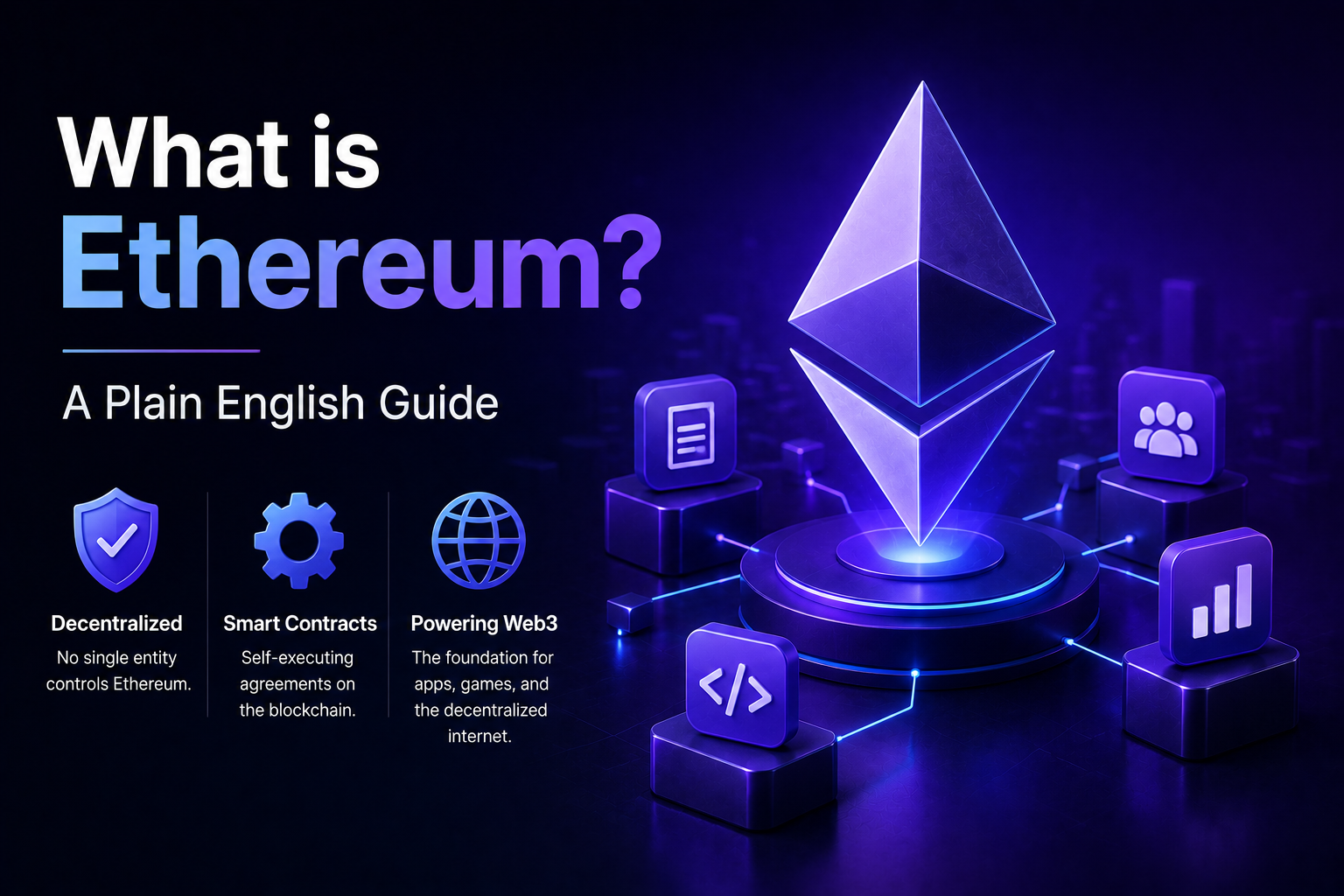
Short answer: Ethereum is a global, decentralised computer that anyone can use to run small programs called smart contracts. It launched in 2015, switched from energy-intensive mining to staking in September 2022, and is the network behind most of what you’ve heard about in crypto — DeFi, NFTs, stablecoins, DAOs, and Layer 2 chains like Polygon and Arbitrum. Its native token, ETH, is used to pay for transactions and to secure the network through staking. ETH is the second-largest cryptocurrency by market value, behind Bitcoin.
Buy Ethereum on BitGet → (referral link)
Key takeaways
- Ethereum is a programmable blockchain — Bitcoin is digital money, Ethereum is a platform for code.
- ETH is the native token. You need it to pay gas fees, no matter what you’re doing on the network.
- The Merge (September 2022) ended Ethereum mining. The network now runs on proof-of-stake — roughly 99.95% less energy per transaction according to the Ethereum Foundation.
- Layer 2 chains like Polygon, Arbitrum, and Optimism handle the cheap, fast transactions. Mainnet handles settlement.
- ETH supply is not capped. But since the Merge plus EIP-1559 burns, net issuance has often been near zero or negative.
What Ethereum actually is (not just “world computer”)
Every introduction to Ethereum calls it the “world computer”. That’s true in a slogan way and useless in a practical way. Let me try harder.
Ethereum is a single global network of computers that all run the same software and all agree on the same shared state. That shared state isn’t just account balances (like Bitcoin) — it’s the memory and code of every program anyone has uploaded to the network.
If Bitcoin is a shared spreadsheet that tracks who owns BTC, Ethereum is a shared computer that runs apps. You can deploy a small program — a “smart contract” — and once it’s on Ethereum, anyone in the world can interact with it. The program runs on every node. The result is the same for everyone. Nobody can shut it down, edit it after the fact, or stop you from using it.
The “computer” part is real. There’s actually a thing called the Ethereum Virtual Machine (EVM) — a kind of universal sandbox that executes the code in every smart contract. Every Ethereum node runs the EVM. When you click “swap” on Uniswap, your transaction is a message to a contract, the EVM runs that contract’s code, and every node updates the shared state to match.
That’s what makes it different from Bitcoin. Bitcoin can send BTC and run very simple scripts. Ethereum can run any program a developer can write. The trade-off is complexity — Ethereum is harder to secure, slower to scale, and more expensive to use.
Vitalik Buterin proposed Ethereum in late 2013. He was 19. The network went live in July 2015. (Vitalik’s original blog post on smart contracts is still worth a read if you want the founding logic in his own words.)
Ethereum vs Bitcoin — the real difference
Most people get told “Bitcoin is digital gold, Ethereum is digital silver” and move on. That’s a slogan, not an explanation. Here’s the real split.
| Bitcoin | Ethereum | |
|---|---|---|
| Purpose | Sound money | Programmable platform |
| Launched | 2009 | 2015 |
| Consensus | Proof-of-Work (mining) | Proof-of-Stake (staking) since Sept 2022 |
| Supply cap | 21 million BTC | No fixed cap (but issuance is low) |
| Block time | ~10 minutes | ~12 seconds |
| Smart contracts | Very limited | Full programming language |
| Native use case | Store of value | Apps, tokens, DeFi, NFTs |
| Energy use | High | Very low (post-Merge) |
| Average fee | A few dollars | Variable, often $1–$30 |
The simplest way to think about it: Bitcoin is a thing. Ethereum is a place.
Bitcoin is one asset — BTC. There’s nothing else to do with it except hold it, send it, or trade it. That simplicity is the feature.
Ethereum is a platform where thousands of assets, apps, and contracts live. ETH is the fuel. Holding ETH gives you exposure to the platform; using ETH lets you interact with everything built on it.
Most experienced traders I know hold both. They’re not competing products — they answer different questions. If you want a single bet on monetary scarcity, Bitcoin. If you want a bet on a programmable financial layer, Ethereum.
For the full beginner walkthrough on BTC, see what is Bitcoin. For how to buy either, how to buy crypto covers it end to end.
Smart contracts explained simply
A smart contract is a program that lives on Ethereum and runs automatically when triggered. That’s it.
Think of a vending machine. You put a coin in, push B7, and the machine releases a packet of crisps. There’s no human involved. The machine follows rules: coin in, button pressed, item out. A smart contract is the digital version of that. You send a transaction with the right inputs, the contract runs its code, and the outcome happens.
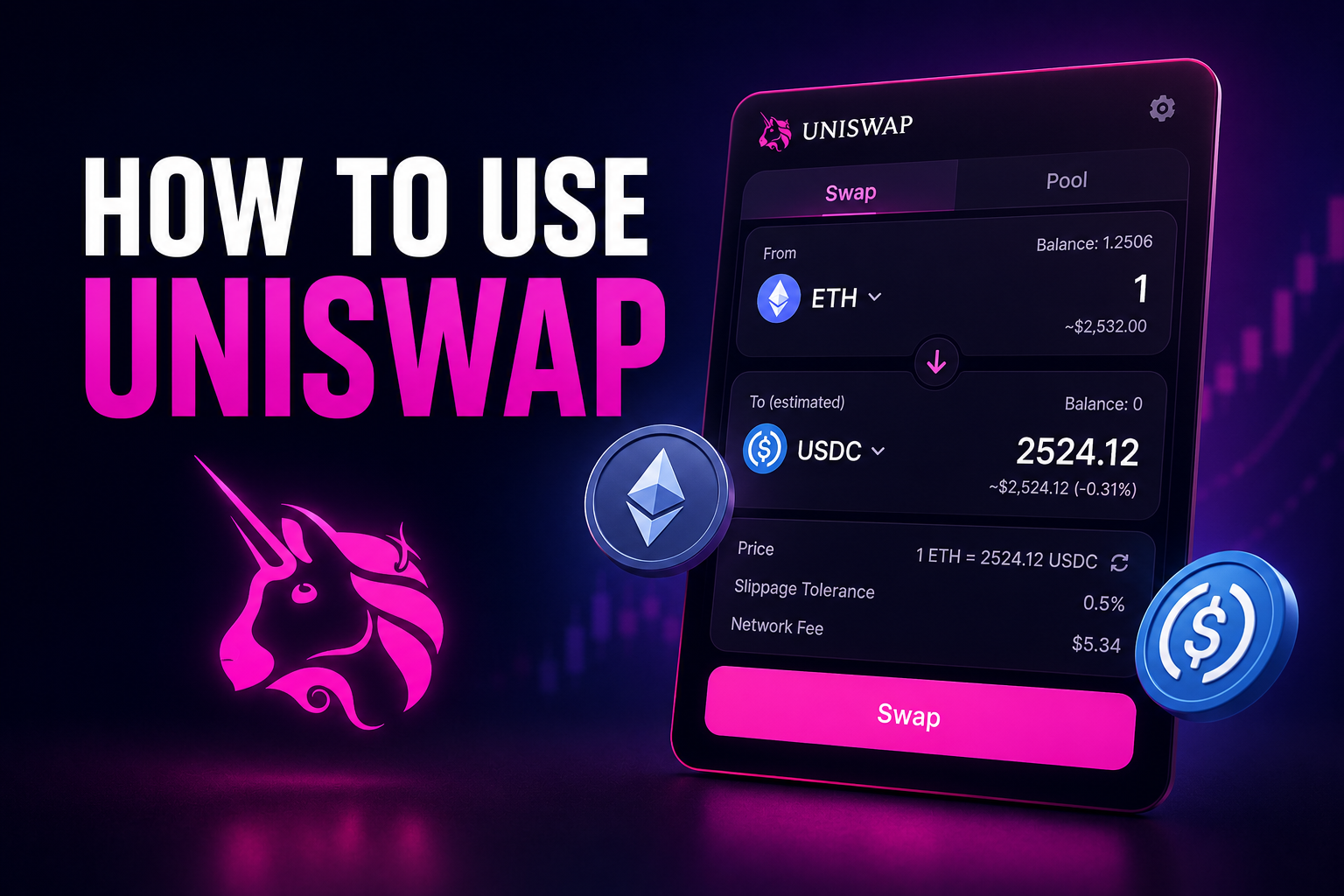
A real example. Uniswap is a smart contract on Ethereum that lets people swap one token for another. When you “swap” 1 ETH for some USDC on Uniswap, here’s what actually happens:
- Your wallet signs a transaction saying “I want to send 1 ETH to this contract address and receive USDC in return.”
- The Uniswap contract checks its internal pool, calculates how much USDC you should get based on the current ratio, takes a small fee, and sends you the USDC.
- Every Ethereum node updates its copy of the state to reflect the swap.
There’s no Uniswap company sitting in the middle approving the trade. The contract code does it. That’s what people mean when they say DeFi is “trustless” — you don’t trust a company, you trust the code.
The catch: code has bugs. If a smart contract has a flaw, attackers can exploit it and drain user funds. Hundreds of millions of dollars have been lost this way. Smart contracts are powerful and dangerous. Stick to ones with long track records, large user bases, and public security audits.
Smart contracts power:
- Decentralised exchanges (Uniswap, Curve, Balancer)
- Lending protocols (Aave, Compound)
- Stablecoins (USDC, DAI)
- NFTs (every NFT is a smart contract)
- DAOs (decentralised organisations with rules in code)
- Games, prediction markets, identity systems
That’s the surface area. It’s why Ethereum matters more than most people who haven’t used it realise.
What you can actually do on Ethereum
The marketing answers this with words like “decentralised finance” and “Web3”. The practical answer is more useful.
DeFi (decentralised finance)
You can swap tokens, lend out tokens to earn interest, borrow against tokens you hold, provide liquidity to a pool and earn fees, or take leveraged positions — all without a centralised company in the middle. Total value locked in Ethereum DeFi sits in the tens of billions of dollars according to DefiLlama.
Aave lets you deposit ETH and earn interest, or deposit ETH as collateral and borrow stablecoins. Curve is built for stablecoin swaps with very low slippage. MakerDAO mints DAI, a decentralised stablecoin, against locked collateral. These are the boring, productive uses of Ethereum.
Stablecoins
USDC and USDT — the two largest stablecoins by market cap — are smart contracts on Ethereum (and several other chains). Trillions of dollars in stablecoin volume move across Ethereum every year. For someone in a country with an unstable local currency, holding USDC on-chain is often more accessible than holding actual dollars.
NFTs
Every NFT you’ve heard of — CryptoPunks, Bored Apes, Pudgy Penguins — is a smart contract on Ethereum. NFTs are just tokens with unique IDs and metadata. The market has cooled a lot from the 2021 peak, but the infrastructure is still there.
DAOs
A decentralised autonomous organisation is a group of people who pool funds into a smart contract and vote on what to do with them. Decisions are executed by the contract automatically. Some DAOs manage billion-dollar treasuries. Others are glorified Discord chats. The technology works; the human coordination is harder than it looks.
Games and identity
Onchain games, decentralised social networks (Farcaster, Lens), and identity systems (ENS — the .eth name service) all run on Ethereum. The user numbers are still small compared to the financial use cases, but they exist.
If you want to learn what’s possible, the most useful thing you can do is set up a small wallet, send yourself $20 of ETH, and try one DeFi action — swap, deposit, withdraw. The mechanics make sense in 20 minutes once you’ve done it once.
Gas fees explained (gwei, base fee, priority fee)
Gas fees are the single biggest source of confusion for new Ethereum users. They’re also the part that costs you actual money. Let me break it.
Every action on Ethereum — sending ETH, swapping a token, minting an NFT, interacting with any contract — uses computational resources. Gas is the unit of measurement for that work. The more complex the action, the more gas it uses.
You pay for gas in ETH. The amount you pay depends on:
- How much gas the action uses. A simple ETH transfer uses 21,000 gas. A token swap on Uniswap might use 150,000+ gas. A complex DeFi position can use 500,000+.
- The gas price, denominated in gwei (1 gwei = 0.000000001 ETH). This fluctuates based on demand.
When Ethereum is quiet, gas prices might be 5–15 gwei. When it’s busy (NFT mints, market crashes, big news), gas can spike to 100–300 gwei. The same swap that costs $3 on a Sunday morning can cost $80 on a Wednesday afternoon.
The base fee and priority fee (post-EIP-1559)
In August 2021, Ethereum introduced EIP-1559, which changed how fees work. Every transaction now has two parts:
- Base fee — an algorithm-set minimum, burned forever (removed from supply)
- Priority fee — an optional tip to the validator to include your transaction faster
This sounds technical and it is. The practical takeaway: you don’t really set the gas price manually anymore. Wallets like MetaMask suggest a reasonable amount and you accept it.
The base fee burn matters for ETH’s economics. Every time someone uses Ethereum, ETH is destroyed. Combined with the lower issuance after the Merge, this has often made ETH net deflationary — fewer ETH exist after a busy week than before. More on that below.
How to actually save on gas
Three practical tips:
- Don’t transact during peak hours. Gas is usually cheapest on weekends and during US night-time.
- Use a Layer 2. Polygon, Arbitrum, Optimism, Base — fees on these chains are typically 10–100x cheaper than mainnet.
- Bundle actions. If you’re doing multiple swaps, some platforms let you batch them into a single transaction.
For most beginners now, the answer is: don’t use Ethereum mainnet for anything small. Use a Layer 2.
The Merge — Ethereum’s switch to Proof of Stake
In September 2022, Ethereum did something no major blockchain had ever done: it changed its entire consensus mechanism on a live network with billions of dollars at risk. They called it the Merge.
Before the Merge, Ethereum was secured by miners running specialised hardware, just like Bitcoin. Miners competed to solve cryptographic puzzles and earned ETH as a reward. This consumed enormous amounts of electricity — roughly the energy use of a mid-sized country.
After the Merge, Ethereum is secured by validators staking ETH. To run a validator, you lock up 32 ETH as collateral. You earn rewards for proposing valid blocks and validating other blocks. If you act dishonestly or go offline, your stake gets slashed (penalised).
The numbers from the switch, per the Ethereum Foundation and Reuters’ coverage of the Merge:
- Energy consumption dropped by approximately 99.95%
- ETH issuance dropped by roughly 90% (from ~13,000 ETH/day to ~1,700 ETH/day)
- The network kept running with no downtime during the switch
That’s a remarkable engineering feat. People worked on it for years. It went off without a hitch.
There were political consequences. Some miners — who had spent millions on GPUs — were unhappy and forked off a separate chain called Ethereum PoW. That chain still exists, has minimal usage, and trades at a tiny fraction of ETH’s price.
For most users, the Merge changed two things:
- You can stake ETH and earn yield. Currently around 3–4% annual yield depending on validator count.
- ETH became potentially deflationary. With low issuance and ongoing fee burns, total ETH supply has often shrunk over time.
If you want to stake without running a validator yourself, exchanges like BitGet, lending platforms, and liquid staking providers (Lido, Rocket Pool) all let you stake any amount. You give up some of the yield as a fee. You also accept a counterparty risk — your ETH is in someone else’s hands.
ETH supply economics (deflationary post-Merge)
This is where Ethereum gets interesting from an investment angle.
Bitcoin’s pitch is simple: fixed supply, 21 million coins ever, scarcity drives long-term value.
Ethereum’s pitch is more complicated. ETH has no hard cap. New ETH is created every time a block is produced (currently ~1,700 ETH per day to pay validators). But ETH is also burned every time a transaction is processed (the base fee from EIP-1559 is destroyed).
When network usage is high, more ETH gets burned than issued. The supply shrinks. When network usage is low, more ETH gets issued than burned. The supply grows.
The net effect over the last few years has been roughly flat or slightly deflationary. You can see live data at ultrasound.money — it tracks burns, issuance, and net supply change in real time.
This is a different argument than Bitcoin’s. Bitcoin says “supply is fixed by code”. Ethereum says “supply adjusts based on usage — if people actually use it, it gets scarcer”. Whether you find that compelling is a matter of taste.
The current ETH supply sits around 120 million, per CoinGecko. For context, when Ethereum launched in 2015, the initial supply was around 72 million.
Layer 2s explained (Polygon, Arbitrum, Optimism)
If Ethereum is so expensive and slow, why is it the most used smart contract platform? Layer 2s.
A Layer 2 is a separate blockchain that runs on top of Ethereum. Transactions happen cheaply and quickly on the L2, then get periodically bundled and settled on Ethereum mainnet. You get the security of Ethereum with the cost and speed of a smaller chain.
The major L2s:
- Arbitrum — largest by total value locked, used heavily for DeFi
- Optimism — early L2, home to OP Stack chains
- Base — Coinbase’s L2, built on the OP Stack, growing fast
- Polygon — technically a sidechain originally, now offering multiple scaling options including zkEVM
- zkSync — uses zero-knowledge proofs for scaling
For a beginner, the practical impact is this: when you want to use DeFi or trade tokens on-chain, you don’t have to use Ethereum mainnet anymore. You can bridge your ETH to an L2 and do everything for a fraction of the cost.
Major exchanges like BitGet support direct withdrawals to Arbitrum, Optimism, Polygon, and others — you don’t even need to bridge yourself.
For posts on the L2-native tokens, see how to buy Polygon and the broader how to buy crypto guide.
How to buy and store ETH
The short version: same as buying Bitcoin, with one extra wrinkle (gas fees on withdrawal).
Buying ETH
- Open an exchange account. I use BitGet. Coinbase, Kraken, and Binance are also legitimate. Pick one that operates legally where you live.
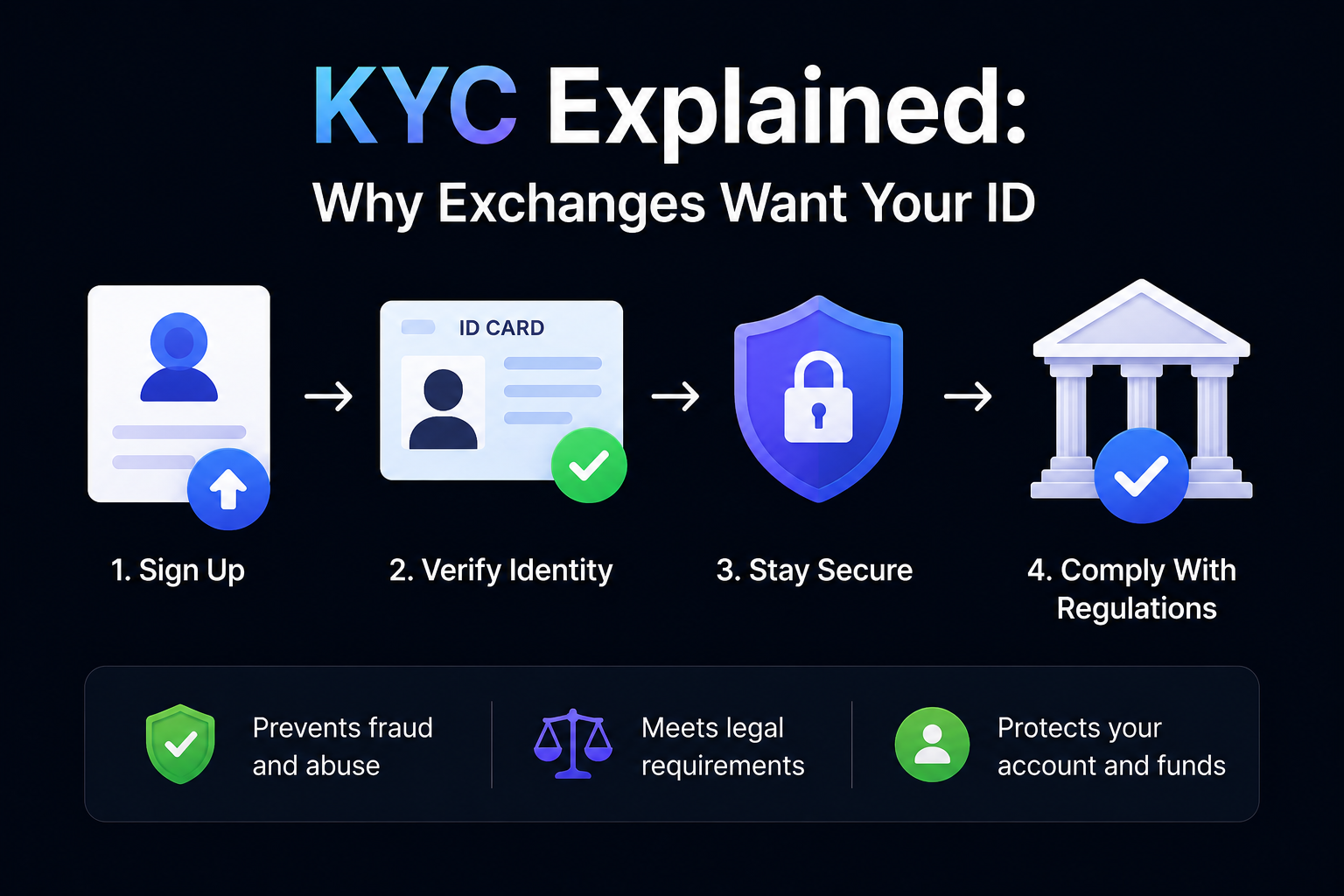
- Complete KYC. Upload ID, take a selfie, wait for verification.
- Deposit funds. Bank transfer is cheapest, card is fastest, P2P is sometimes the best rate.
- Buy ETH. Use a limit order if you want a specific price, market order if you want it now.
The full walkthrough is in the how to buy Ethereum post.
Storing ETH
For small amounts (under $500), leaving ETH on the exchange or in a hot wallet like MetaMask is fine.
For meaningful amounts, get a hardware wallet. I use a Ledger Nano X. It plugs into your phone or laptop, holds your private keys offline, and integrates with MetaMask and most DeFi apps.
The trade-off between hot and cold storage is covered in hot vs cold wallet. The broader playbook for not getting your funds stolen is in how to store crypto safely.
One specific Ethereum thing: when you withdraw ETH from an exchange to your own wallet, you pay a gas fee. On Ethereum mainnet this can be $5–$50 depending on network conditions. On an L2 like Arbitrum it’s usually under $1. If you’re buying small amounts, withdraw to an L2 to save on fees — or accumulate on the exchange before doing a single mainnet withdrawal.
Ready to buy your first ETH?
BitGet is the exchange I use. Sign-up takes about 90 seconds, KYC usually clears same-day. Direct withdrawals to Arbitrum and Polygon if you want to skip the gas fees.
Affiliate link. I may earn a commission at no extra cost to you.
Common misconceptions about Ethereum
A few things I hear constantly that aren’t quite right.
“Ethereum is going to flip Bitcoin.” Maybe. People have been saying this for almost a decade. The market cap gap has narrowed and widened. As of writing, BTC is roughly twice ETH’s market cap per CoinGecko. It’s a question about future dominance, not a near-term certainty.
“Ethereum gas is always expensive.” Mainnet gas is often expensive at peak. Layer 2 gas is consistently cheap — fractions of a cent for a swap on Base or Arbitrum. The “Ethereum is too expensive” critique is a 2021 take.
“ETH is just like BTC but newer.” No. They serve different functions. Bitcoin tries to be the best version of digital money. Ethereum tries to be the best version of a global computer. Different goals, different trade-offs.
“Proof-of-stake centralises Ethereum.” This is a real debate, not a slam dunk either way. The largest staking pool (Lido) holds around a quarter of all staked ETH. The Ethereum community is actively trying to limit single-pool dominance. The PoW version of Ethereum had massive miner concentration too. Centralisation is a risk on both consensus models — it just looks different.
“You need to be a developer to use Ethereum.” Not anymore. Wallets like MetaMask, Rabby, and the BitGet Wallet make it easy for non-technical users to interact with apps.
If you want to actually learn how to trade ETH well — not just hold it — I’d point you at Trade Travel Chill. It’s the community I’m part of and the one structured education source I trust for retail traders. Soft sell, not a hard one — it’s just where I learned most of what I know about trading. See best crypto trading courses for the wider comparison.
Risks to know
If you’re going to own ETH, here’s what can actually hurt you.
Price volatility. ETH has had 70%+ drawdowns multiple times. If you can’t stomach a 50% drop, size your position smaller.
Smart contract risk. If you use DeFi, the smart contract you’re interacting with could have a bug. Funds can drain in minutes. Stick to well-audited, long-running contracts.
Validator slashing (if staking). If you run your own validator and go offline or misbehave, you lose some of your stake. Most retail stakers use liquid staking or exchange staking instead.
Regulatory uncertainty. The SEC has hinted at but not formally classified ETH as a security. Most experts think it’s safe; some think it isn’t. This affects which apps can list ETH-related products in the US.
Bridging risk. When you move tokens between Ethereum and an L2 or another chain, you use a bridge. Bridges have been the single biggest source of crypto hacks. Use official bridges or large, audited third parties.
For the wider scam landscape, crypto scams guide covers the patterns.
Frequently asked questions
Is Ethereum a good investment?
Nobody knows. ETH has outperformed most assets over its history but also had 70%+ drawdowns. It’s a bet on a programmable financial platform continuing to gain users. If that thesis plays out, ETH should do well. If it doesn’t, it won’t.
How is Ethereum different from Bitcoin?
Bitcoin is digital money — one asset, one main use case. Ethereum is a platform for programs — thousands of assets and apps run on top of it. ETH is the fuel for the platform.
What are gas fees?
Gas fees are the cost of using Ethereum. You pay in ETH, the amount depends on how much computation your action needs and how busy the network is. Layer 2s like Arbitrum and Polygon have much lower fees.
Can I stake any amount of ETH?
Yes, through exchanges or liquid staking protocols like Lido and Rocket Pool. Running your own validator requires 32 ETH. Most retail users stake through an exchange or liquid staking provider.
What’s the difference between ETH and Ethereum?
Ethereum is the network. ETH is the token that runs on it. People often use the words interchangeably.
Is Ethereum decentralised?
More decentralised than most crypto, less decentralised than Bitcoin. Staking is concentrated in a few large pools, but no single entity controls block production. The community actively works to reduce concentration risk.
What is the Merge?
The Merge was Ethereum’s switch from proof-of-work mining to proof-of-stake validation in September 2022. It cut energy use by roughly 99.95% and reduced new ETH issuance by about 90%.
Final word
Ethereum is more complicated than Bitcoin. The trade-off is that it does more things. You’re not just buying a scarce asset — you’re buying exposure to a programmable financial layer that an enormous number of developers are building on.
If I were starting from zero today:
- Read crypto for beginners first if any of this still feels unclear.
- Open a BitGet account and buy a small amount of ETH — call it 1% of your liquid savings.
- Try one DeFi action with $20 on a Layer 2 like Arbitrum or Base. It costs almost nothing and the mechanics click once you’ve done it.
- Move the rest of your ETH to a hardware wallet — Ledger Nano X review covers the one I use.
- Hold for years, not months. Or stake it for yield. Both are reasonable.
That’s the playbook.
Right — over to you.
Related posts
- What is Bitcoin? Explained Without the Hype
- How to Buy Ethereum: Step by Step
- Blockchain Explained Like You’re Five