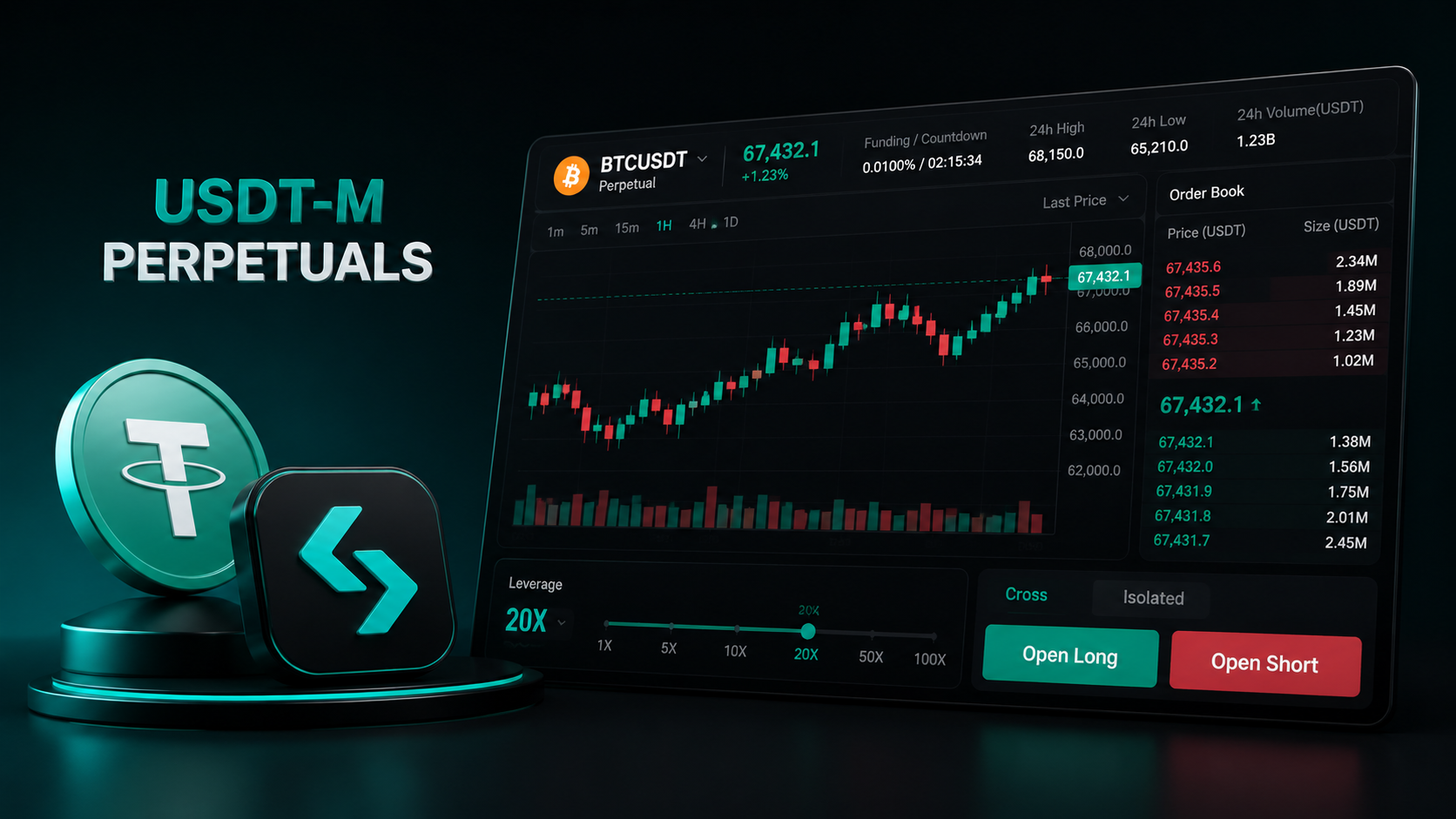
Every Discord I’m in has the same Sunday-night conversation. Someone shares a screenshot of their account, down 60% from a month ago. They ask what went wrong. The replies always blame the chart or the market. The screenshots always tell a different story: oversized positions, no stops, revenge trades stacked at 3am.
I’ve made every mistake on this list. Most of them more than once. This is the post I wish someone had handed me before my first deposit. Some links are affiliate. I flag them when they appear.
Short answer: The crypto trading mistakes that wreck most beginner accounts are predictable and systematic: trading without stops, using too much leverage, revenge trading after losses, chasing FOMO entries, switching strategies weekly, oversizing positions, ignoring fees, and trying to learn alone. 80%+ of retail traders lose money — and almost all of them lose for the same handful of reasons listed below.
See Trade Travel Chill — the structured education that prevents most of these → (referral link)
Key takeaways
- Most studies put retail trader failure rates above 70% — and the failure patterns are remarkably consistent.
- The top three account-killers: no stops, over-leverage, and revenge trading.
- Most beginners lose to behaviour, not to bad analysis. The fix is process, not better signals.
- Structured education compresses the learning curve dramatically vs trying to figure it out alone.
- The TTC TBD System is built specifically to drill out these mistakes before they cost real money.
Why 80%+ of retail traders lose money
The statistic gets repeated everywhere. It’s also under-explained.
Retail traders don’t lose because the market is unfair. They lose because:
- They size positions on emotion, not maths
- They take trades without a defined exit plan
- They use leverage they don’t understand
- They learn from YouTube clips, not from structured curricula
- They quit journaling within two weeks
- They follow the loudest voice rather than the most consistent one
Each one of these is fixable. None of them require a higher IQ, a better chart pattern, or more screen time. They require discipline and process. That’s the gap between the 20% who survive and the 80% who don’t.
Below: the 12 specific mistakes I see most often, and the systematic fix for each.
Mistake 1: No stop loss
The most common mistake and the most expensive.
The trader enters a position. The setup looked great. They don’t set a stop because “they’ll just watch it.” Price moves against them. They watch. They wait. They tell themselves it’ll bounce. It doesn’t. By the time they exit, the loss is 5–10× what a disciplined stop would have produced.
Why it happens
Three reasons:
- The trade looks too good to need a stop. Conviction blinds discipline.
- The trader thinks they can react fast enough. They can’t. Cortisol shuts down the prefrontal cortex during real-time losses.
- The trader is afraid of being stopped out at the wrong time. They prefer the imagined pain of a possible stop-out to the certain discomfort of accepting a defined risk.
The fix
Adopt the “no stop, no trade” rule. Before clicking buy or sell, the stop loss field is filled. No exceptions. Even on the highest-conviction setup.
Use a platform stop (a real order in the order book), not a mental stop. Detail in the how to set stop losses crypto post.
This single rule has saved more accounts than every indicator combined.
Mistake 2: Over-leveraged positions
You can survive almost any mistake in trading except this one.
The trader opens a 50x position because the chart looks bulletproof. A 2% adverse move wipes out the entire margin. The “bulletproof” setup didn’t account for normal Bitcoin volatility — 2% on Bitcoin happens twice a day.
Why it happens
The platform offers up to 125x. The maths in the order panel looks attractive (small margin, big notional). The temptation is to maximise leverage and “win bigger.”
The catch: at 125x, a 0.8% adverse move triggers liquidation. Bitcoin moves 0.8% during the lunch break. The 125x position is one normal candle away from zero.
The fix
Two rules:
- Cap your leverage at 5x for the first six months on futures. Even if you have to manually override the suggested setting.
- Position size is determined by stop distance, not leverage. Calculate the position you need to keep risk at 1%. Then choose the leverage that makes the margin requirement comfortable.
Detail in BitGet leverage explained and crypto position sizing.
Heads up: Leverage can wipe your account in a single move. If you’re new, stay on spot trading for six months minimum before touching futures. The numbers in this post are examples — not promises.
Mistake 3: Revenge trading after a loss
The losing trade closes. You’re angry. You’re certain the market “stopped you out unfairly.” You take the next trade immediately to “make it back.”
The next trade is sized larger because you want a bigger win. The setup is weaker because you’re not waiting for A+ conditions. You’re not following your rules — you’re chasing the loss.
It loses too. Now you’re double-down angry. The cascade begins.
Why it happens
Loss triggers a primitive fight-or-flight response. The trader’s brain interprets the loss as a threat to survival and overrides logical decision-making. Reward systems push for immediate compensation.
This is hardwired. You can’t think your way out of it in the moment.
The fix
Build a hard rule: after any loss greater than 1R, walk away from the screen for 60 minutes minimum.
If you’ve taken two losses in a session, walk away for the day.
If you’ve taken three losses in a week, halve your position size for the next ten trades (the 3-strike rule from the position sizing post).
The fix is environmental, not mental. You cannot trust your in-the-moment judgement after a loss. You can trust a rule that takes the decision out of your hands.
Read more in crypto trading psychology.
Mistake 4: Chasing entries (FOMO)
The trade was set up. You watched. You hesitated. You didn’t take it. Price ripped 4% in your direction without you.
You can’t stand watching it climb without you on board. You enter — late, at a worse price, with a stop you have to widen because the move is already extended.
The trade either reverses immediately (because you bought the top) or makes you a small profit and you exit early, kicking yourself for being late.
Either way: you took a bad trade for emotional reasons.
Why it happens
Loss aversion has a sibling — fear of missing out. Watching others profit while you don’t feels almost as bad as losing. Your brain prefers a bad action to no action.
The fix
Two rules:
- If you missed the entry, you missed the trade. The next setup is always coming. Wait for it.
- Never enter mid-candle on a move that’s already extended. If you didn’t enter at the structure, you don’t have a trade at the extended price.
This is one of the hardest disciplines to learn because the dopamine of “catching the train” is real. The dopamine of consistent profitability over years is bigger, but it’s slower.
The trader community at Trade Travel Chill is built around this discipline — Annii’s TBD System forces patience by design. (referral)
Mistake 5: Switching strategies every week (strategy hopping)
The strategy didn’t work for three trades in a row. The trader concludes it’s broken and switches to a new one. The new one doesn’t work for three trades. Switch again. Repeat.
After six months, the trader has tried 12 strategies. None of them got a fair test (each needed 50+ trades to evaluate). The trader concludes they’re “still learning” but has no actual edge in any direction.
Why it happens
Three trades is not a statistically meaningful sample. But it feels meaningful when each one cost real money. The trader confuses small-sample variance with strategy failure.
The “new strategy” also offers a hope reset — fresh signals, fresh setups, fresh dopamine. The trader is chasing novelty as much as profit.
The fix
Commit to one strategy for 50 trades minimum. Track R-expectancy across those 50 trades. Only at trade 50+ do you have meaningful data to decide if the strategy works.
If the strategy is positive R-expectancy after 50 trades, keep going. If negative, change one variable (not the entire strategy) and run another 50.
This requires patience and journaling. Both of which are skills the strategy hopper hasn’t developed yet.
More in best crypto trading strategy and crypto trading journal.
Mistake 6: Trading without a plan
“Plan” doesn’t mean a 40-page document. It means: before you click buy, you can answer five questions in one sentence each.
- What’s the setup?
- Where’s the entry?
- Where’s the stop?
- Where’s the target?
- What’s the position size?
If you can’t answer all five before placing the trade, you don’t have a trade.
Why it happens
Beginners think planning is for professionals. They imagine pros looking at charts and feeling the trade. They don’t see the years of process that made the “feel” reliable.
The shortcut to pretending you have the feel: just click buy. The trade happens. The feeling of taking action replaces the discomfort of having to think.
The fix
Write the five answers on a sticky note. Stick it next to your monitor. Until the note is filled, the order doesn’t go in.
After 200 trades the discipline becomes automatic. Until then, the note is the substitute for muscle memory.
If you want a structured template, the crypto trading journal post has the pre-trade fields I use.
Mistake 7: Position size too large for account
A $1,000 account taking $500 positions is one bad trade away from being a $500 account. From which it takes a 100% return to get back to where it started. Most never make it back.
Why it happens
Two reasons:
- The trader wants big wins. A $5 win on a $50 position feels small. They size up to make the wins matter.
- They confuse buying power with risk. They think “1% of my account” means putting 1% of dollars into the trade, not risking 1% based on the stop distance.
The fix
Adopt the 1% rule and the formula:
Position size = (Account × 1%) ÷ Stop distance
A $1,000 account risking 1% per trade can lose 10 trades in a row and still be a $900 account. The 5x oversized trader loses one trade and is at $500.
Full breakdown in crypto position sizing.
Mistake 8: Trading the wrong timeframe for lifestyle
The trader works a 9-to-5 job. They try to day trade on 5-minute charts. They miss entries because they’re in meetings. They take impulsive trades on phone screens during lunch breaks. They get stopped out mid-afternoon while the market plays out perfectly during a customer call.
Or: a retired person with all day to trade picks the 1-day chart. They take two trades a month. They get bored. They start over-analysing every candle.
Either case: timeframe mismatched to availability.
Why it happens
Beginners pick the timeframe their YouTuber uses, not the timeframe that fits their life.
The fix
Match the timeframe to your available screen time:
- 2 hours/day or less: trade the 4h or 1D chart. Swing trades, fewer setups, hold for days.
- 2–6 hours/day: trade the 1h chart. Intraday swings, hold for hours.
- 6+ hours/day at the screen: trade 15m or 5m. Day trading.
- All-day at the screen and disciplined: consider scalping on 1m–5m.
The 2-hour-a-day approach is actually one of TTC’s core teachings. The TBD System is built around traders with full-time jobs — high-quality setups on higher timeframes that don’t require constant screen attention.
Detail in crypto trading time frames.
Mistake 9: Ignoring fees
You’re scalping the 1m chart for 0.3% moves. Your maker fee is 0.10%. Your taker fee is 0.10%. Round-trip fee per trade: 0.20%. You’re keeping 0.10% per trade — before slippage. Slippage on 1m scalps averages 0.05–0.10%. You’re break-even at best.
You take 100 trades a month. You feel like you’re trading well. Your account doesn’t grow. Fees ate everything.
Why it happens
Fees feel invisible. They come off each trade in tiny increments. The trader doesn’t see the cumulative impact until the monthly statement.
The fix
Three rules:
- Calculate your strategy’s edge in basis points. If your average move is 30bps and your round-trip cost is 20bps, you have 10bps of net edge. That’s thin.
- Use maker orders where possible. Limit orders that add liquidity often get lower fees than market orders.
- Hold BGB on BitGet for the 20% fee discount. Small allocation, real ongoing savings.
For full fee structure, see the BitGet review. Calculate your strategy’s break-even.
Mistake 10: No trading journal
I covered this in depth in the crypto trading journal post, but it’s worth re-emphasising here as a mistake.
The trader who doesn’t journal:
- Doesn’t know their real win rate
- Doesn’t know their average R per trade
- Can’t identify which setups are profitable and which aren’t
- Has no defence against confirmation bias
- Can’t see the patterns in their worst trades
After 12 months without a journal, the trader has no more useful data than when they started. After 12 months with a journal, the trader can answer any question about their own performance with evidence.
The fix
Start a journal today. Google Sheets, 12 fields, 90 seconds per trade. The format is in the crypto trading journal post.
The first 50 trades is when the journal pays its initial dividend — usually the identification of one major leak that’s been costing money invisibly.
Mistake 11: Confusing trading with investing
The trader bought ETH at $4,000 as a “long-term hold.” Price dropped to $3,200. Now they’re “trading it back up” — selling at $3,500 to “lock in some profit,” then re-entering at $3,400 because “the bounce continues.”
They’ve turned a long-term investment into a short-term trade without any of the discipline of trading: no stop, no target, no setup. They lose on both ends.
Or the reverse: the trader entered a scalp at $3,400. The trade went against them. They told themselves they’d “just hold long-term” instead of taking the loss. The scalp became an unintended investment.
Both fail.
Why it happens
Beginners don’t separate the time horizons in their head. They blur trading and investing into one “I have ETH” identity. They make decisions based on price, not on plan.
The fix
Keep separate accounts (or at minimum, separate spreadsheets) for trading and investing. Money in one cannot become money in the other without a deliberate decision.
Trading capital has stops and targets. Investing capital has accumulation schedules and holding plans. They are different activities with different rules.
Detail in crypto trading vs investing.
Mistake 12: Trying to learn alone (where TTC fits)
This is the mistake that compounds with all the others.
The trader watches YouTube, reads Twitter, joins free Discords. They piece together fragments from 30 different sources. Each fragment contradicts the next. They never build a coherent system because nobody is teaching them one.
After 18 months, they know a lot of vocabulary. They can name 40 indicators. They can’t make consistent money because they’ve never seen a complete, internally consistent methodology applied across hundreds of trades.
Why it happens
Crypto education is full of grifters selling courses with no edge. Beginners get burned, conclude all paid education is grift, and resign themselves to “learning free.” The free path takes 5–10 years and most never finish.
The fix
Find one structured curriculum from someone who actually trades. Commit to it for at least 6 months. Don’t strategy-hop across multiple courses.
The community I belong to is Trade Travel Chill. Annii Snelleksz built the TBD System by porting forex precision into crypto market structure. It’s the only crypto-specific course I’d put my name behind:
- The TBD System — entries, stops, position sizing as one integrated framework
- TBD Indicators — proprietary, built around the methodology
- Liquidity course — how market makers actually move price
- MM Masterclass — retail-trap avoidance
- Scalp course — unlocked after completing the prerequisites
- Cabin Crew of pro traders (who’s who)
- 1,000+ Discord members logging trades and sharing setups
- 1,000+ hours of recorded material
Pricing: $88/month or $899/year for Business Class (self-paced, all courses, Discord). $158/month or $1,610/year for First Class (live sessions 3× daily, direct pro trader access, mindset coach). 20% off if you pay in crypto. 48-hour money-back guarantee.
The structured approach compresses the learning curve from years to months. See TTC → (referral)
If you’re comparing options, best crypto trading courses walks the field. Are crypto trading courses worth it covers the economics. Best crypto trading mentor covers mentorship specifically. Best crypto trading discord covers community options.
Want to skip 80% of these mistakes by default?
TTC’s TBD System bakes risk management, journaling, and patience into the methodology from day one. The community is the accountability.
Referral link.
The fix: structured education
If you read this list and recognised four or more of the mistakes in your own trading — and most beginners will — the fastest fix is structured education.
Self-taught traders take 5–10 years to develop consistency. Mentored or course-trained traders typically reach the same level in 18–36 months. The difference is the curriculum — having someone show you the order of operations instead of figuring it out from contradicting fragments.
Two paths I’d recommend:
Path 1: Self-study + community
- Read this site systematically (start with the crypto trading for beginners post and work through the trading silo)
- Open a BitGet account (referral) and paper trade for 100 trades
- Journal every trade (template here)
- Apply the 1% rule and platform stops on every trade
- Join a free Discord for accountability
Cost: $0. Time to consistency: 24+ months.
Path 2: Structured course + community
- Trade Travel Chill (referral) — Business Class at $88/month covers the full curriculum
- TBD System + Indicators + Liquidity course + MM Masterclass
- Discord with 1,000+ members
- Add live sessions (First Class at $158/month) when you want real-time learning
Cost: $88–$158/month. Time to consistency: 6–18 months.
The choice is yours. The mistakes above will be there waiting either way. The structured path just skips most of them by design.
How long does it take to learn?
The most common question after “what mistakes should I avoid?” is “how long until I’m profitable?”
Honest answer: depends on how you learn, how disciplined you are, and how much you trade.
- Self-taught, casual: 5+ years if ever.
- Self-taught, disciplined with journal and process: 2–3 years.
- Course-trained, disciplined: 12–24 months.
- Course-trained with daily live sessions and active community: 6–18 months.
These are rough numbers from observing dozens of traders through my community and Discord groups. Individual variance is huge.
Detail in how long to learn crypto trading.
What “profitable” actually looks like
The fantasy: 10x in a year, lambo by Christmas.
The reality of a profitable retail trader after 18 months:
- 30–60% annual return on a small account
- 10–20% maximum drawdown
- 200–500 trades a year
- 35–55% win rate
- 0.3–0.5R expectancy per trade
That’s it. That’s the boring truth of profitable retail trading. It compounds beautifully over 5+ years. It looks unremarkable in any 3-month window.
The traders who chase the 10x year are the ones who blow up. The traders who chase the 30% year are the ones who compound to wealth.
A note on bots and copy trading
Many beginners assume bots and copy trading will let them skip the mistakes above. They won’t.
- Bots automate execution. They don’t fix bad strategies. A grid bot on a bag you shouldn’t hold loses anyway. Detail in are crypto bots profitable.
- Copy trading inherits the copy target’s mistakes. If you copy a trader with poor risk management, you have poor risk management. Most copy traders blow up within a year.
There’s a legitimate place for both — but neither is a shortcut around the discipline above.
If you want a bot to try, the BitGet BTC/USDT spot bot (affiliate) is the one I run on a small portion of my float. Set a range, set a grid count, let it work the chop. It loses money in strong directional trends.
Where to apply this (and what NOT to do first)
If you’ve read this far and want to actually start trading, here’s the order I’d do it in.
Month 1
- Sign up for BitGet (referral). Complete KYC.
- Deposit a small amount (consider $100–$500 to start).
- Open the crypto trading for beginners post and the how to start trading crypto with $100 post.
- Paper trade only. Place 30 trades on paper before any real money.
- Start a journal from trade 1.
Months 2–3
- Read the trading silo: position sizing, stops, journal, psychology.
- Start live trading at half the paper size.
- Apply the 1% rule and platform stops on every trade.
- Pick one timeframe and one strategy. Don’t strategy-hop.
Months 4–6
- Consider structured education (TTC referral, best crypto trading courses for comparison).
- Continue journaling. Weekly and monthly reviews.
- Begin tracking R-expectancy as your primary success metric.
Month 6+
- Evaluate live performance against paper.
- Scale size only if R-expectancy is positive across 100+ live trades.
- Avoid futures and leverage until consistent on spot.
This sequence avoids about 80% of the mistakes in this post by structure alone.
Frequently asked questions
What is the biggest mistake new crypto traders make?
Trading without a stop loss. The trader enters a position confident the trade will work, doesn’t set a stop, watches it move against them, and ends up exiting at a loss 5-10× larger than a disciplined stop would have produced. Fix it by adopting a “no stop, no trade” rule.
Why do most crypto traders lose money?
Most lose because of process failures, not analysis failures: no stops, over-leverage, oversized positions, revenge trading, strategy hopping, no journal, no plan, and trying to learn alone. The market doesn’t matter — the trader’s behaviour does.
How much money should I start trading with?
Start with what you can afford to lose entirely. For most beginners that’s $100–$500 for paper trading practice, scaling to $500–$2,000 once live trading is consistently positive across 100+ logged trades.
How long does it take to become a profitable crypto trader?
12–24 months with structured education and discipline. 2–3 years self-taught with strong discipline. 5+ years (if ever) self-taught without discipline. Most who try quit within the first six months.
Should I use leverage as a beginner?
No. Stay on spot trading for the first 6 months minimum. Once consistent on spot with 100+ logged positive-R trades, consider starting futures at 2–5x leverage maximum. Never start with maximum leverage.
Is crypto trading just gambling?
It is gambling without process, plan, stops, and journaling. It becomes a skill-based activity with all of those in place. The 20% of retail traders who survive long-term are the ones who treat it as a process, not a casino.
Do I need a paid course to learn?
You can self-teach using free content (this site, Babypips, Investopedia, free Discords) over 24+ months with strong discipline. A structured paid course like Trade Travel Chill compresses the timeline to 6–18 months by giving you a complete methodology instead of fragments.
What’s the best way to learn from my mistakes?
A trading journal. Log every trade with 12 fields including emotion and reason. Review weekly and monthly. Identify your worst-performing setups and emotional triggers and eliminate them systematically. Detail in the crypto trading journal post.
Final word
The mistakes in this post are not exotic. They’re not edge cases. They’re the same 12 patterns I see in every beginner Discord every week.
The good news: every single one is fixable. Most are fixed by a single rule applied without exception. Stop placement before entry. 1% risk maximum. Journal every trade. Don’t trade after a loss without a cooling-off window. Pick one strategy and run 50 trades before evaluating. Get structured help instead of learning from fragments.
You’ll make some of these mistakes anyway. I still do. The difference between a survivor and a casualty is how often you make them and how quickly you stop.
Right — over to you.
Related posts
- Crypto Trading Position Sizing: The 1% Rule and How to Actually Apply It
- How to Set Stop Losses in Crypto Trading
- Crypto Trading Journal: What to Log and Why It Changes Everything